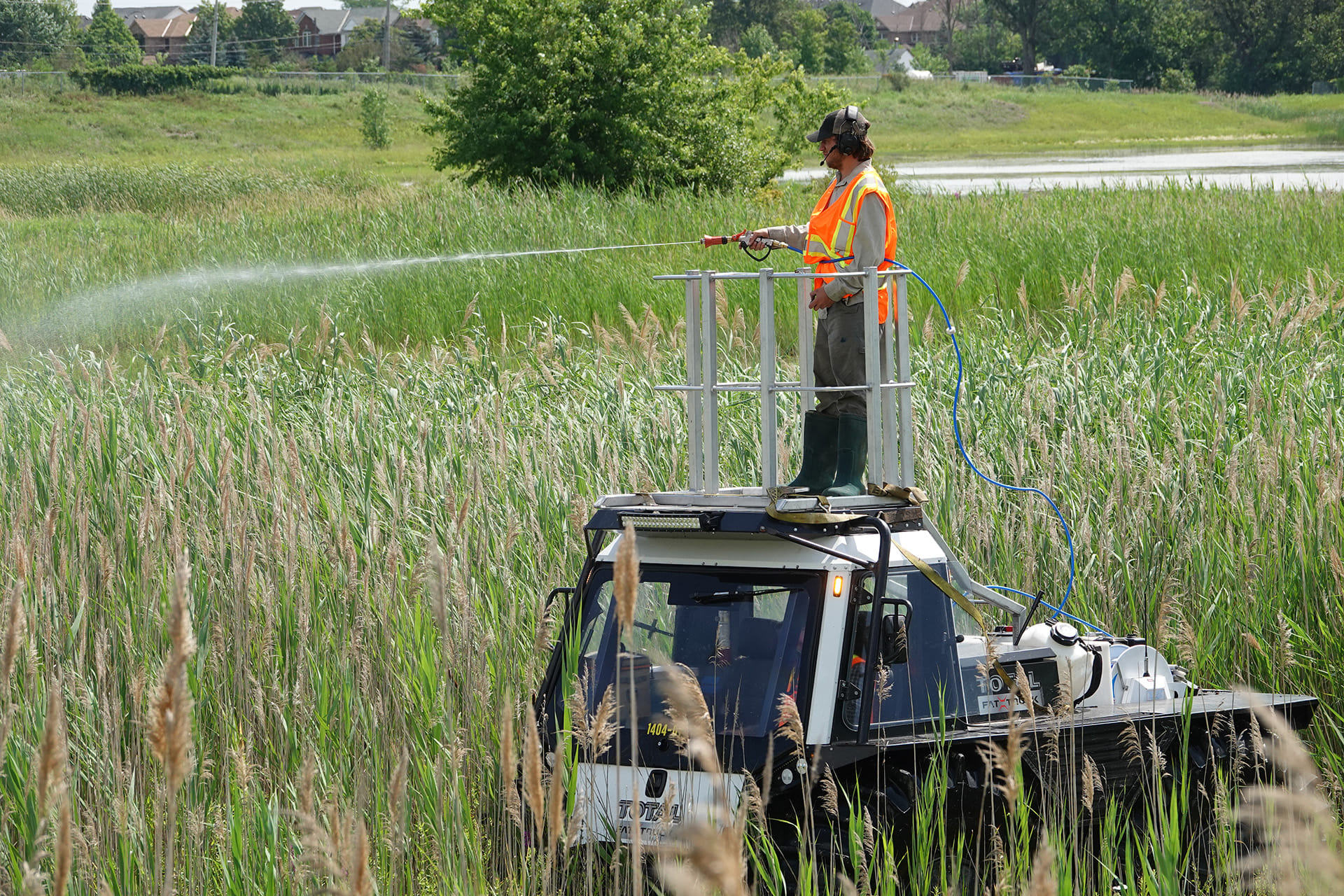
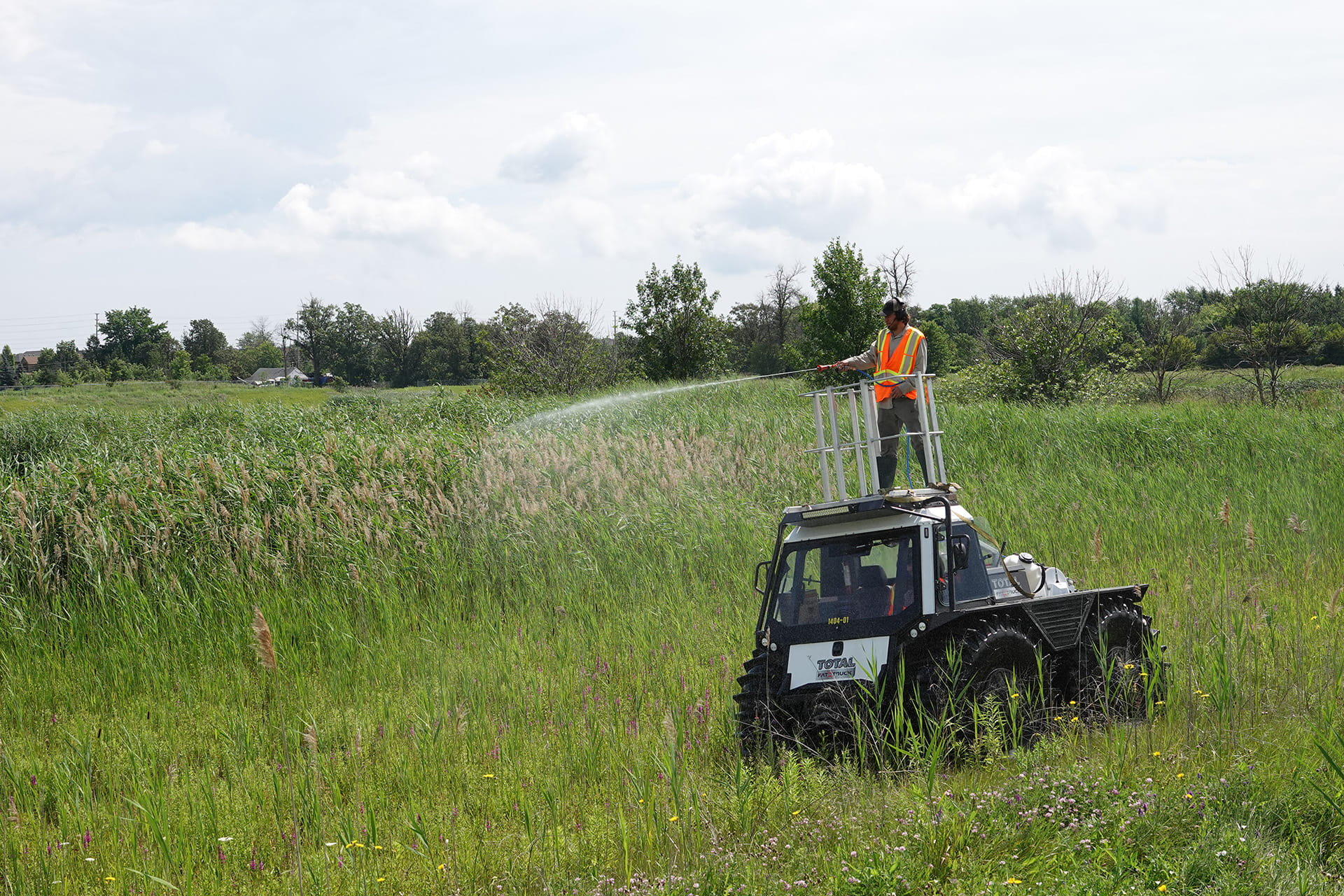
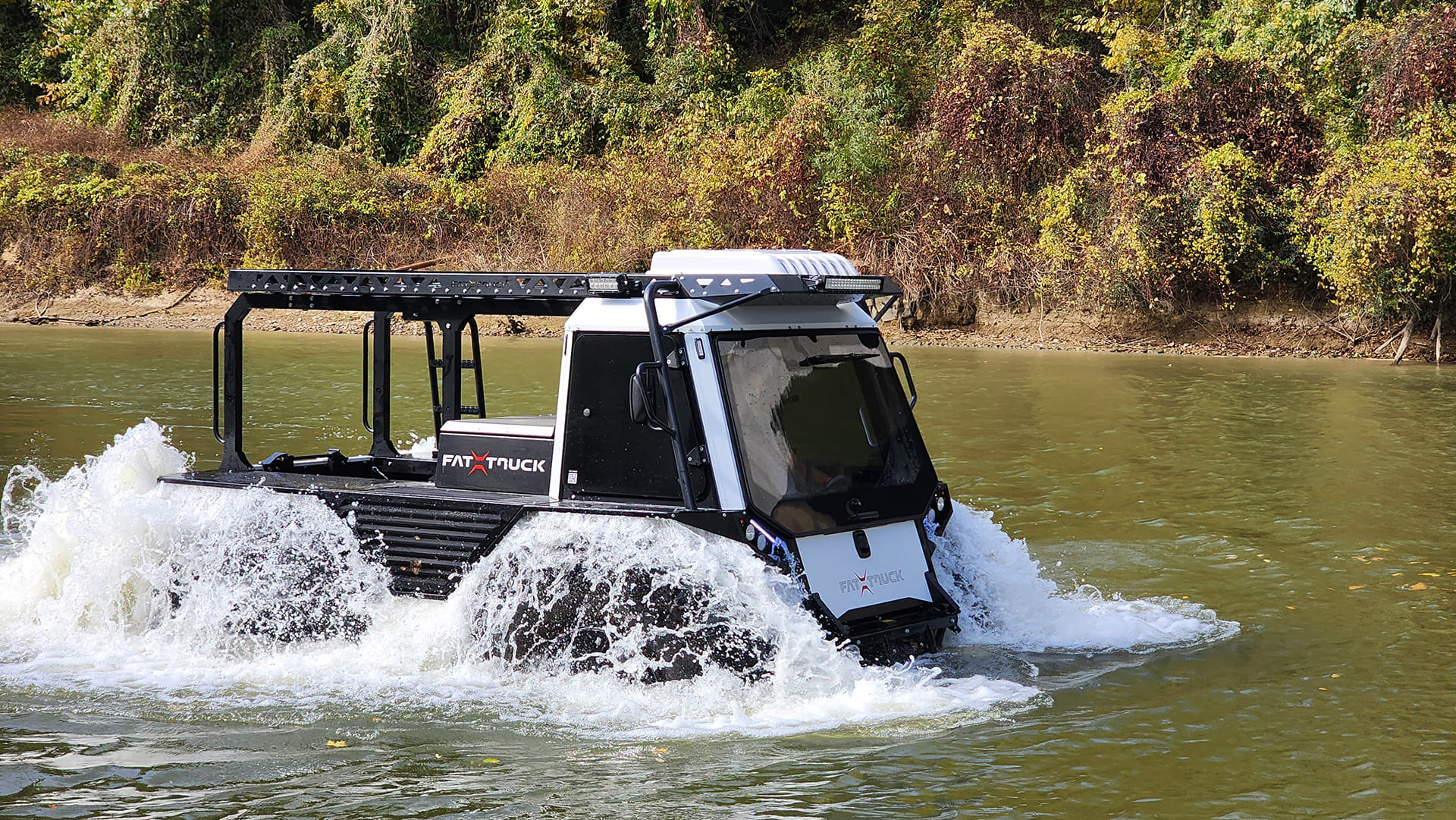
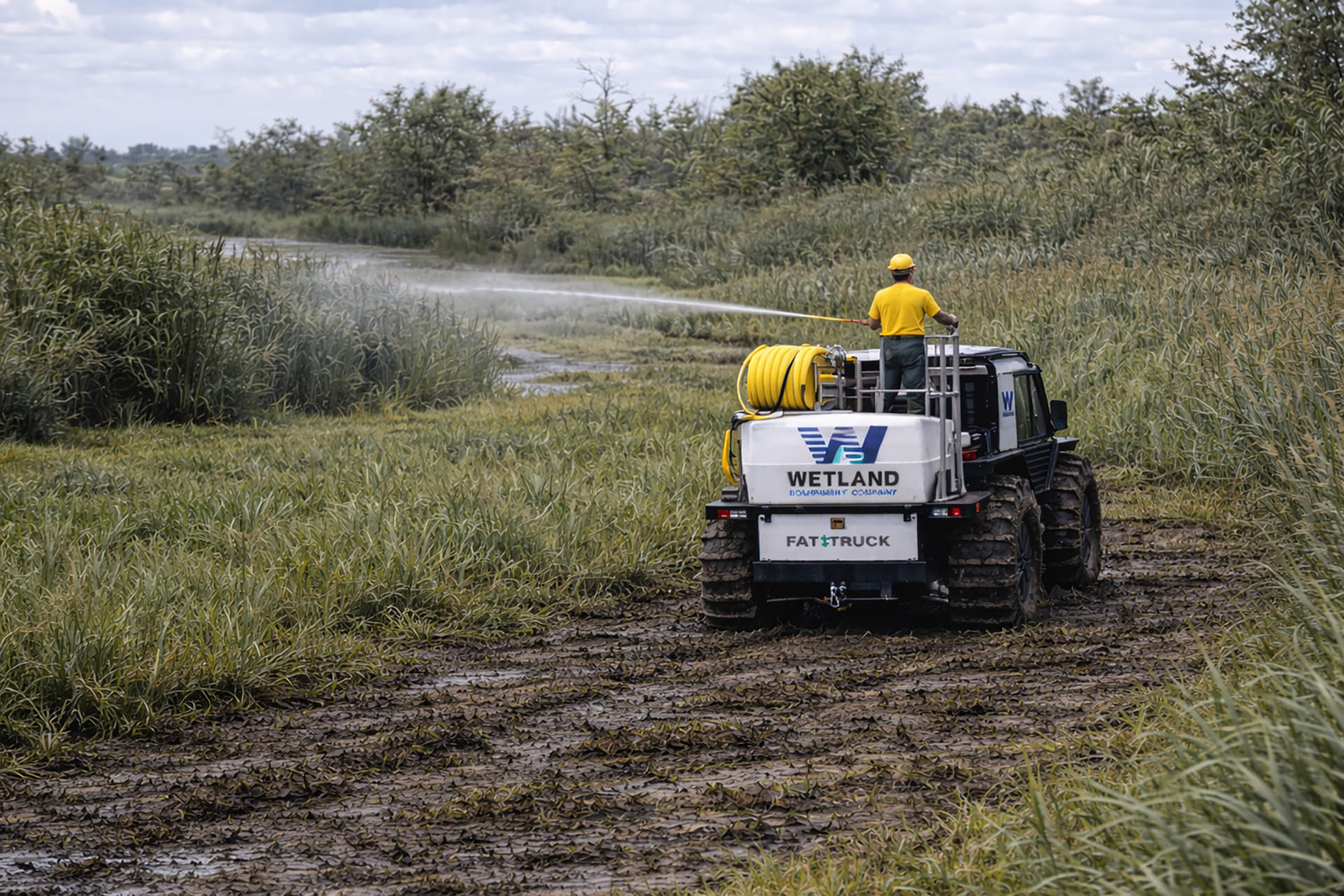
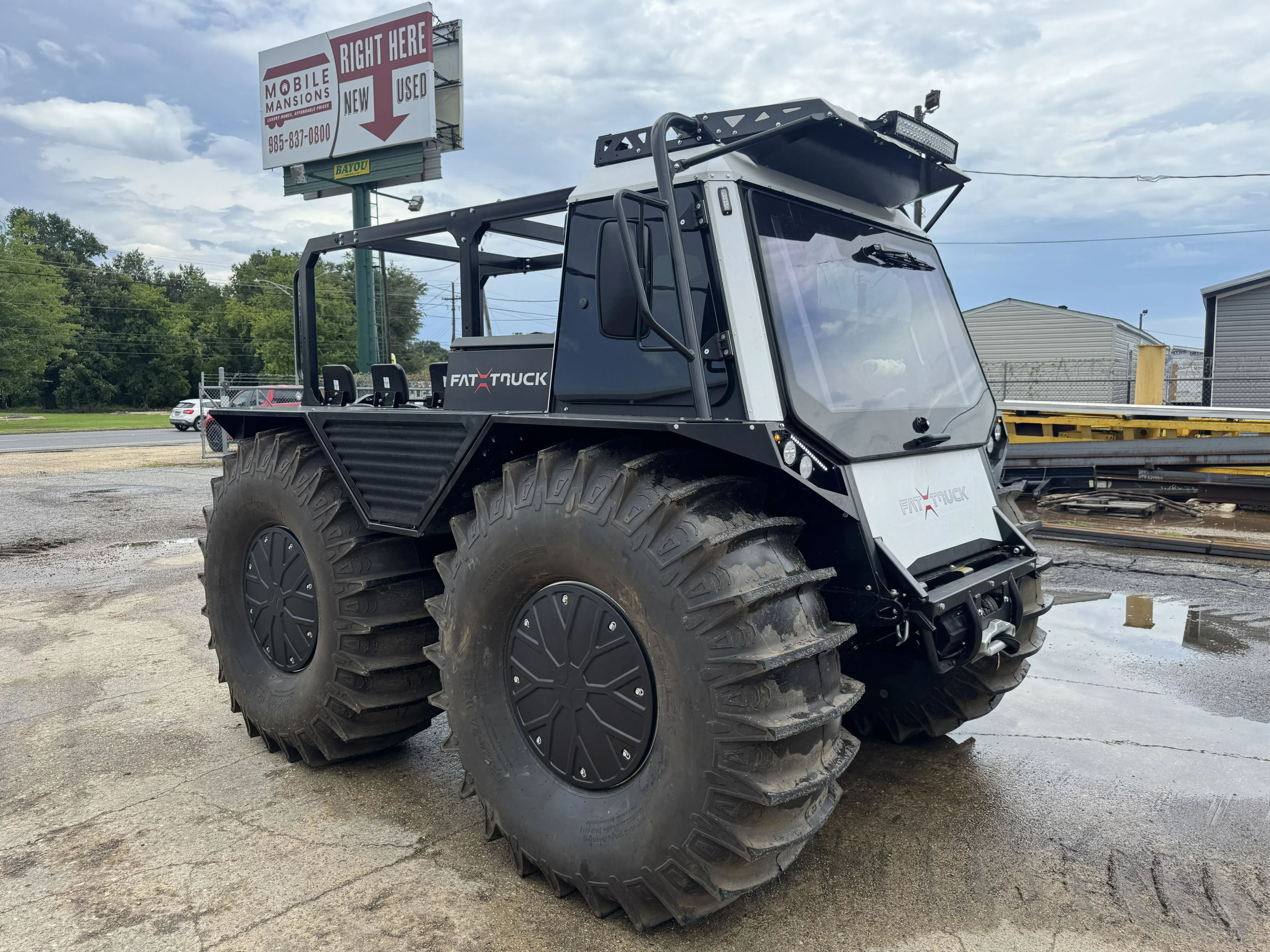
Most spraying equipment is built around access assumptions that do not hold up in wetlands or remote terrain. Pickup-mounted sprayers, tractors, UTV sprayers, and tow-behind systems can perform well on maintained roads, fields, and firm work sites, but they often struggle when the route includes mud, water, soft soils, ditches, ruts, or thick vegetation. Once a vehicle loses traction or stability, the spraying system becomes difficult to use consistently. That creates delays, safety concerns, and uneven treatment coverage.
These problems can also increase labor costs because crews may need to stage equipment far from the treatment area, carry hoses over long distances, or rely on manual application methods. In large treatment zones, that extra labor can slow down the entire operation and limit how much ground a team can cover in a day. Stuck equipment, repeated repositioning, and unstable driving conditions can also create unnecessary wear on vehicles that were not built for the environment. For operational buyers, the issue is not only whether the sprayer works, but whether the entire system can reach the work area and perform reliably once it gets there.