Case Studies - Amphibious Trailer Payload Test

We'll Get You There

fat truck with black paint


Case Study · Amphibious Trailer Payload Test

Testing FT3 Amphibious Trailer Systems for Maximum Payload Flexibility

When one Fat Truck isn't enough capacity for the job, the logical question is: can you trailer behind an amphibious vehicle and maintain full terrain capability? For equipment managers planning large-scale projects in remote locations, that question determines whether they can scale operations or whether they're limited by single-vehicle payload constraints.

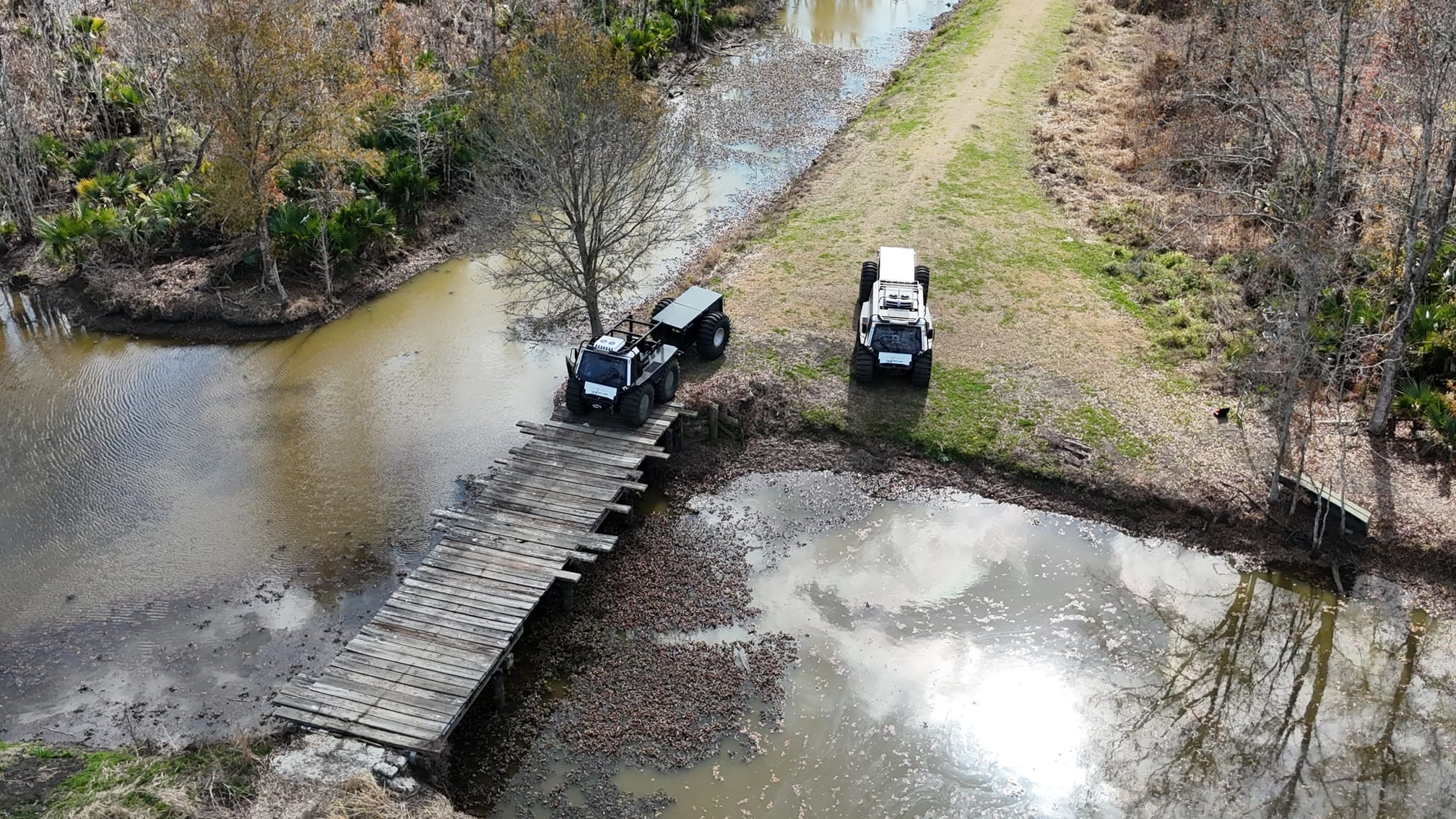
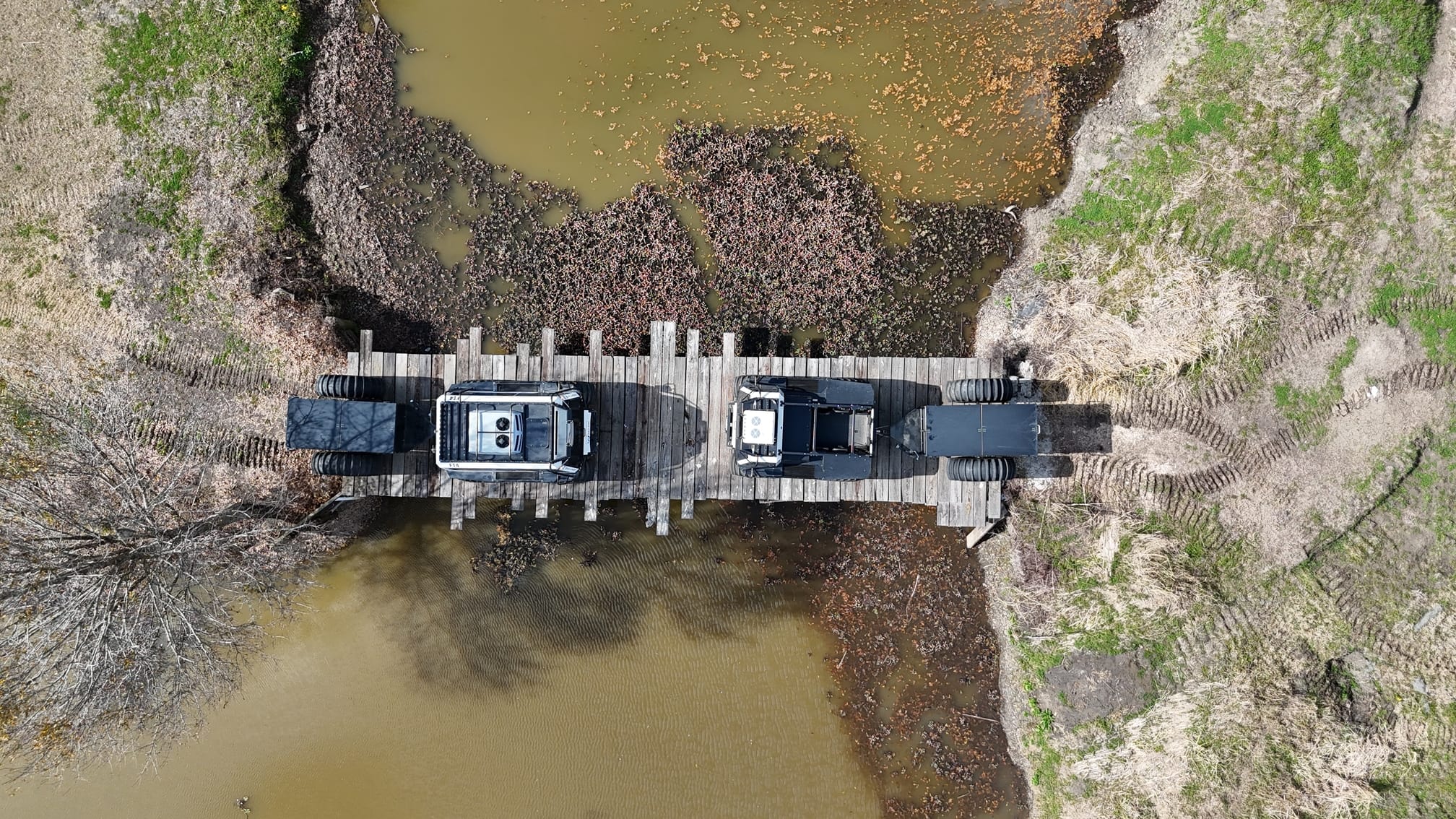
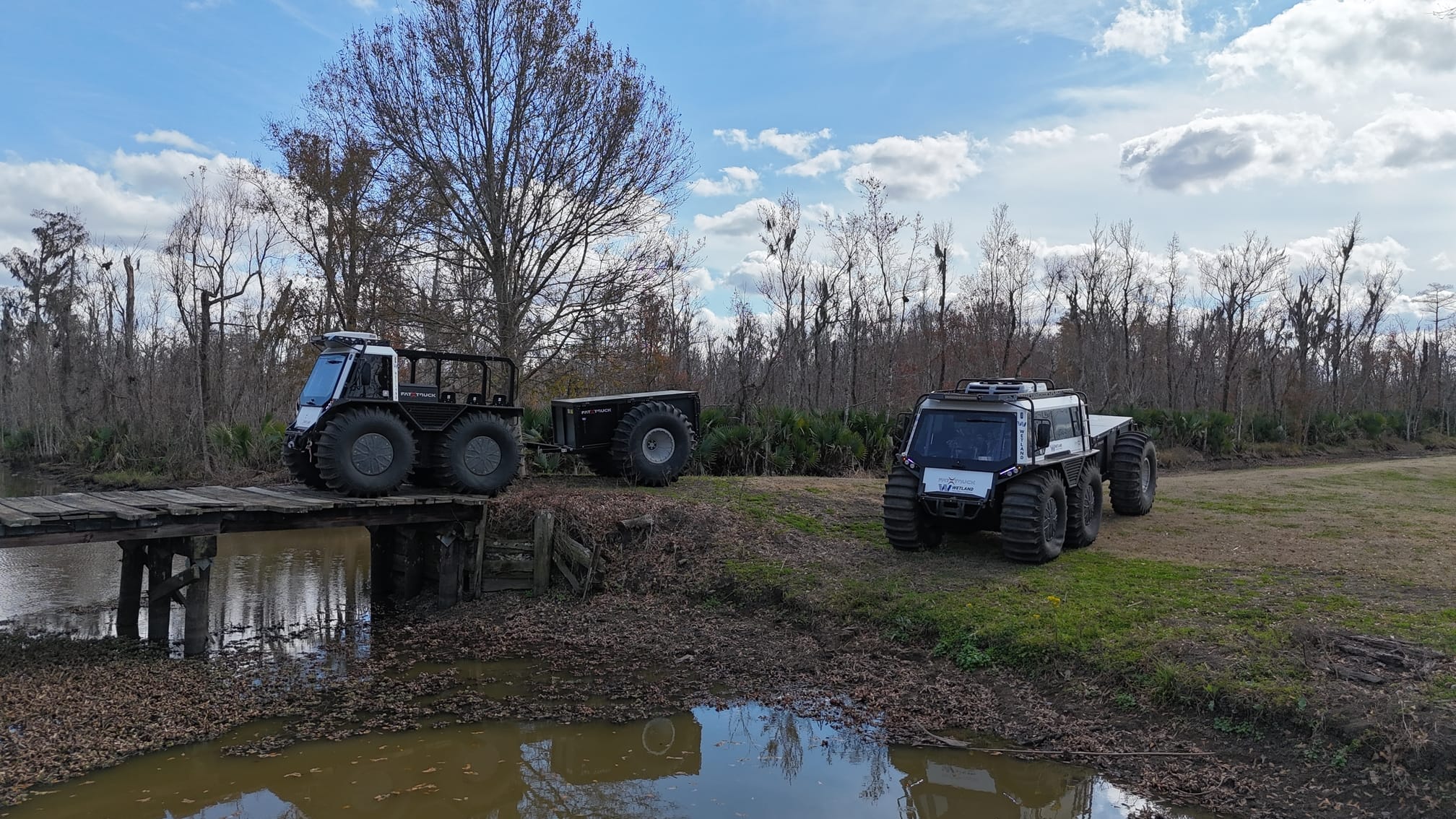
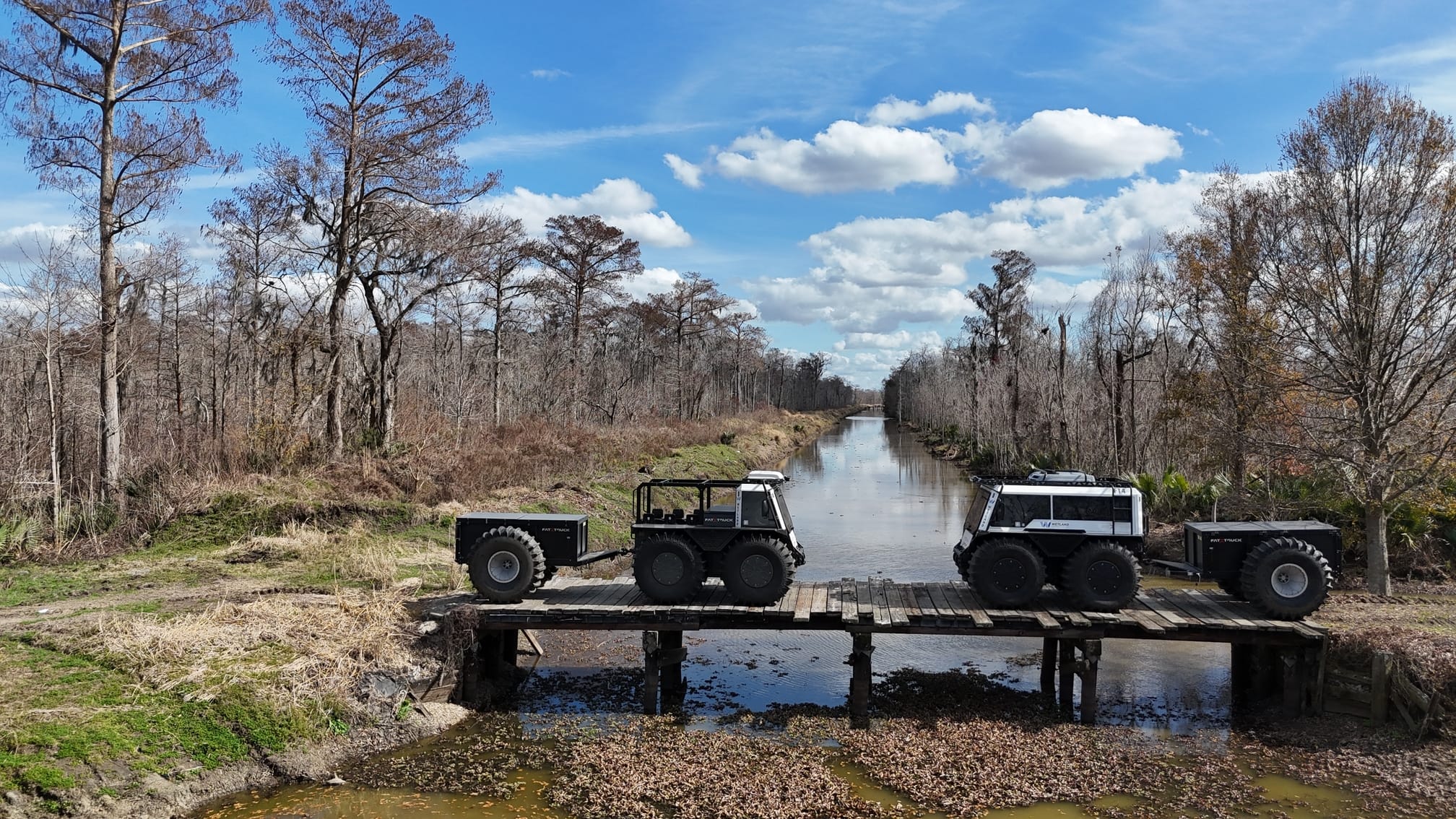
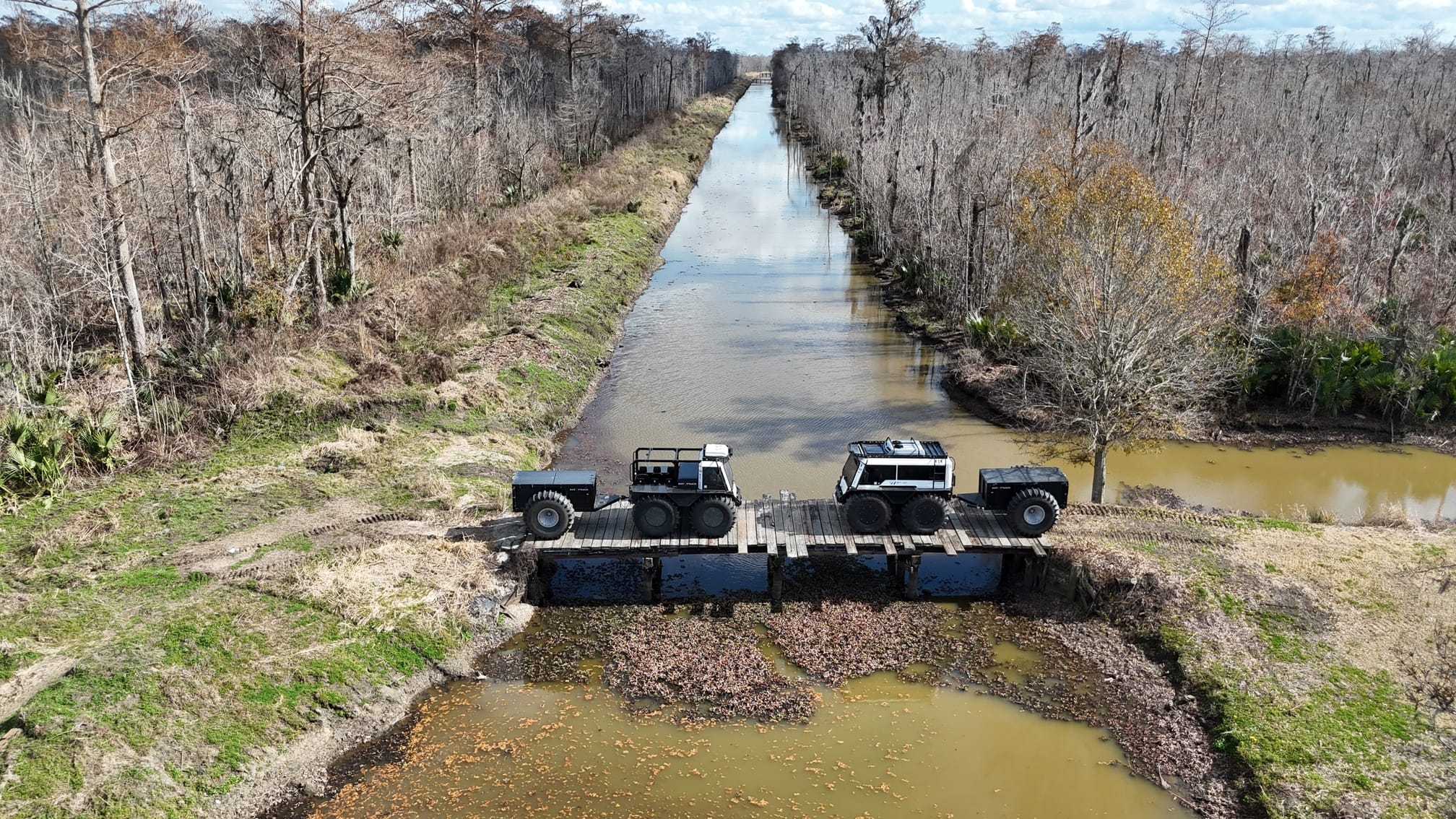
A recent field test with two FT3 units, one Pickup, and one Wagon. Each pulling custom amphibious trailers through pipeline access terrain answered that question definitively. Not only do the trailers pull easily and handle predictably, but they remain fully amphibious while carrying 2,200 pounds of additional payload per trailer.

Location

The test took place in remote pipeline terrain, including marshes, canals, and uneven off-road access routes.

Equipment

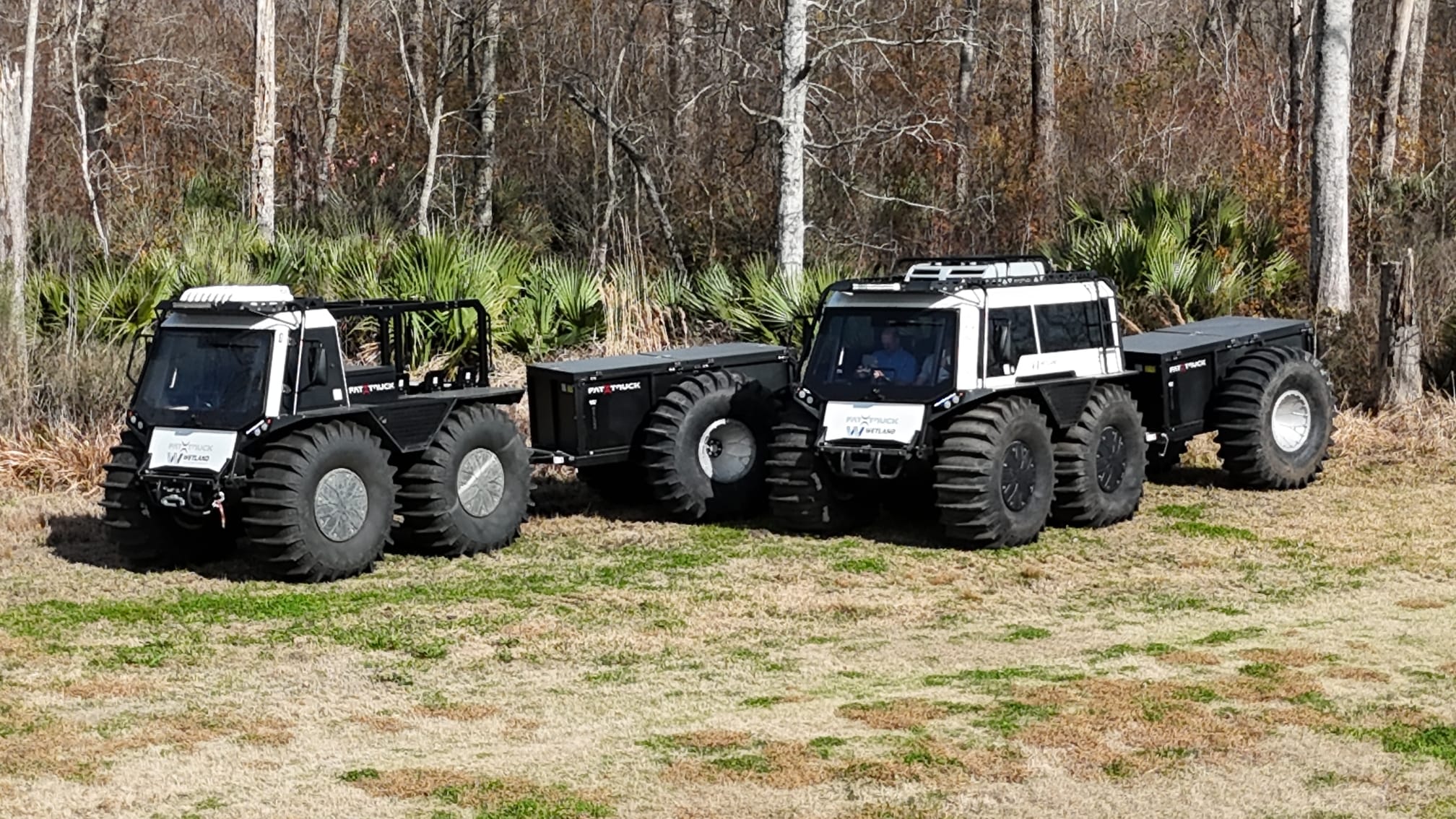
Two FT3 units — a Pickup and a Wagon — pulled amphibious trailers carrying up to 2,200 pounds of payload.

Mission

The mission tested increased payload capacity while maintaining full amphibious and off-road capability.
fat truck sitting still on grass

Configuration Options

Pickup vs. Wagon with Trailer Capacity

The side-by-side comparison revealed practical differences that matter for project planning. The FT3 Pickup, with its open rear bed, offers familiarity for crews accustomed to conventional pickup operations. Operators load equipment, tools, and materials in the bed, then add 2,200 pounds of additional payload in the amphibious trailer for total hauling capacity that rivals small commercial trucks.

The FT3 Wagon configuration brings different advantages. With an enclosed cabin that seats up to eight, the Wagon maximizes crew transport while the trailer handles all equipment and materials. For projects requiring larger teams in remote locations, this combination means everyone and everything travels together in one convoy, with no splitting crews between multiple vehicles or staging equipment separately.

Both configurations demonstrated identical trailering characteristics. The amphibious trailers tracked predictably behind the FT3 units across varied terrain, requiring minimal operator adjustment. For experienced equipment operators familiar with backing conventional truck and trailer combinations, the learning curve proved negligible. The articulation and response felt intuitive, with only slight practice needed to master backing maneuvers in tight pipeline corridors or staging areas.

red fat truck with a closeup on the tire

Amphibious Trailing Capability

Supports full towing performance in both land and water environments while maintaining stability, control, and buoyancy with up to 2,200 lb payload capacity per trailer.

Terrain Adaptive Mobility

Maintains reliable movement across headlands, pipeline corridors, uneven off-road terrain, and deep-water canal crossings without loss of access capability.

Crew and Payload Configuration Flexibility

Allows FT3 Pickup and Wagon setups to scale between equipment hauling and crew transport, enabling single-trip mobilization of personnel, tools, and materials in remote operations.

Operational Flexibility

Matching Configuration to Mission

The visual comparison between the two configurations also highlighted strategic flexibility. For projects where crew size is limited but equipment demands are high, the FT3 Pickup with trailer maximizes cargo capacity. For operations requiring larger teams, the Wagon with trailer balances personnel transport with equipment hauling.

The ability to interchange configurations based on project requirements means equipment managers don't need separate specialized vehicles for different job types. The same FT3 platform adapts—swap between Pickup and Wagon configurations, add or remove trailers based on payload needs, and maintain consistent operational training and maintenance protocols across the fleet.

For multi-phase projects where requirements change, this flexibility prevents equipment from becoming bottlenecks. Early-stage site surveys might need maximum crew capacity in Wagons. Later construction phases might prioritize material hauling with Pickups and loaded trailers. The same base equipment handles both scenarios without requiring additional specialized purchases.

Mission Results

What Was Proven in One Field Test

Four key outcomes from a single FT3 trailer mobilization, all confirming scalable amphibious payload capability.

Full Terrain Access Confirmed

Both FT3 Pickup and Wagon units successfully pulled loaded amphibious trailers through headlands, pipeline corridors, and canal crossings without loss of control.

Amphibious Payload Validated

Trailers maintained full flotation while carrying up to 2,200 pounds of equipment and mission cargo during water crossings.

Operational Simplicity Maintained

Operators with standard truck and trailer experience adapted quickly to towing, backing, and maneuvering in confined pipeline environments.

Single-Trip Capability Achieved

Crew, tools, and materials were combined into one mobilization flow, reducing the need for staged transport or multiple trips.

What the FT3 Pickup Brings to the Field

Integrated Land and Water Mobility

The FT3 Pickup is purpose-built to operate across land and water while towing amphibious trailers without interruption. It maintains continuous movement through headlands, pipeline corridors, and canal crossings without staging, launch infrastructure, or support equipment. This combined capability allows remote access routes and inspection areas to be reached in a single, uninterrupted mobilization.

Mud & Wetlands

Soft, saturated ground that bogs standard vehicles

Snow & Ice

Frozen, slippery, and unpredictable winter terrain

Swamps & Marshes

Waterlogged vegetation and unstable peat

Shallow Water

Stream crossings and standing water barriers

Remote Off-Road

Unimproved routes far from paved access

Delays caused by access constraints are no longer necessary.

With the FT3 Pickup and amphibious trailer system, remote work can be completed in a single mobilization, allowing crews to reach, service, and return from sites that previously required multiple trips or additional equipment.

If You Can’t Reach It, You Can Still Work It.

The FT3 Pickup and Wagon with amphibious trailers make remote terrain and water access sites fully reachable in a single deployment.