Case Studies - Pipeline Project

We'll Get You There

fat truck with black paint


Case Study · Fat Truck FT3 Pickup

When the Pipeline Disappears: FT3 Water Navigation Reaches Forgotten Infrastructure

Some pipeline infrastructure doesn't disappear because it's been decommissioned; it disappears because access became impossible. When vegetation overgrows canal routes, drainage systems clog, and boat ramps are miles away, even short-distance inspections become logistical nightmares that get postponed indefinitely. For one oil and gas operator in south Louisiana, a pipeline inspection that hadn't happened "in some time" finally became possible again, not because conditions improved, but because the Fat Truck FT3 Pickup could simply drive into the water and navigate to infrastructure that had become effectively unreachable.

The August mission accomplished more than just rediscovering a forgotten pipeline. It proved that amphibious equipment can operate as effectively on water as on land, clearing drainage obstacles and creating navigable paths through dense aquatic vegetation without requiring specialized marine equipment or dedicated boat access.

Location

Drainage canal in south Louisiana — 60 ft wide, miles long, with no boat ramp within reach and marsh mat clogging the bridge crossing.

Equipment

One Fat Truck FT3 Pickup. Tracked propulsion, low-profile hull, and an enclosed climate-controlled cabin.

Mission

Visual pipeline inspection plus an impromptu marsh-mat clearing at the bridge crossing — two operators, one afternoon.
fat truck sitting still on grass

FT3 Changed Everything

Why the FT3 Changed the Access Equation

The inspection team was already working in the area with the FT3 Pickup on other projects when the request came: could they extend their scope to check the nearly-forgotten pipeline? Because the FT3 was in close proximity and offered amphibious capability, the answer was immediate: yes, without additional equipment or mobilization.

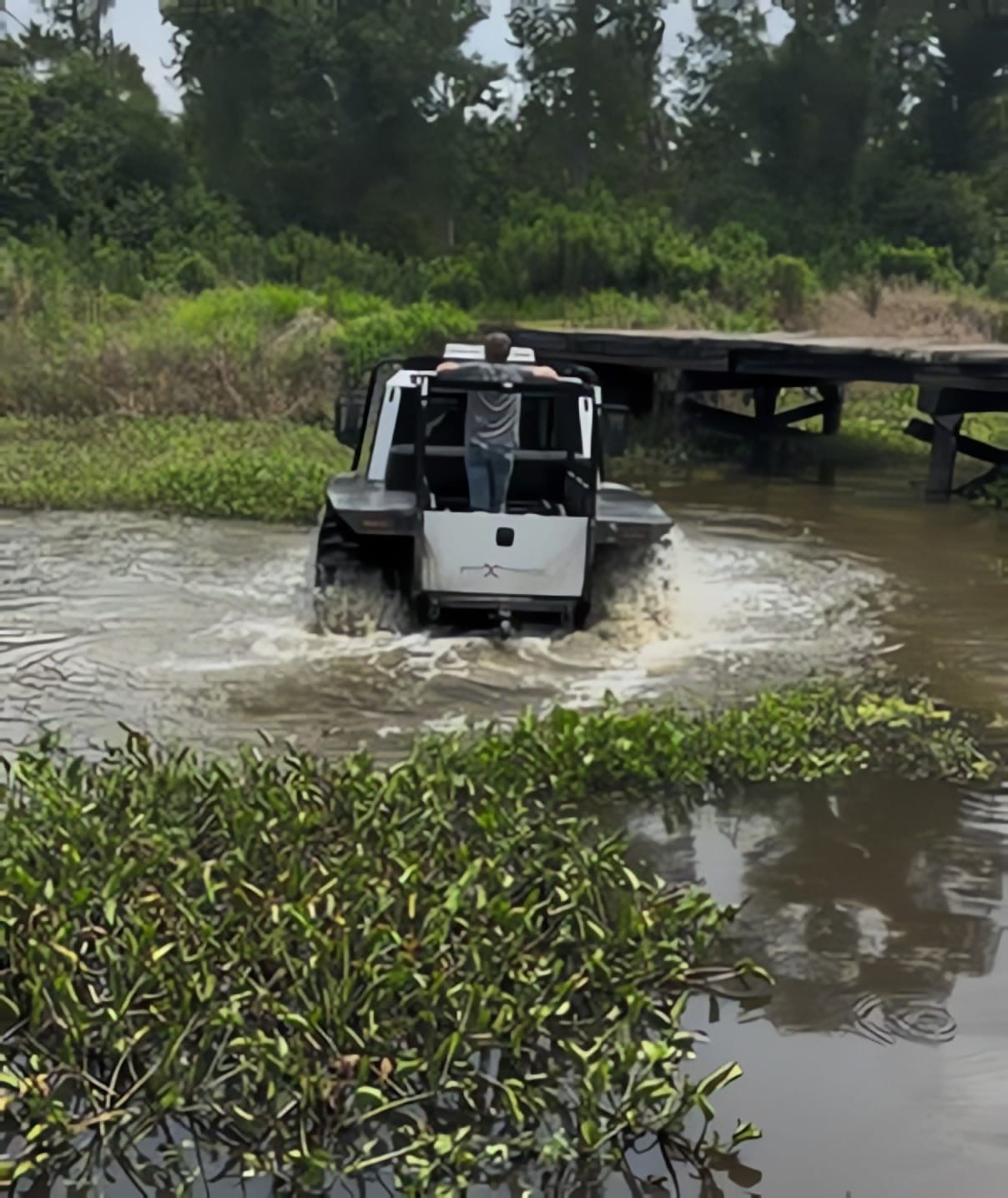
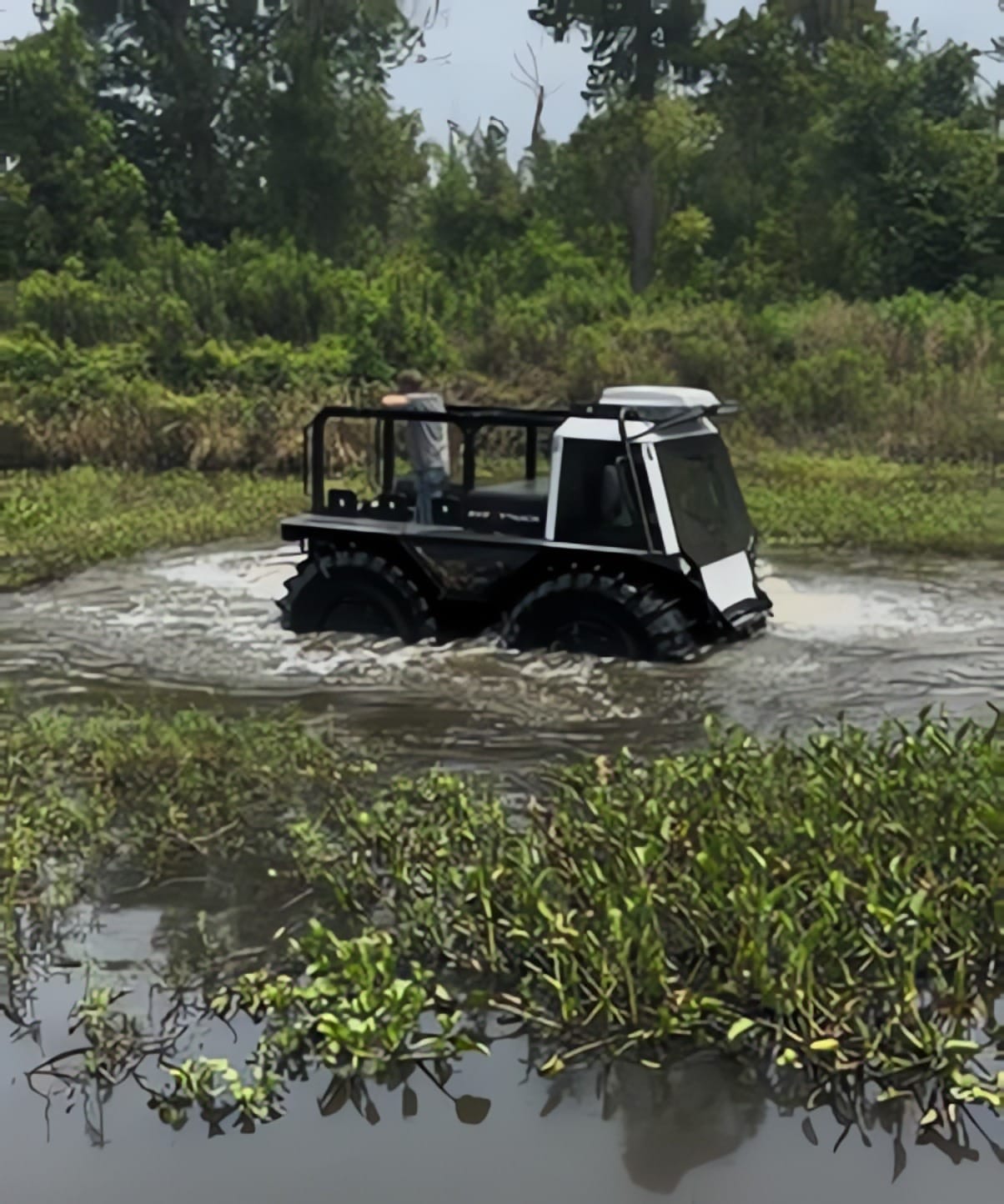
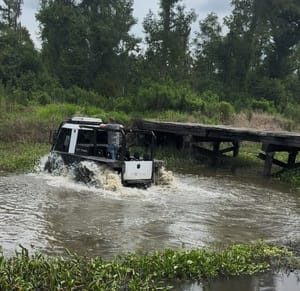
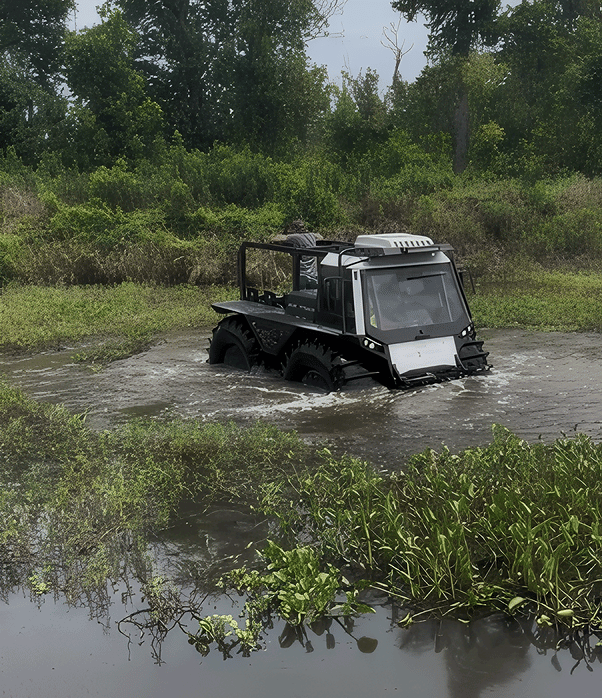
The team accessed the canal directly from behind a private residence, no boat ramp, no trailer launch, no marine equipment staging. The FT3 simply drove to the canal edge and entered the water, transitioning from tracked land vehicle to floating watercraft in seconds. With one operator in the enclosed cabin and another filming to document conditions, the FT3 navigated out into the 60-foot-wide canal in 15 feet of still water.

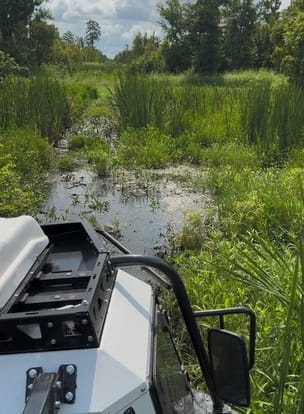
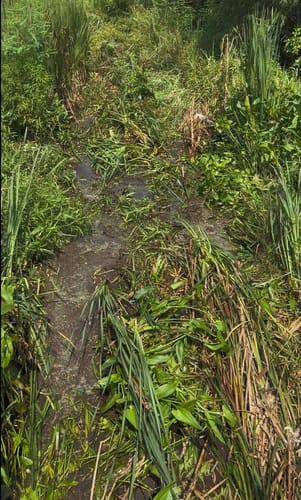
The photos capture what conventional thinking says shouldn't be possible: a ground vehicle operating as a boat, not just crossing water but deliberately navigating through it. One image shows the FT3 floating in deep water with its flotation gear fully engaged. Another captures the moment of breaking through from dense marsh into open canal water, the FT3 literally making its own trail where vegetation had closed off navigable routes.

As the FT3 pushed through the medium to light vegetation, it accomplished dual objectives. The primary mission was reaching the pipeline for visual inspection, but the secondary benefit was immediate: breaking up the marsh mat at the bridge crossing and clearing a path that allowed water to flow more freely through the canal. What started as an inspection became an impromptu drainage improvement that addressed flooding and flow issues the canal system had been experiencing.

red fat truck with a closeup on the tire

Tracked Propulsion

No propeller to foul. The FT3 drives the same way in water as it does in mud — steady, controlled, repeatable. Vegetation that shuts down a conventional boat is just another surface to grip.

Low-Profile Hull

Pushes through floating marsh mat without riding up or losing control. On this mission, the hull broke up the mat at the bridge crossing — an unscheduled drainage improvement that came free with the inspection.

Climate-Controlled Cabin

Mid-August in Louisiana with sun reflecting off open water was a non-issue. The operator worked from an air-conditioned, enclosed cabin while documenting the line — a productivity and safety advantage you don't get from an open boat.

Mission Results

What Got Done in Two Hours

Four wins from a single FT3 mobilization — three planned, one a happy accident.

Pipeline Inspected

Visual confirmation captured, documented, and photographed. The line is back on the active inspection schedule, out of the "we'll get to it" bucket for the first time in a while.

Drainage Improved

Marsh mat at the bridge crossing broke up as the FT3 passed through. Flow improved on a stretch that had been backing up, an unbudgeted bonus that wasn't in the scope.

~75% Time Saved

Compared to a conventional boat-based approach with mobilization, launch coordination, and vegetation problems on top. About two hours start to finish with a two-person crew.

Zero Extra Mobilization

No additional boats, trailers, contractors, or permissions. The FT3 was already on site for another project, the inspection was a scope expansion the team simply said yes to.

What the FT3 Pickup Brings to the Field

Amphibious by Design, Continuous in Operation

The Fat Truck FT3 Pickup isn't a land vehicle that can cross water and it isn't a boat that can come ashore. It's purpose-built to do both — and to transition between them without stopping, without staging, and without specialized launch infrastructure. For Louisiana operators working pipelines, levees, wetlands, and remote inspections, that capability profile turns access problems into routine site visits.

Mud & Wetlands

Soft, saturated ground that bogs standard vehicles

Snow & Ice

Frozen, slippery, and unpredictable winter terrain

Swamps & Marshes

Waterlogged vegetation and unstable peat

Shallow Water

Stream crossings and standing water barriers

Remote Off-Road

Unimproved routes far from paved access

"Can't get there" is no longer a valid answer.

When forgotten infrastructure needs attention and access has always been the excuse for delay, the Fat Truck FT3 Pickup proves the equipment you already have on site can do the job — in about two hours, with two people, and without a second mobilization.

Have a Pipeline We Can't Reach? Bring It to Us.

Whether you're inspecting a forgotten line, surveying wetland infrastructure, or planning the next remote project — we'd like to hear about it.