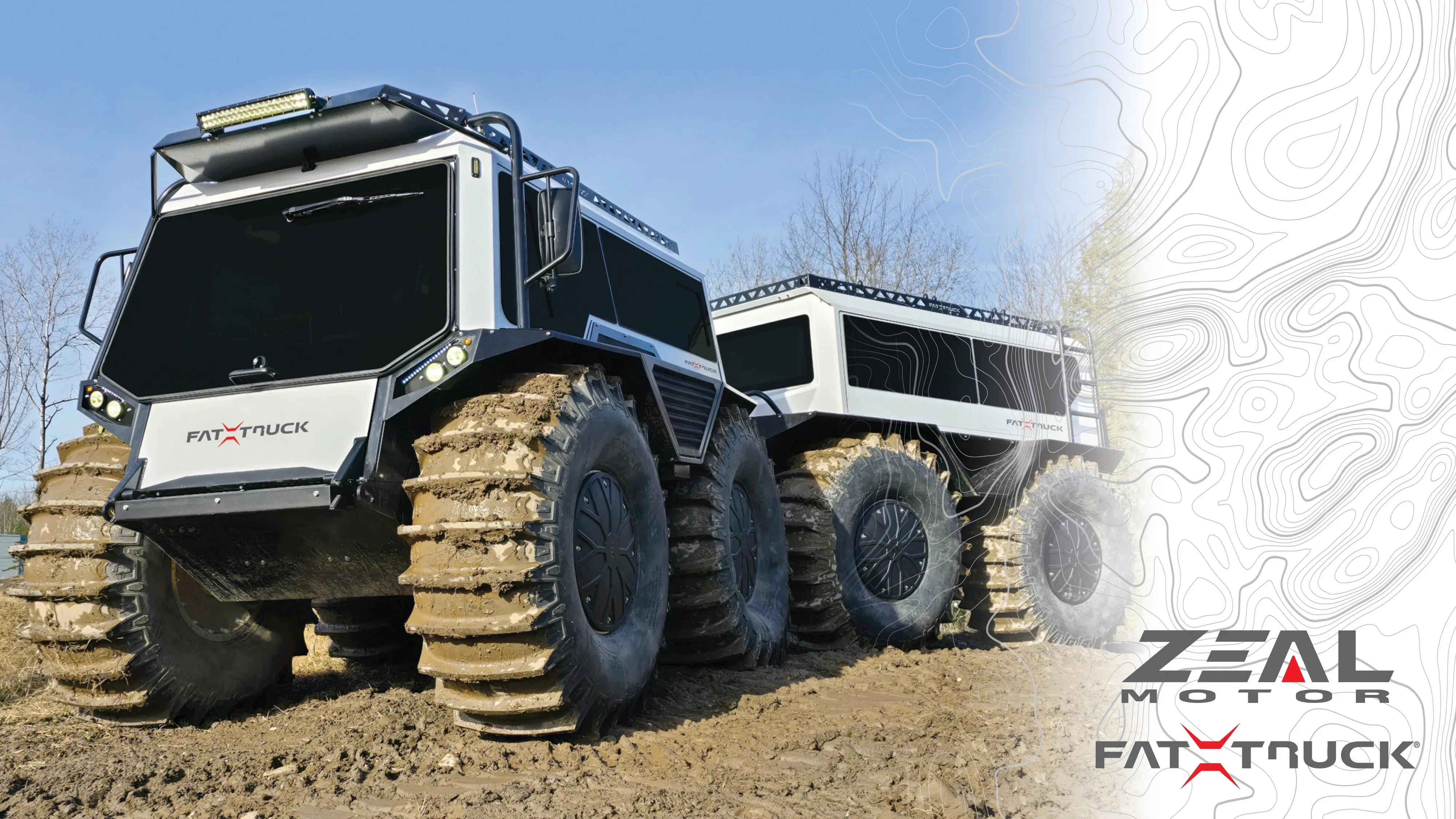
Fat Trucks MODELS

Fat Truck Models and Configurations

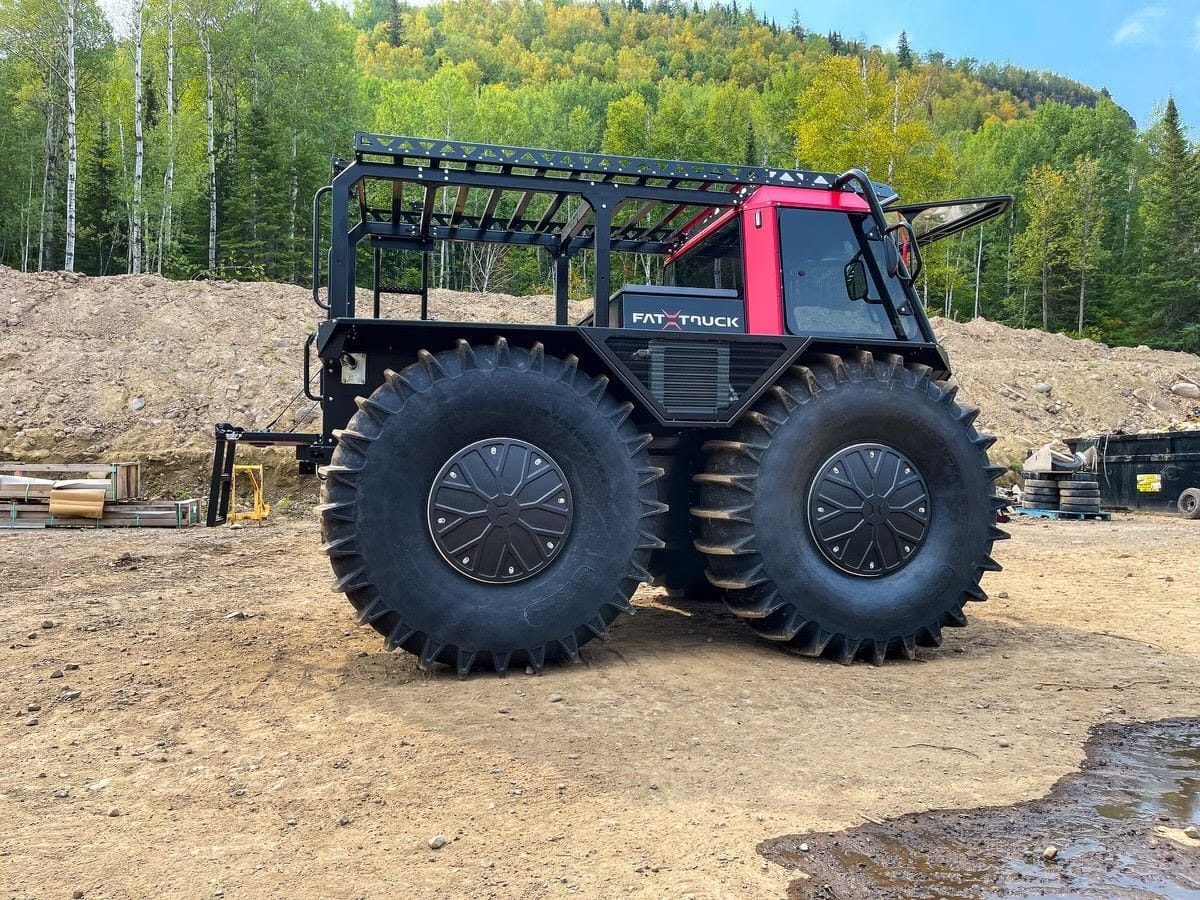
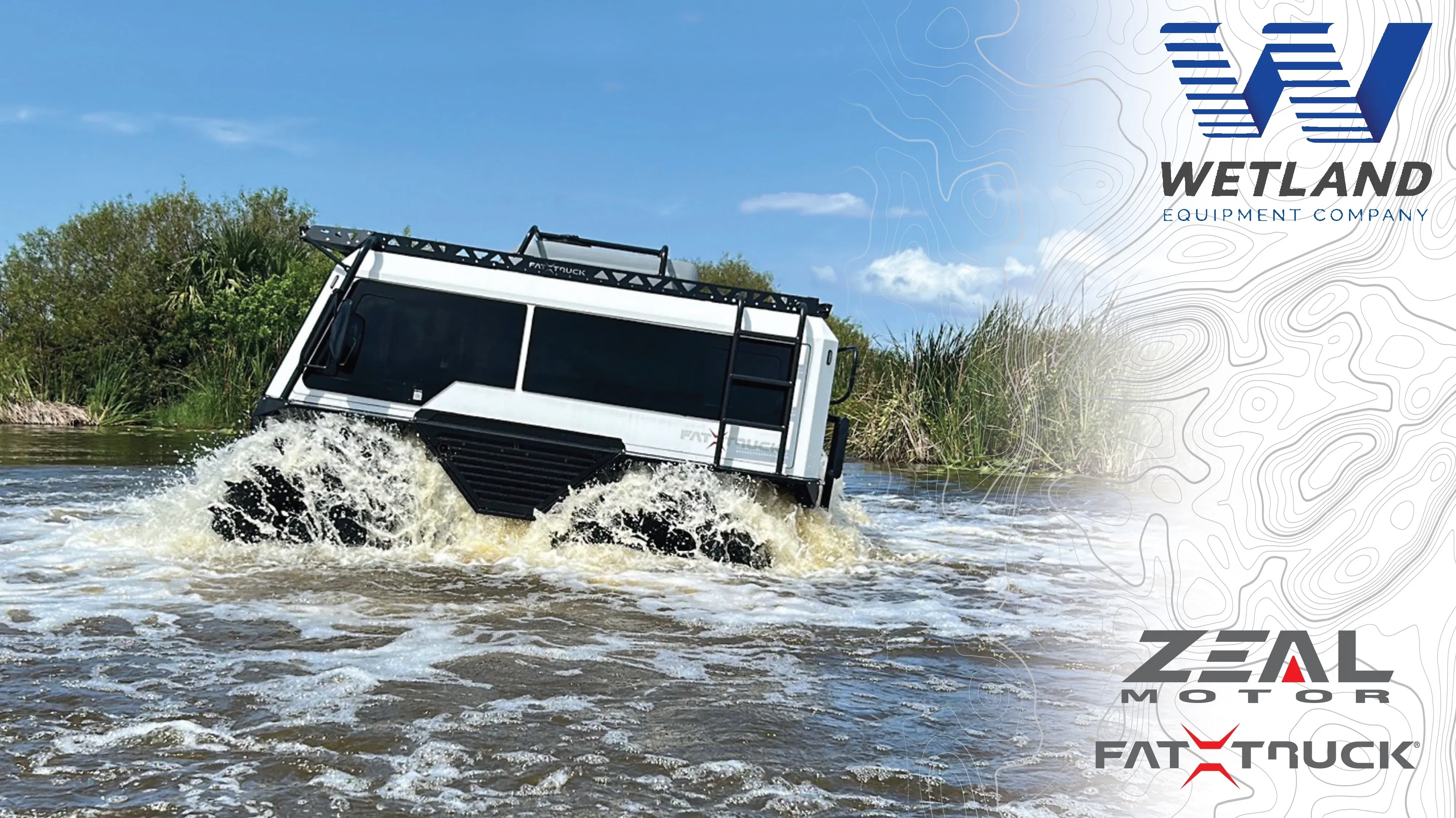
Fat Truck models are built around the same core idea: move people, tools, and equipment through terrain where conventional vehicles cannot reliably work. Each model is amphibious, wheeled, and designed for demanding off-road conditions, including mud, marsh, snow, ice, shallow water, and remote job sites. The right choice comes down to payload, seating, configuration, application needs, and how often the machine will be used.

Some buyers need a compact amphibious vehicle for small crews and tight access areas. Others need enclosed crew transport, heavier hauling capacity, or a larger platform that can support demanding industrial work. This page gives you a high-level look at the Fat Truck lineup so you can compare options before moving into demos, rentals, or model-specific specifications.


How to Choose the Right Fat Truck Model

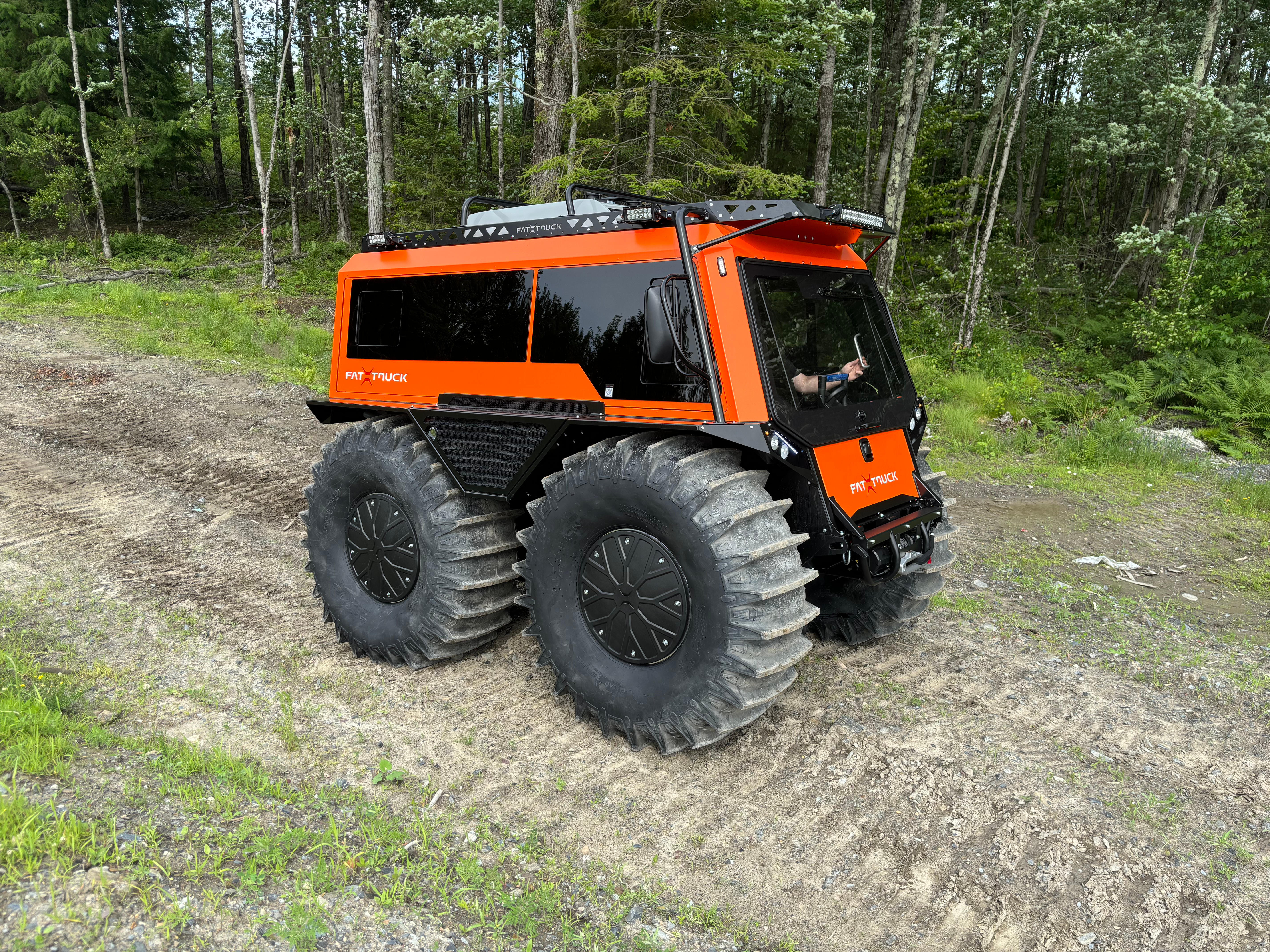
Orange Fat Truck standing still near forest area

Choosing the right Fat Truck model starts with the job, not the size of the machine. The largest model is not always the best fit, especially when access routes are narrow, crews are small, or the work requires frequent transport between sites. A smaller model may be easier to move, simpler to stage, and more cost-effective when the payload and seating requirements are modest.

Crew size is one of the first questions to answer. If you only need to move one to four people with tools, the FT2 Pickup may provide the right balance of access and capability. 

Payload also plays a major role in model selection. Crews carrying pumps, hoses, tools, fuel, environmental equipment, or utility hardware may need more capacity than a light access vehicle can provide. 

Terrain and frequency of use should guide the final decision. A rental may make sense for short-term access, seasonal projects, or emergency work. A purchase may be more practical for organizations that repeatedly operate in wetlands, marshes, remote utility corridors, snow, ice, or flood-prone areas.

Fat Truck Model Lineup

FT3 Pickup

The FT3 Pickup is a strong fit for crews that need more payload, more passenger flexibility, and more work capability than the FT2 can provide. It includes an enclosed main cabin for two passengers with heat and air conditioning, along with rear seating in the open bed area for larger crews depending on configuration. This gives operators a practical blend of protected front-cab operation and flexible rear capacity.

The FT3 Pickup carries up to 3,000 pounds on land and 2,200 pounds on water. It travels up to 25 mph on land and approximately 3.1 mph on water, depending on job-site conditions. The FT3 platform is often considered the workhorse of the lineup because it balances size, payload, seating, and attachment potential. For many utility, pipeline, right-of-way, and remote access jobs, it provides the capability needed without moving into the larger FT5 class.


  • Seating Range: 2 passengers in the enclosed cabin, with rear seating for up to 6 to 8 depending on configuration
  • Payload Range: 3,000 pounds on land and 2,200 pounds on water
  • Best For: Crew transport, field access, utility work, oil and gas support, and flexible worksite hauling
  • Configuration Type: Pickup-style amphibious work vehicle
 
FT2 Pickup

The FT2 Pickup is the compact entry point into the Fat Truck lineup. It is well-suited for small crews, lighter payloads, and access routes where a larger machine may be more than the job requires. With seating for two passengers in the enclosed main cabin and two passengers in the rear open bed area, it gives crews a practical way to move people and gear across difficult terrain.

The FT2 Pickup offers a 2,000-pound land payload and a 1,500-pound water payload. It travels up to 20 mph on land and approximately 3.1 mph on water, depending on conditions. Its low ground pressure, amphibious design, and compact footprint make it useful for utility access, inspection work, environmental projects, and smaller remote jobs. It is often the right choice when the goal is dependable access without stepping into a larger crew transport or heavy-haul platform.


  • Seating Range: Up to 4 people
  • Payload Range: 2,000 pounds on land and 1,500 pounds on water
  • Best For: Small crews, tight access areas, lighter payloads, inspections, and remote work support
  • Configuration Type: Pickup-style amphibious utility vehicle
 
FT3 Wagon

The FT3 Wagon is designed for teams that need enclosed passenger transport across extreme terrain. Instead of using an open bed for rear seating, the wagon configuration keeps the crew inside a climate-controlled cab with heat and air conditioning. This makes it a strong option for longer workdays, harsh weather, emergency response, and job sites where crew comfort and safety matter as much as access.

The FT3 Wagon can carry 6 to 8 passengers depending on configuration. Like the FT3 Pickup, it offers a 3,000-pound land payload and a 2,200-pound water payload. Its enclosed layout is especially useful for utilities, search and rescue, survey crews, environmental teams, and industrial operators that need to move people through wet, cold, muddy, or remote terrain. When passenger protection is more important than an open cargo bed, the FT3 Wagon is often the better fit.


  • Seating Range: 6 to 8 passengers depending on configuration
  • Payload Range: 3,000 pounds on land and 2,200 pounds on water
  • Best For: Enclosed crew transport, emergency response, survey teams, utilities, and harsh-weather access
  • Configuration Type: Wagon-style amphibious crew vehicle
 
Amphibious Trailers

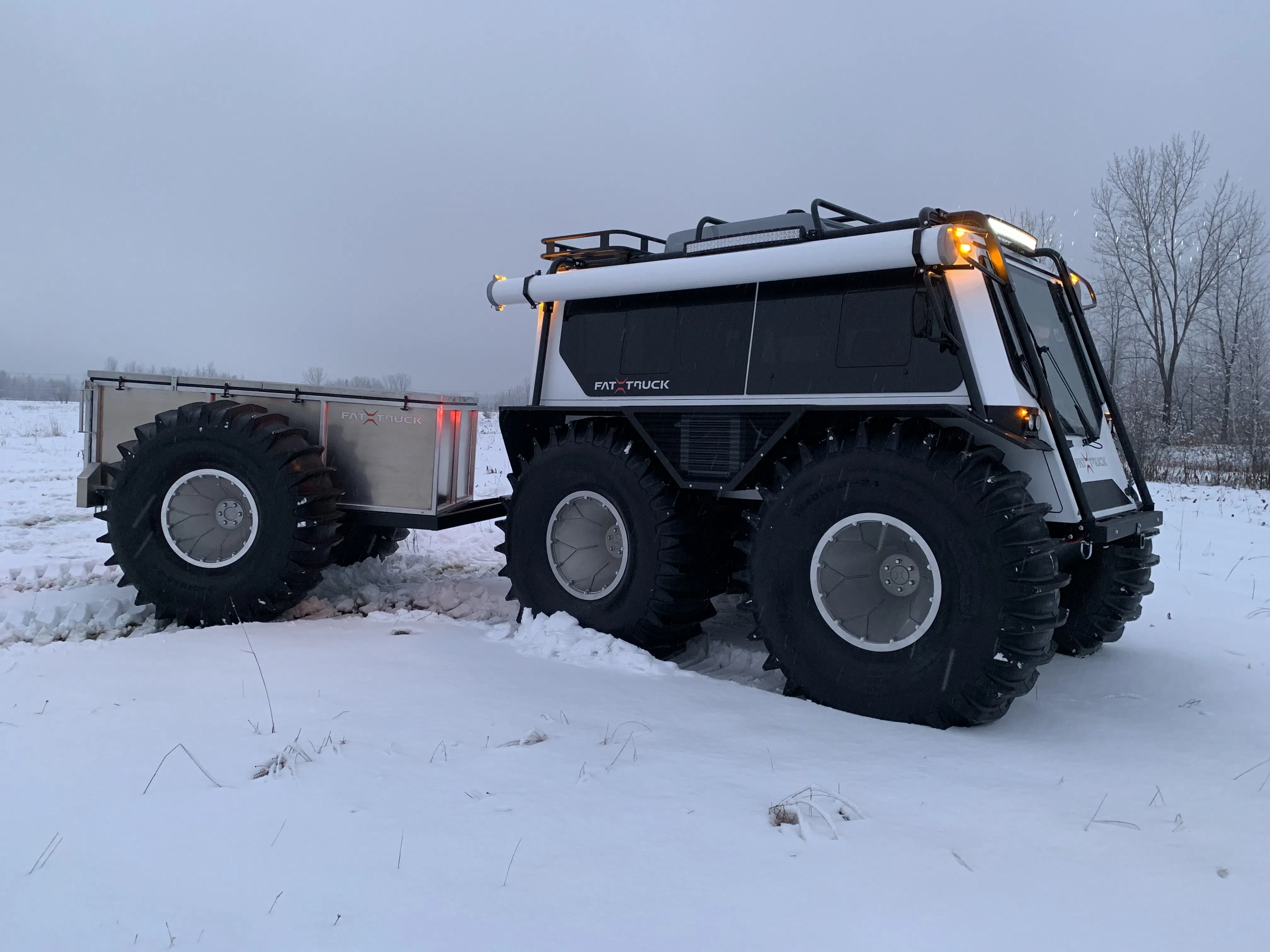
The Fat Truck amphibious trailer works as a payload extender and use-case enhancer for compatible models. It gives crews additional cargo capacity without requiring a larger vehicle for every job. This can be valuable when the main vehicle needs to carry passengers while the trailer carries tools, supplies, pumps, hoses, parts, or job-specific equipment.

The FT2 and FT3 trailer options each offer a 2,200-pound trailer payload and 100.5 cubic feet of internal volume. They use dedicated low-pressure Fat Truck tires and an independent inflation system, which separates them from trailers that depend on the towing vehicle’s exhaust or tire system. Rear and top loading access make the trailer practical for worksite hauling, not just supplemental cargo. For crews that regularly carry tools, materials, and supplies into remote terrain, the amphibious trailer can make the entire setup more productive.


Compatible Models: FT2 and FT3 trailer options available

  • Trailer Payload: 2,200 pounds
  • Internal Volume: 100.5 cubic feet
  • Best For: Worksite hauling, equipment support, utility supplies, environmental tools, and remote cargo movement
  • Configuration Type: Amphibious work trailer
 
FT5 Hauler

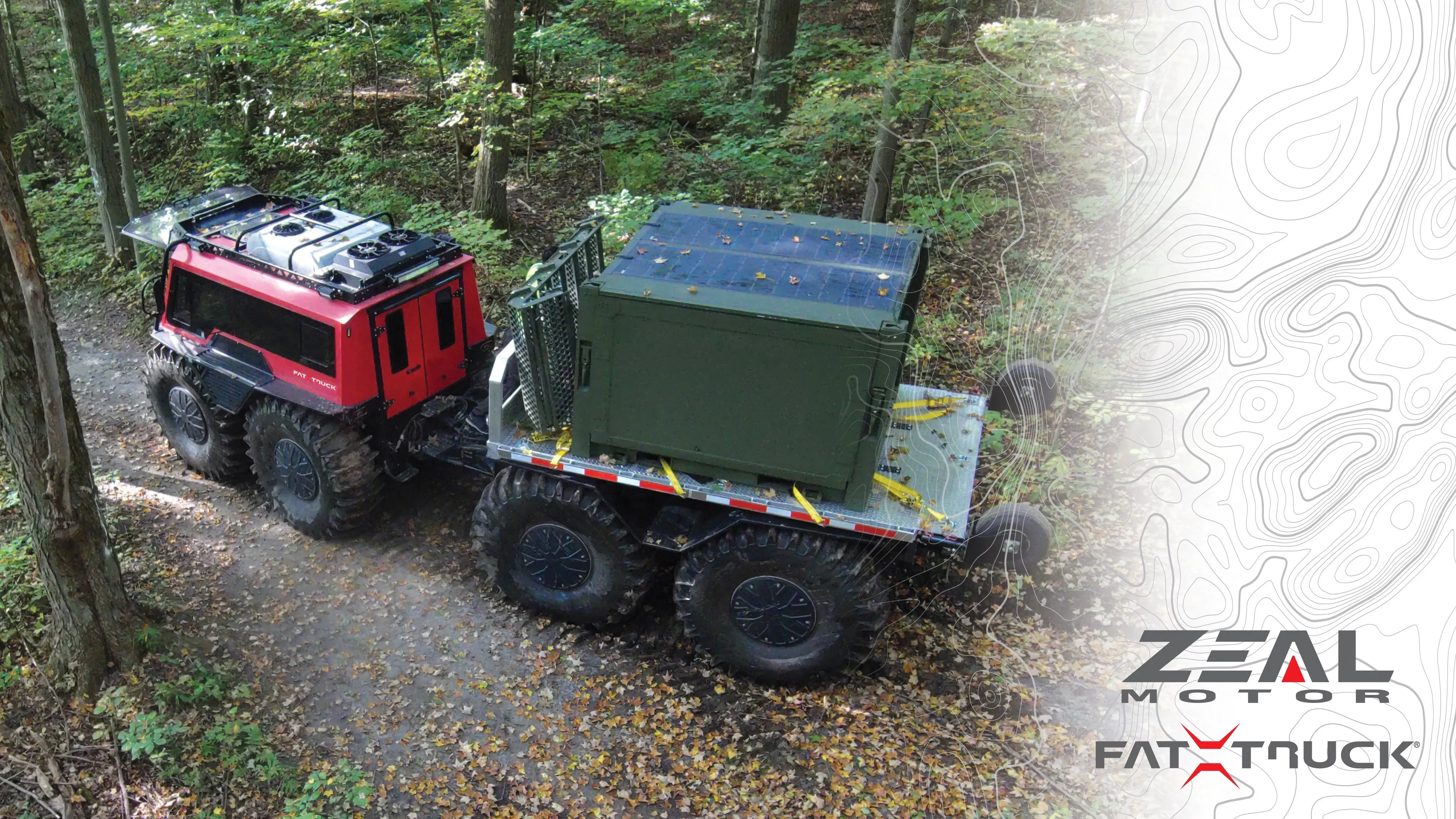
The FT5 Hauler is built for heavier work where the rear unit needs to carry equipment, tools, materials, or specialized systems. The front unit provides enclosed seating for four passengers with heat and air conditioning, while the rear unit is configured as an open bed for hauling. This makes it a practical choice for industrial jobs where payload and work capability are the main priorities.

The FT5 Hauler provides a 1,000-pound payload in the front unit and a 4,000-pound payload in the rear unit. It travels up to 25 mph on land and approximately 3.1 mph on water, depending on operating conditions. The articulated 8-wheel platform gives operators more carrying capacity than smaller models while maintaining amphibious performance. It is often selected for utility projects, heavy field support, remote infrastructure work, and applications involving larger tools or custom systems.


  • Seating Range: 4 passengers in the enclosed front unit
  • Payload Range: 1,000 pounds in the front unit and 4,000 pounds in the rear unit
  • Best For: Heavy hauling, equipment transport, industrial work, utility support, and larger custom configurations
  • Configuration Type: Articulated amphibious hauler
 
FT5 Wagon

The FT5 Wagon is the largest enclosed crew transport option in the lineup. It is designed for organizations that need to move larger teams through extreme terrain while keeping passengers protected inside climate-controlled compartments. With seating for four passengers in the front unit and twelve passengers in the rear unit, it can transport up to sixteen people depending on configuration.

The FT5 Wagon provides a 1,000-pound payload in the front unit and a 3,000-pound payload in the rear unit. It travels up to 25 mph on land and approximately 3.1 mph on water, depending on the terrain, load, and water conditions. This model is a strong fit for large crews, emergency response teams, utility groups, and industrial operations that need a high-capacity amphibious vehicle. When the job requires moving people safely and efficiently instead of making multiple trips, the FT5 Wagon becomes a serious advantage.


  • Seating Range: Up to 16 passengers
  • Payload Range: 1,000 pounds in the front unit and 3,000 pounds in the rear unit
  • Best For: Large crew transport, emergency response, industrial access, utility work, and remote team movement
  • Configuration Type: Articulated amphibious wagon
 

Models by Application

Search and Rescue

Search and rescue teams often need fast access across flooded areas, mud, snow, ice, and unstable terrain. FT3 Wagon and FT5 Wagon configurations are strong options when enclosed crew transport is the priority. The FT2 Pickup may also fit smaller teams that need compact access with enough room for essential rescue gear. For larger response operations, the FT5 Wagon can reduce the number of trips needed to move personnel into the field.

Utility Access

Utility crews need vehicles that can reach poles, lines, substations, right-of-way corridors, and remote infrastructure without getting stuck or creating unnecessary surface damage. The FT3 Pickup is often a practical fit because it combines payload, crew flexibility, and worksite capability. The FT5 Hauler may be better when heavier equipment, tools, or larger custom systems need to be carried. An amphibious trailer can also help crews bring additional parts and supplies without sacrificing passenger space.

Oil and Gas

Oil and gas operations often involve marshes, wetlands, pipeline corridors, and soft-ground access where conventional trucks struggle. FT3 and FT5 configurations are strong candidates because they offer higher payload capacities, amphibious operation, and industrial work capability. The FT5 Hauler is especially useful when equipment, materials, or specialized systems need to move across difficult terrain. For crew movement in harsh environments, wagon configurations add enclosed comfort and protection.

Industrial Transport

Industrial users often need to move people, tools, and equipment into places that are not friendly to road vehicles, UTVs, or standard pickups. The FT3 Pickup gives many teams a flexible middle ground for mixed crew and cargo needs. The FT5 Hauler supports heavier work when payload is the main concern. The FT5 Wagon fits larger teams that need enclosed transportation across long or difficult access routes.

Recreation and Remote Property Access

Although Fat Truck is designed for real work, some buyers also evaluate it for remote access, land management, hunting property support, and extreme-terrain transportation. The FT2 Pickup may be the most practical fit for smaller private-property needs because it is compact, capable, and easier to justify for lighter use. The FT3 Pickup adds more payload and seating flexibility for property owners or organizations that carry more gear. Rental availability may also help buyers test whether a Fat Truck is the right long-term solution.

Demo, Rental, or Purchase?

A demo is the right next step when your team needs to evaluate performance before making a decision. During a demo, the focus can be shaped around real-world needs such as terrain handling, maneuverability, amphibious operation, payload use, crew movement, and attachment planning. Free demos are available at Wetland Equipment’s location, while on-site demos may be available for a fee. This is often the best path when buyers are comparing Fat Truck models against UTVs, tracked equipment, boats, marsh buggies, or other amphibious off-road vehicle models.

A rental is the better fit when the need is short-term, seasonal, emergency-based, or project-specific. Wetland Equipment maintains a rental fleet and can support equipment needs across the continental United States. Rentals can also help teams understand how a Fat Truck performs before committing to a purchase. Rental payments may be applied toward purchase if the rental is converted, which gives buyers more flexibility when the long-term need becomes clearer.

A purchase makes sense when the vehicle will be used repeatedly or when access problems are affecting project cost, safety, scheduling, or equipment planning. Fat Truck models can reduce trips, limit the need for multiple machines, and support modular systems for different applications. Standard configurations are often available in stock, while units with additional factory options may require lead time. For organizations that regularly operate in remote terrain, owning the right model can turn a recurring access problem into a predictable part of the work plan.
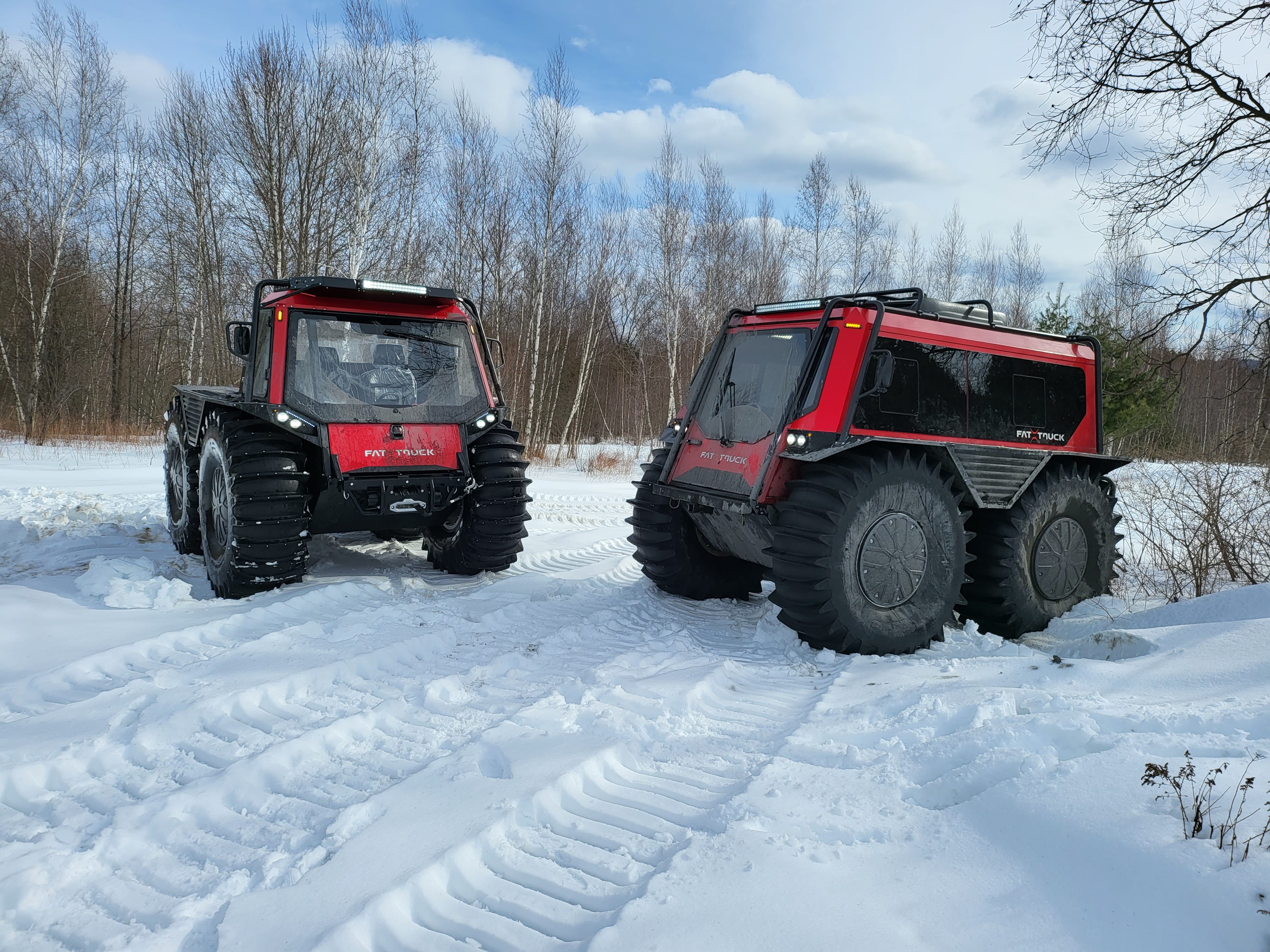
Two red Fat Trucks sitting in the snow

Not Sure Which Fat Truck Fits Your Needs?

Choosing between FT2, FT3, FT5, pickup, wagon, hauler, and trailer configurations is easier when the conversation starts with your actual job site. Crew size, payload, terrain, water conditions, attachments, transport needs, and frequency of use all shape the right recommendation. A compact Fat Truck may be perfect for one project, while another job may call for enclosed crew transport, heavy hauling capacity, or a trailer-supported setup.

Wetland Equipment can help you compare Fat Truck models, review rental availability, and decide whether a demo, rental, or purchase makes the most sense. If you already know your application, the next step is to match the model to the work. If you are still narrowing down your options, a demo can make the differences clear.

Get The Job Done.

Tell us about your terrain, crew size, payload needs, or project timeline, and our team will help you find the right Fat Truck solution. Whether you need pricing, rental availability, demos, used inventory, or custom configurations, we’re ready to help.


Contact Sales

Collecting information: We only collect information that you provide us through the "contact us online" form or directly through other means. Sharing Personal Information: We will not share any information directly received from you, whether by SMS text or any other means, with third-party affiliates without your permission.