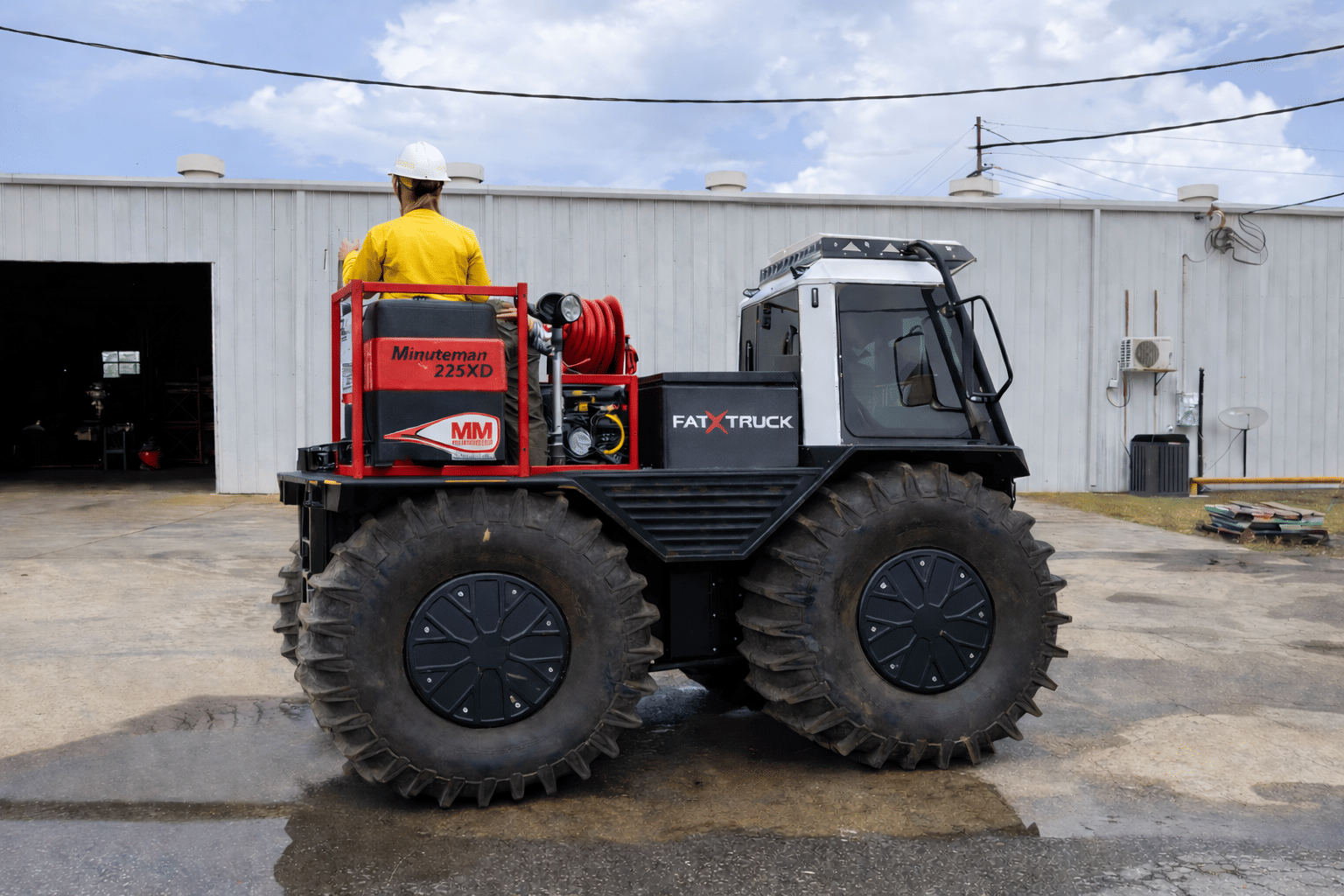
Amphibious Fire Suppression Vehicle for Remote and Wet Terrain

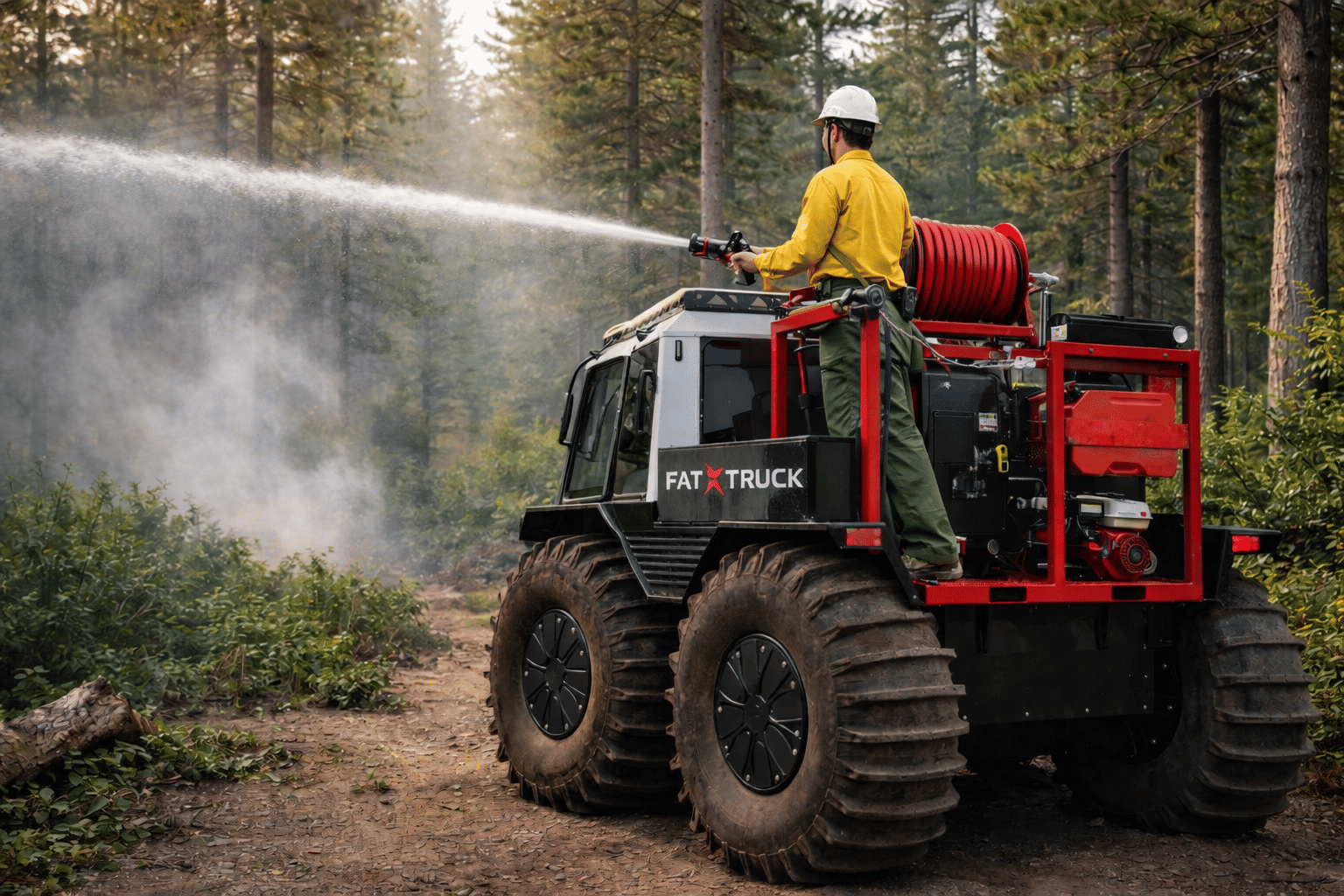
Fires do not always start somewhere crews can easily drive to. Brush, marsh, and undeveloped areas can burn well beyond the last road, with soft ground, standing water, or thick vegetation making access even harder. In those situations, responders may have to cover the distance on foot while carrying as much gear as they can. Fat Truck amphibious vehicles give crews another option, carrying firefighters and mounted suppression equipment across difficult terrain and closer to the fire instead of leaving everything staged back at the road.

The Access Problem in Search and Rescue

Early access decides how much ground a fire covers. In wetlands, marsh, river bottoms, and undeveloped brush, the distance between a passable road and the fire edge can run a few hundred yards over ground that won't carry weight. Engines stage where the surface ends, so crews walk in with hand tools and whatever hose they can drag, and the equipment that would make the most difference stays on the truck.

Seasonal conditions make that harder to plan around. Ground that held a truck in August can be standing water in March, and a burn that starts in dry brush can spread into flooded terrain inside the same operational period. What these environments ask for is a platform that doesn't have to stop at the transition.

Access is the constraint the whole Fat Truck application range is built around, and fire response shows it as plainly as anything. The machine floats and propels on its own low-pressure tires, so a route that crosses dry ground, mud, and open water in sequence becomes one drive instead of three separate staging problems.

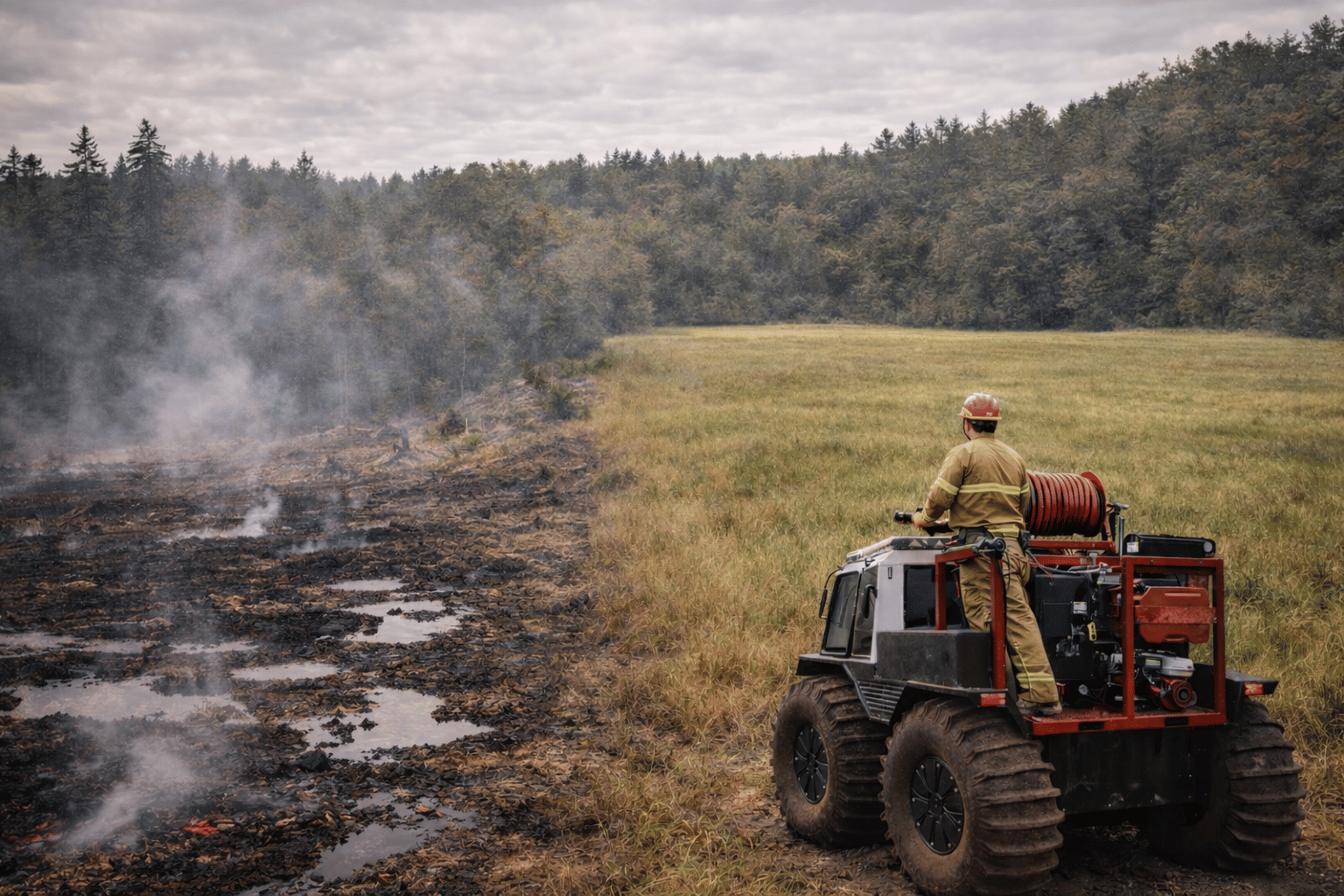
Fat truck parked near burnt grass after a wild fire
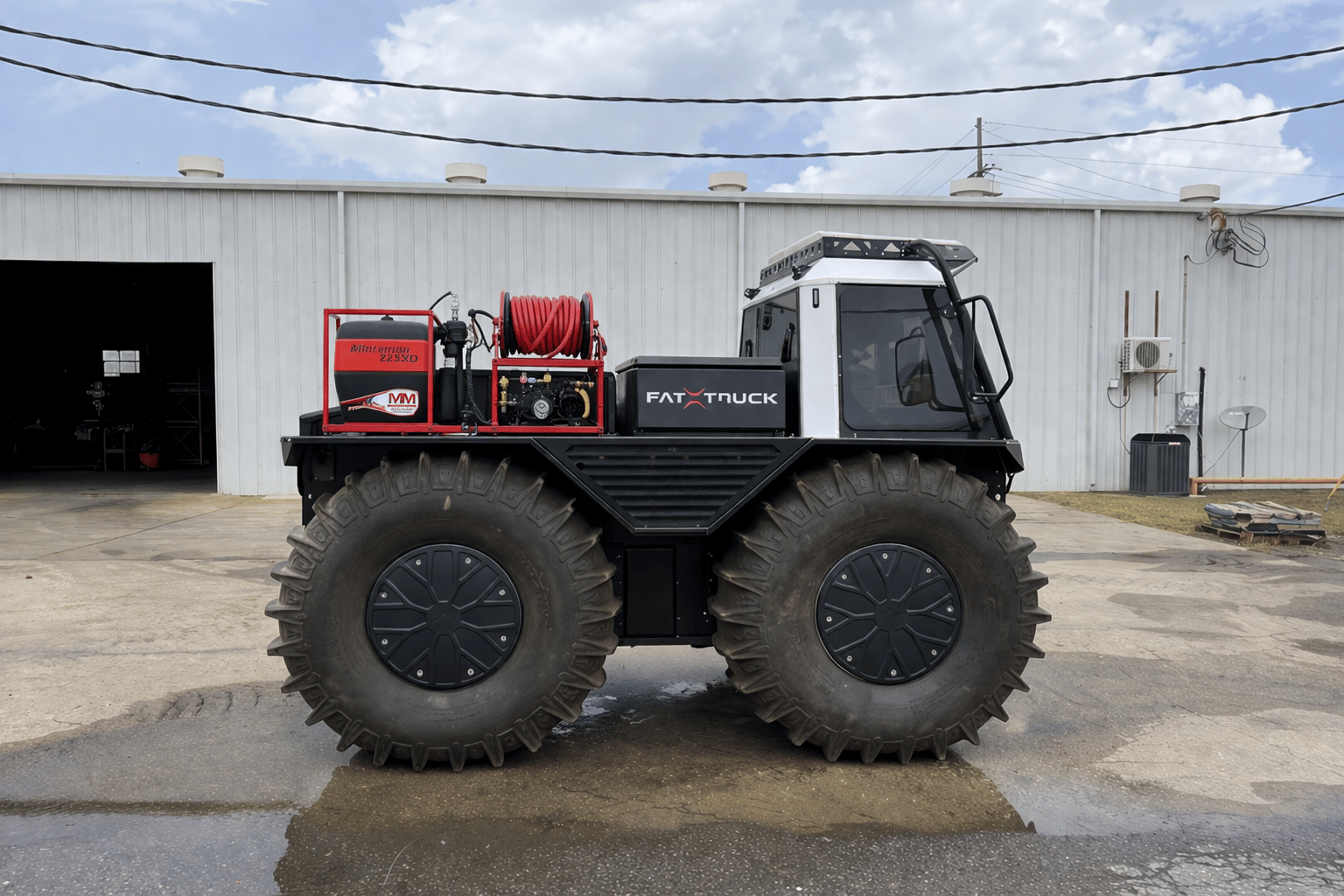
Fat Truck FT3 Trailer sitting in parking lot

Why Conventional Fire Equipment Falls Short

A fire apparatus is designed to carry a lot of weight, move plenty of water, and get down the road quickly. Those same qualities become a problem once the ground turns soft, muddy, or flooded. A fully loaded engine puts a huge amount of weight on a relatively small footprint, so it does not take much for one to sink or get stuck. Brush trucks and skid units can reach farther off-road, but they still need ground firm enough to support a conventional vehicle.

Tracked machines do better in soft terrain, but they come with tradeoffs. They are slower, usually need a lowboy for transport, and are not always built to carry a full crew. Boats work well on the water but stop being useful at the shoreline, while ATVs can get into tight places but run out of payload quickly once tanks, pumps, and other gear are added.

A lot of the time, the problem is not that a department lacks the right firefighting equipment. It is that there is no practical way to get that equipment close enough to the fire. A support platform fills that gap by carrying responders and mounted gear across difficult ground, allowing departments to use the equipment they already have where it is actually needed.

Fire Suppression

Fire Suppression Applications

Fire work in these environments falls into a few recurring patterns, and each one turns on the same question: whether a crew and its equipment can get within working distance before the fire grows.

Wildland and Brush Fire Response

Brush fires in undeveloped land often start well beyond road access and spread through terrain that changes as it burns. A Fat Truck configured for suppression carries a crew and mounted equipment across soft ground and standing water to the fire edge, then gives them something stable to work from once they're there.

Wetland and Marsh Fire Suppression

Marsh fires burn on ground that won't hold a conventional chassis. Fully loaded, a Fat Truck runs at 1.6 to 2.0 psi, which is the weight it puts on each square inch beneath it. A 200-pound person standing on one foot exerts roughly 2.6 psi, so the machine works marsh that wouldn't hold a firefighter on foot.

Remote Industrial and Municipal Support

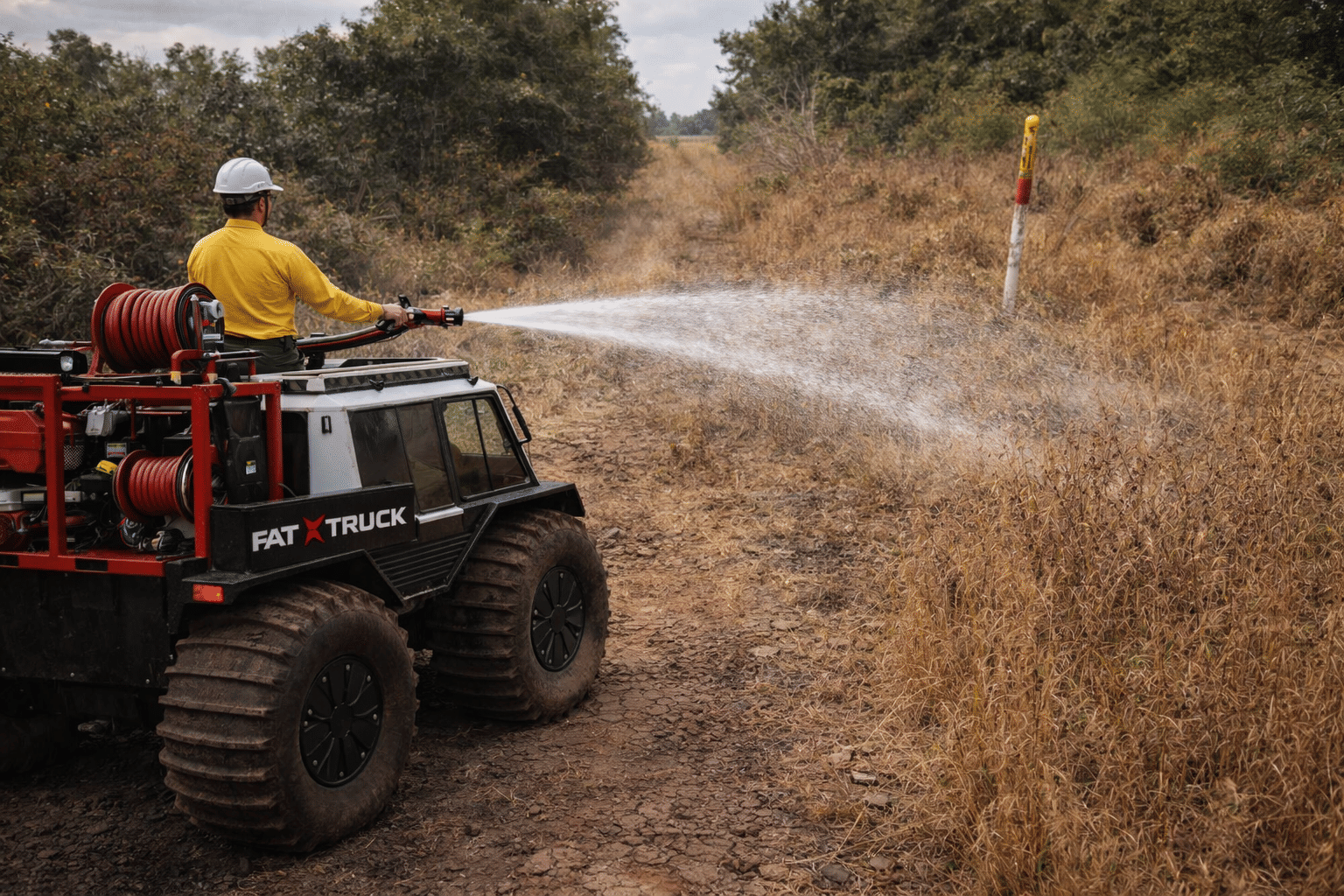
Pipeline corridors, utility right-of-way, and outlying municipal districts all include ground fire apparatuses can't cross. Industrial safety teams and responding departments use these machines to reach those areas with crew and equipment together, which counts for most in the early stage of an incident.

Choosing a Configuration for Fire Response

Model choice comes down to how many people ride and how much the machine carries once equipment is mounted. The FT3 Pickup seats up to eight and carries 3,000 pounds on land, which suits a crew plus a mounted suppression package. The FT5 Hauler is an articulated eight-wheel machine, one vehicle rather than a towed unit, seating up to sixteen and carrying 1,000 pounds on the front unit and 4,000 on the rear, which is what you look at when equipment weight rather than crew size sets the limit. For four-person teams and lighter setups, the FT2 Pickup covers the work.

Water is heavy, so payload governs a fire build more than any other figure. Wetland Equipment fabricates and fits its own suppression mounting with exclusive part numbers rather than reselling stock arrangements, which lets a configuration start from a department's requirement instead of a catalog. Bring the tank, pump, and hose specifications you actually work with, and the build gets designed around them. Departments covering a season rather than a permanent need can look at rentals, which run on a one-month minimum.

Fire suppression system installed on a FT3 Puckup being used to put out a fire

Built for Crews Working an Incident

Fire response puts equipment in front of people working under pressure, often at night and often tired, so how the machine handles matters as much as what it carries. Control is by joystick with hydrostatic drive, and most operators are moving one confidently within minutes. Wetland Equipment provides a full eight-hour training session, which lets a department qualify its own people rather than depending on one trained operator.

The cab is enclosed and climate controlled. Seating includes an ISO-certified rollover protective structure, known as ROPS, with belts at every seat. Engines meet Tier 4 Final and Stage V emissions standards, the current requirements in North America and Europe, and that's frequently a condition of government purchase. Noise stays below 85 dBA, so a crew can talk without shouting over the machine, and every door opens while it's fully floating.

Fuel supports roughly twelve hours under moderate load. On the FT3 and FT5 there aren't any belts, chains, or drive shafts, which cuts routine service to engine oil, hydraulic oil, and air filters on a 250-hour or annual interval.

Put a Machine on the Ground You Actually Respond Across

Wetland Equipment is the exclusive Louisiana Fat Truck dealership with nationwide sales, backed by 283 combined years of experience across its top fifteen craftsmen. Book a demo to watch a machine cross the ground between your last hard surface and the fire edge, and bring the tank, pump, and hose requirements from a real incident so the configuration conversation starts from your own operation rather than a spec sheet. Request a quote once the build is clear. Standard configurations are often in stock, and custom builds run six to eight weeks.

Frequently Asked Questions

  • Yes, in a support role. Fitted with suppression equipment, it moves crews and mounted gear into terrain that fire apparatuses can't reach and gives them a stable platform to work from once they arrive. It's best thought of as the machine that gets your people and equipment to the fire, not a replacement for an engine. Talk to the sales team about the role you need it to fill.

  • Suppression and spray attachments are both available, and they're fabricated and fitted to the machine rather than sold as fixed stock arrangements. How much you can carry depends on the model, with payload running up to around 3,000 pounds on an FT3 and up to 4,000 pounds on the rear unit of an FT5. Bring your tank, pump, and hose requirements to the sales team and they'll confirm what a given model supports.

  • Yes. Every Fat Truck is purpose-built amphibious, floating and driving itself on low-pressure tires instead of needing a ramp or a launch, so it moves from dry ground into standing water without a transition. Moving current does reduce control, so it's worth walking through specific site conditions with the team before you plan a water operation.

  • Four in an FT2 Pickup, up to eight in an FT3, and up to sixteen in an FT5. The FT5 is a single articulated eight-wheel machine across its two units, not a vehicle towing a trailer.

  • On a standard deck-over trailer behind a three-quarter-ton truck. At roughly 100 inches wide it doesn't need special permits, and loading with ramps or a tilt trailer takes under fifteen minutes.

  • Yes. Demonstrations at the Wetland Equipment facility in Louisiana are free, and on-site demonstrations at your own location can be arranged for a fee.

Get the Right Setup for the Ground You Need to Reach

Every department deals with different terrain, crew needs, and response challenges, so the right setup depends on where and how you expect to use it. Wetland Equipment can help you work through vehicle size, crew capacity, suppression equipment, and any custom mounting or fabrication the job requires. Whether you are trying to reach marsh, flooded ground, remote brush, or areas beyond the road, the goal is to build a configuration that works with the equipment and response plan you already have. Contact the team in Louisiana to talk through your needs, schedule a demo, or start putting together a Fat Truck package for your department.

Request a Demo With Wetland Equipment

The best way to evaluate off-road spraying equipment is to see how the platform works in real terrain. A Fat Truck demo gives your team the opportunity to review mobility, stability, payload options, and spraying system configurations based on the environments you need to reach. Wetland Equipment can help you discuss tank capacity, pump needs, hose reel placement, operator workflow, and the type of terrain your crews face most often. That conversation helps turn a general equipment search into a practical configuration for your application.
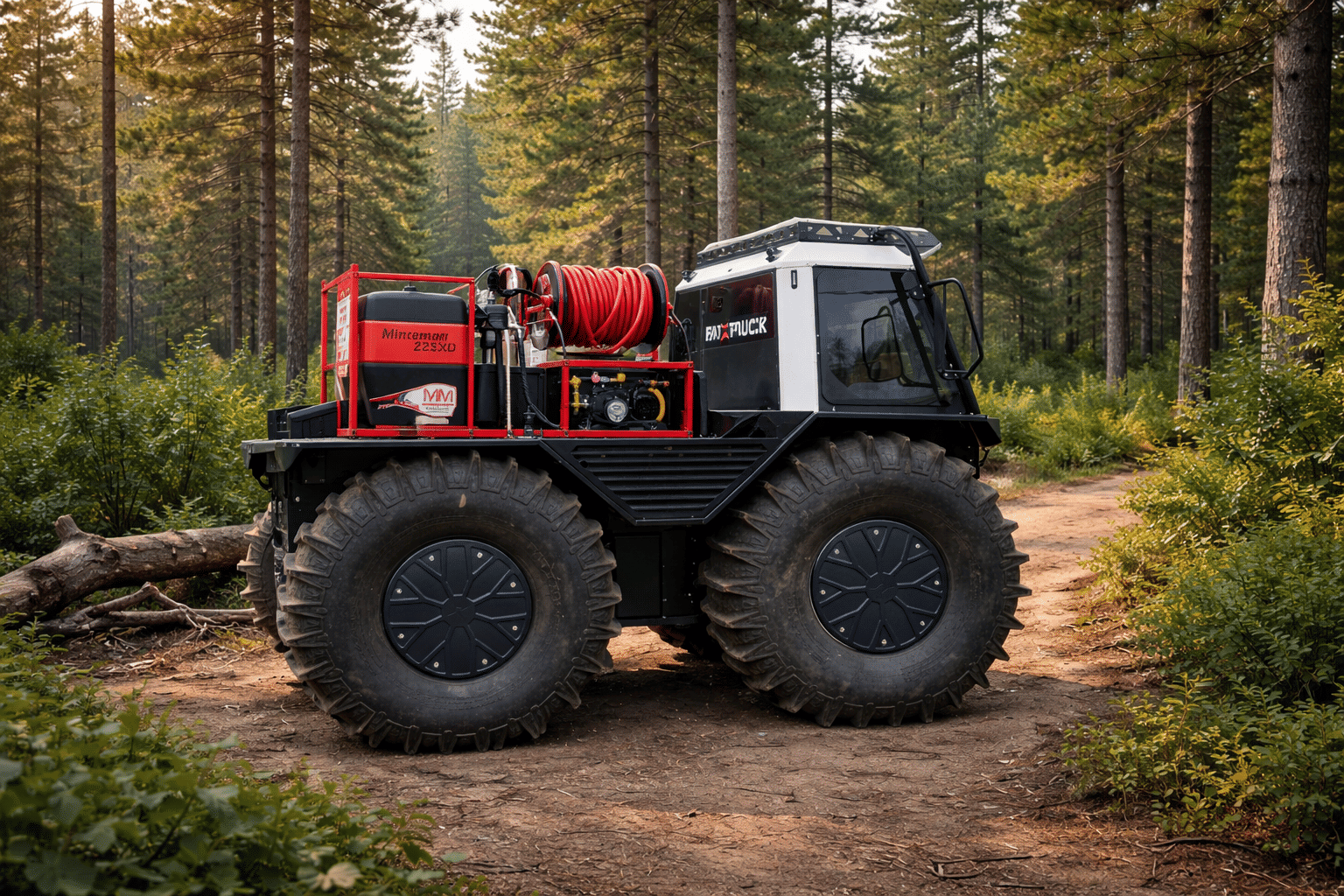
FT3 Pickup parked in forest area preparing for a job