Amphibious Search and Rescue Vehicle for Remote and Off-Road Terrain

Search and rescue work often comes down to the last half mile. A missing hiker, an overdue hunter, a downed aircraft, or a stranded family after a storm can all sit somewhere a truck cannot reach and a boat cannot launch. Fat Truck is a purpose-built amphibious vehicle that floats and propels itself on low-pressure tires, so a crew can cross soft ground, standing water, and rough terrain on one platform. Wetland Equipment configures these machines for the agencies that respond in that country.

The Access Problem in Search and Rescue

Rescue work is rarely limited by the crew. In most cases the limiting factor is the terrain between the staging area and the subject: marsh, swamp, sand, cutover timber, canal banks, snow-covered logging roads, and unimproved trails that stop wheeled apparatus well short of the search area. A team that has to leave its equipment behind and continue on foot loses both time and the ability to carry a patient back out.

These conditions turn up for fire departments, sheriff’s offices, wildlife and parks agencies, drainage districts, industrial emergency teams, and volunteer rescue squads. Some of those calls are storm and flood events, where roads disappear under water for days at a time. Many are not. A backcountry search, a rescue on a barrier island, an injured worker at the far end of a pipeline right-of-way, and a body recovery in a remote marsh all present the same underlying problem: the subject is somewhere the vehicle fleet was never designed to go.

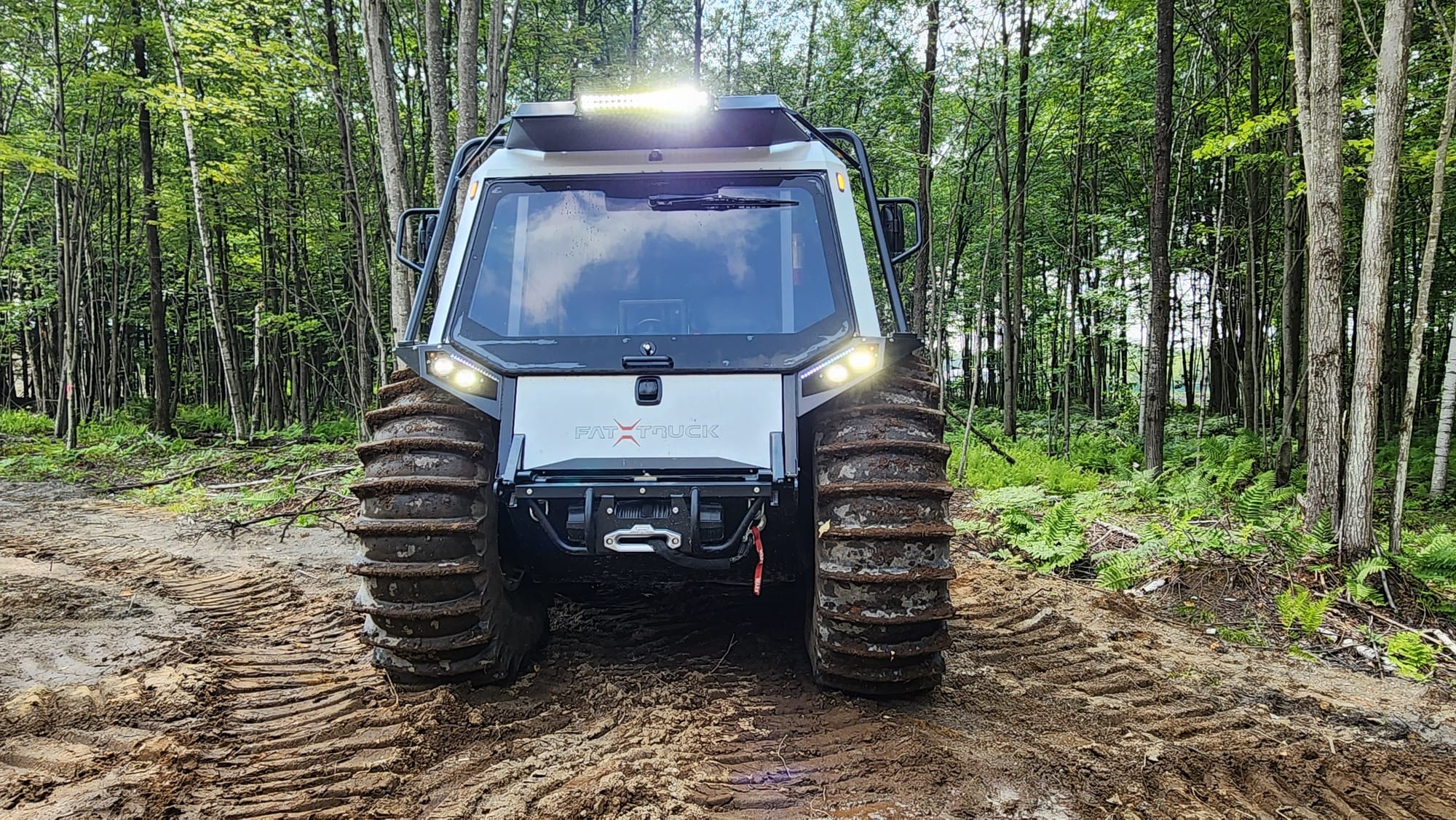
FT3 parked with the lights on in a wooded area, preparing for a rescue
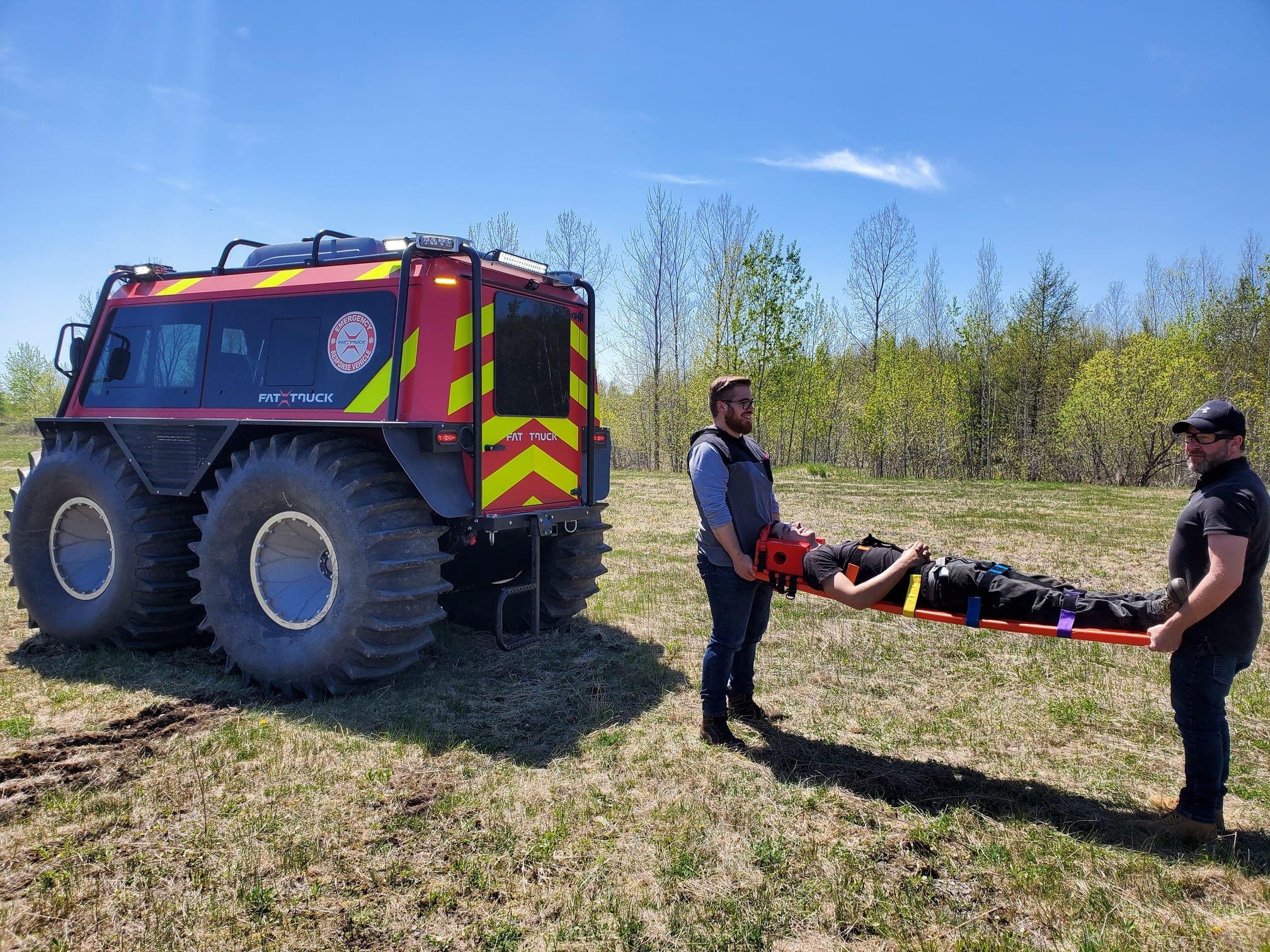
Rescue trainer standing next to Fat Truck as he conducts a field training operation

Why Conventional Rescue Equipment Falls Short

Most response equipment is built around an assumption about the route. Pickups and brush trucks need ground firm enough to carry axle weight. Boats need water deep enough to float a hull and a place to launch. Airboats move well across shallow water, though they are loud, they carry limited crew, and they are awkward to work from once a patient has to come aboard. Tracked machines cross soft ground, but many cannot enter open water at all. All-terrain vehicles reach further than a truck while carrying very little, which means a second trip for equipment or personnel.

The practical result is a fleet that hands a rescue off between platforms, and every handoff costs time. A crew stages at the edge of the ground it can drive, transfers gear, then covers the remainder on foot or in something that carries two people. Terrain also changes during a callout, whether from a rising tide, a thaw, or simply moving from a sand ridge into standing water. For an incident commander, the question is not whether a machine performs in its element. It is whether one machine can carry a crew and its equipment across everything between the road and the subject.

Search and Rescue

Search and Rescue Applications

Fat Truck gives response teams a single amphibious platform for terrain that normally requires several. Ground pressure runs from 1.6 to 2.0 psi fully loaded, which is the weight the machine places on each square inch beneath it. A 200-pound person standing on one foot exerts roughly 2.6 psi, so the machine crosses saturated ground that will not hold a searcher on foot.

Remote and Backcountry Searches

Marsh, dune, cutover timber, and unmaintained trail systems defeat most vehicles long before a search grid is finished. An enclosed, climate-controlled cab lets a team stay out for a full operational period, and fuel capacity supports roughly twelve hours of moderate-load running.

Water Access and Recovery

The machine floats and drives on its tires with no launch ramp required, and every door opens while it is fully floating. A crew can bring a patient through a door at water level rather than lifting over a gunwale, which matters when the person cannot assist.

Storm and Flood Response

When roads go under, the route to a subject becomes a mix of pavement, current, and submerged obstacles. One machine carries responders and evacuees across that transition in a single trip, without a handoff between a truck and a boat at the water line.

Choosing a Configuration for Response Work

Crew capacity usually drives the decision. The FT3 Wagon carries up to eight responders and runs at 1.6 psi, which suits a department deploying a single company. The FT5 Wagon is an articulated eight-wheel machine, one vehicle rather than a towed unit, and it carries up to sixteen, which fits mutual-aid deployments and extended searches that rotate personnel through a grid.

Both can be equipped for the work rather than adapted to it. Ambulance, search and rescue, and water rescue configurations are available, along with cranes and aerial lifts on the FT5. Wetland Equipment builds its own modifications with exclusive part numbers, so a department that needs particular litter space, pump capacity, storage, or lighting is not held to a stock dealer configuration.

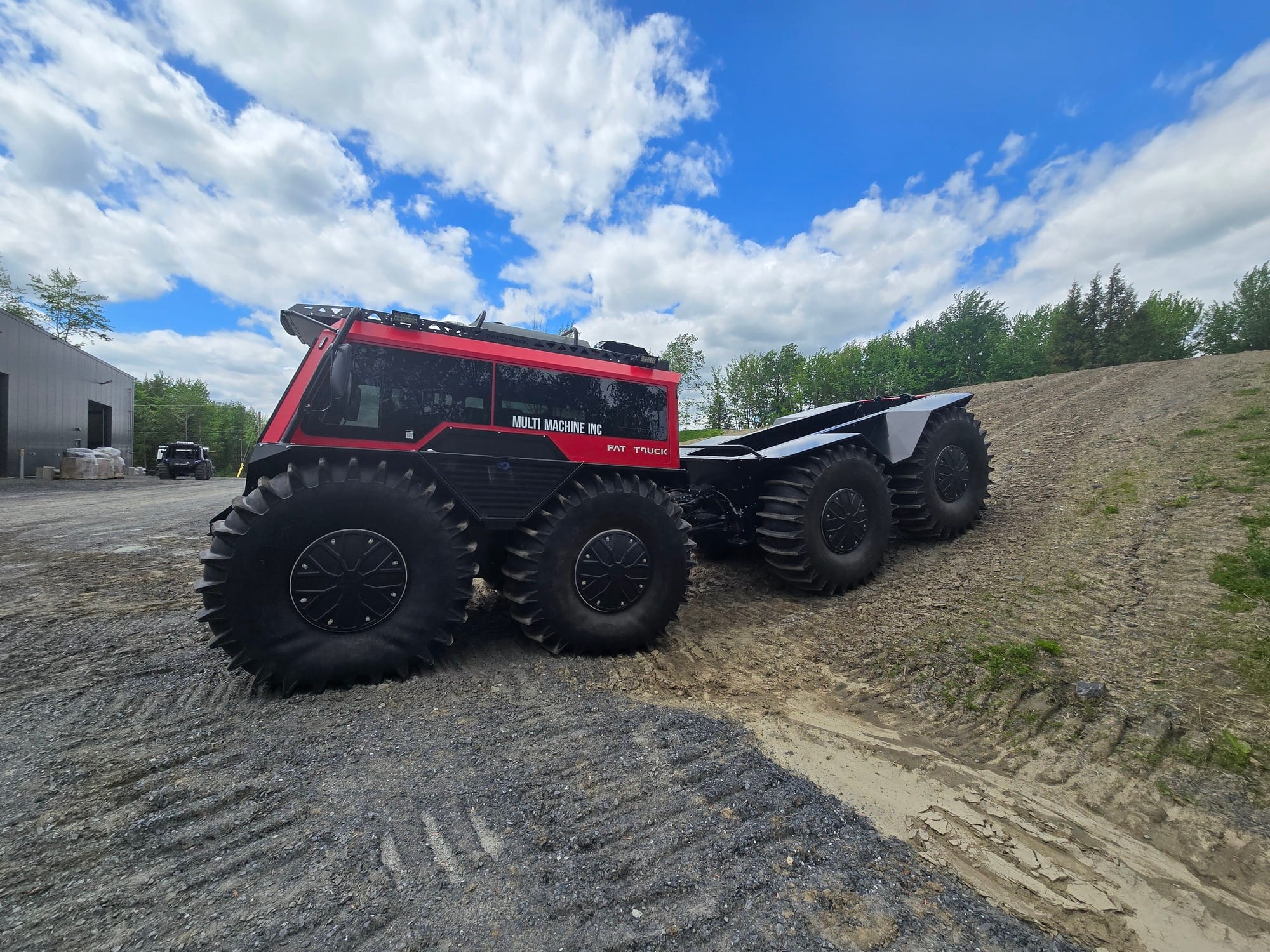
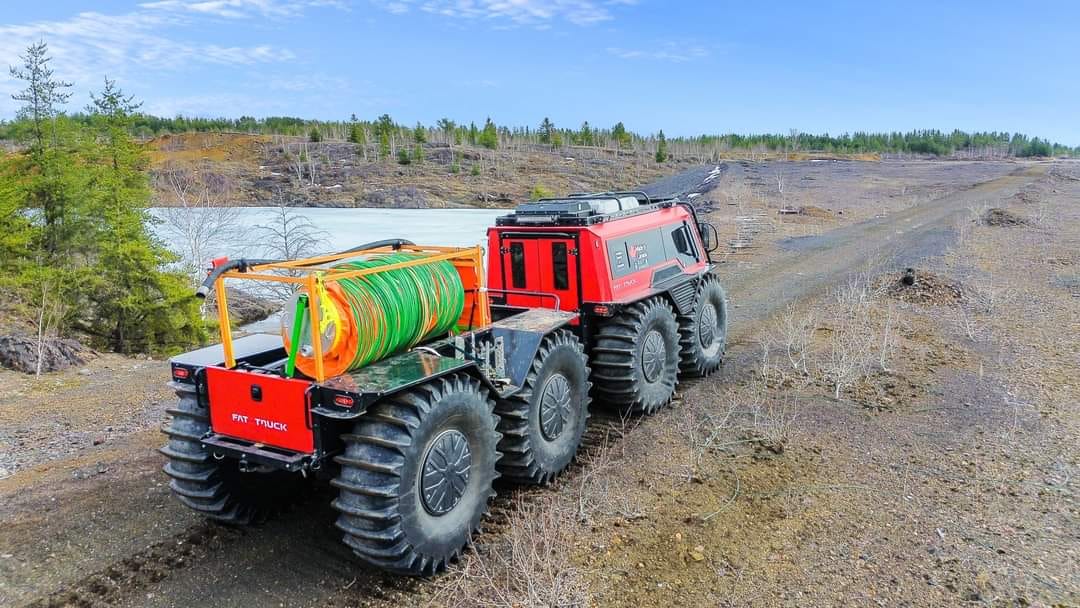
Orange Fat Truck with trailer hauling equipment as it moves along a muddy dirt terrain

Built for Crews Who Have to Operate It Under Pressure

Response equipment gets used by whoever is on shift, which makes operation and upkeep part of the specification. Control is by joystick with hydrostatic drive, and most operators are moving the machine confidently within minutes. On the FT3 and FT5, tire pressure adjusts from a push button in the cab with presets, so an operator can set the machine up for sand, soft ground, or firm trail without leaving the seat. Wetland Equipment provides a full eight-hour training session with the machine, along with service and parts support anywhere in the continental United States.

The safety and compliance details matter for public agencies. Seating includes an ISO-certified rollover protective structure, known as ROPS, with seat belts at every seat, and the machine handles roughly 35 degrees of climb and descent and 22 degrees of side slope. Engines meet Tier 4 Final and Stage V emissions standards, which is frequently a condition of government purchase. Noise stays below 85 dBA, so a crew can communicate without shouting over the machine. Braking engages automatically, and beacons, backup cameras, and electronic inclinometers with alarms are available.

Frequently Asked Questions

  • Yes. The machine is purpose-built amphibious, floating and propelling itself with its low-pressure tires rather than requiring a launch ramp. Every door opens while it is fully floating, which allows a crew to work at water level. Moving current does reduce control, so discuss specific site conditions with the Wetland Equipment team before planning a water operation.

  • The FT3 Pickup and Wagon carry up to eight, with 3,000 pounds of payload on land and 2,200 pounds on water. The FT5 Wagon carries up to sixteen across its two articulated units. The FT2 Pickup carries four, with 2,000 pounds on land.

  • Control is by joystick with hydrostatic drive, and operators typically learn the basics within minutes. Wetland Equipment provides a full eight-hour training session so a department can qualify its own personnel rather than depending on one trained operator.

  • It loads on a standard deck-over trailer behind a three-quarter-ton truck. At roughly 100 inches wide it requires no special permits, and loading with ramps or a tilt trailer takes under fifteen minutes.

  • On the FT3 and FT5 there are no belts, chains, or drive shafts, which reduces routine service to engine oil, hydraulic oil, and air filters. Fuel capacity supports a full working day, roughly twelve hours under moderate load.

  • Yes. Ambulance, search and rescue, and water rescue configurations are available, and Wetland Equipment fabricates its own modifications rather than ordering stock arrangements. Bring the requirement and the team will build to it.

Talk to the Team About Your Response Terrain

Fat Truck machines are backed by a company with 283 combined years of experience across its top fifteen craftsmen, and Wetland Equipment is the exclusive Louisiana Fat Truck dealership with nationwide sales. Book a demo to see the machine cross the country your calls actually take you into, and to work through the configuration that fits your crew size, equipment, and response area.

Request a Demo With Wetland Equipment

The best way to evaluate off-road spraying equipment is to see how the platform works in real terrain. A Fat Truck demo gives your team the opportunity to review mobility, stability, payload options, and spraying system configurations based on the environments you need to reach. Wetland Equipment can help you discuss tank capacity, pump needs, hose reel placement, operator workflow, and the type of terrain your crews face most often. That conversation helps turn a general equipment search into a practical configuration for your application.
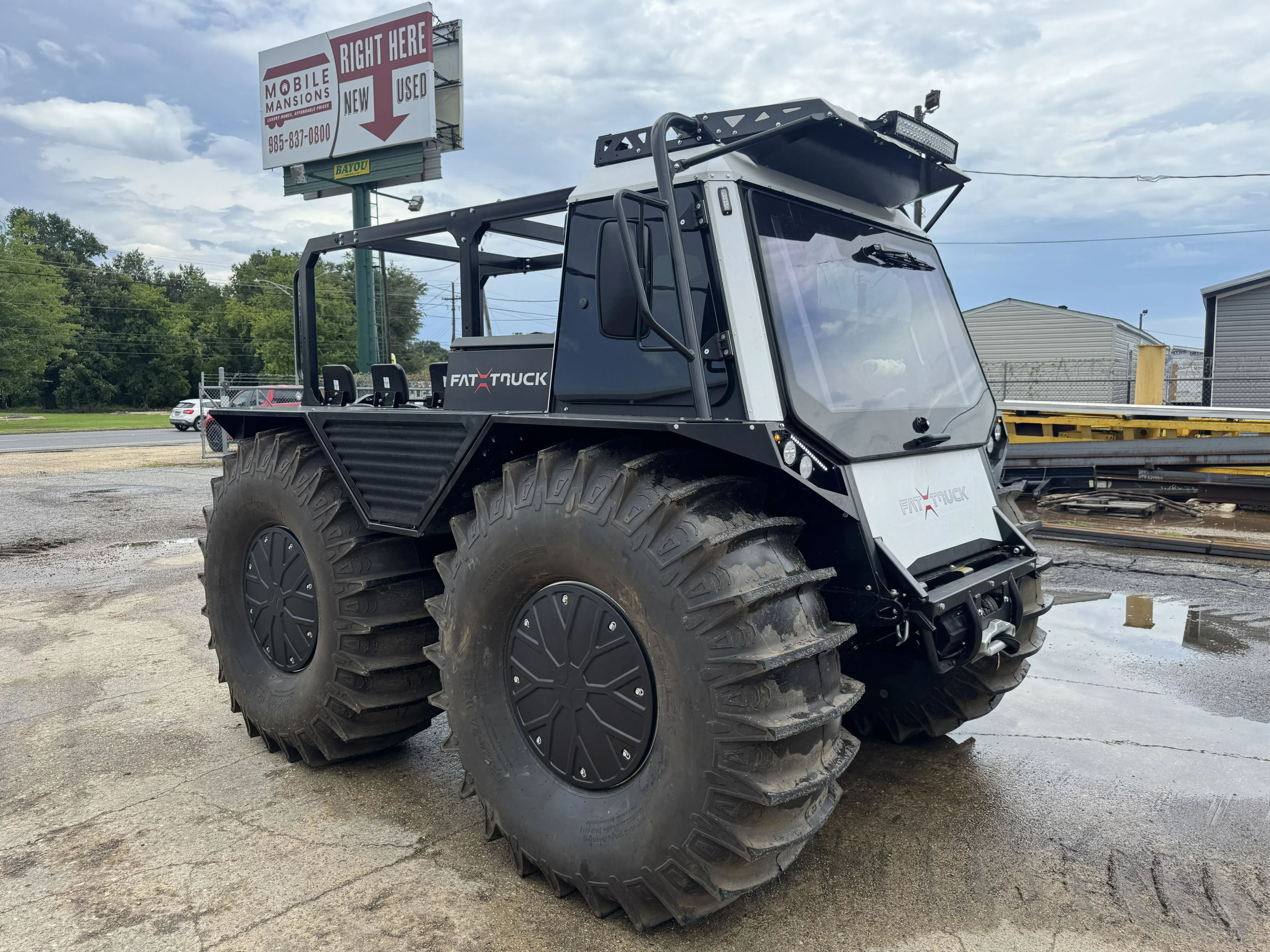
White Fat Truck sitting in lot for viewing