

Fat Truck vs Sherp: Comparing Two Amphibious Platforms
We'll Get You There
Which Amphibious Vehicle Is Built for Real Work?
Both Fat Truck and Sherp operate where conventional vehicles cannot. But when your operation depends on moving crews, tools, and equipment efficiently day after day, the differences between these two platforms matter a great deal. This comparison lays out the real numbers, the real tradeoffs, and the real-world situations where each machine belongs, so you can make a confident decision before you buy or rent.
Model
Comparison Overview
Trailer Comparison
See FT5 Spec Sheet for more information.
Core Design Differences
Sherp was designed to get through terrain. Fat Truck was designed to get work done in it. That single distinction explains nearly every difference between these two platforms.
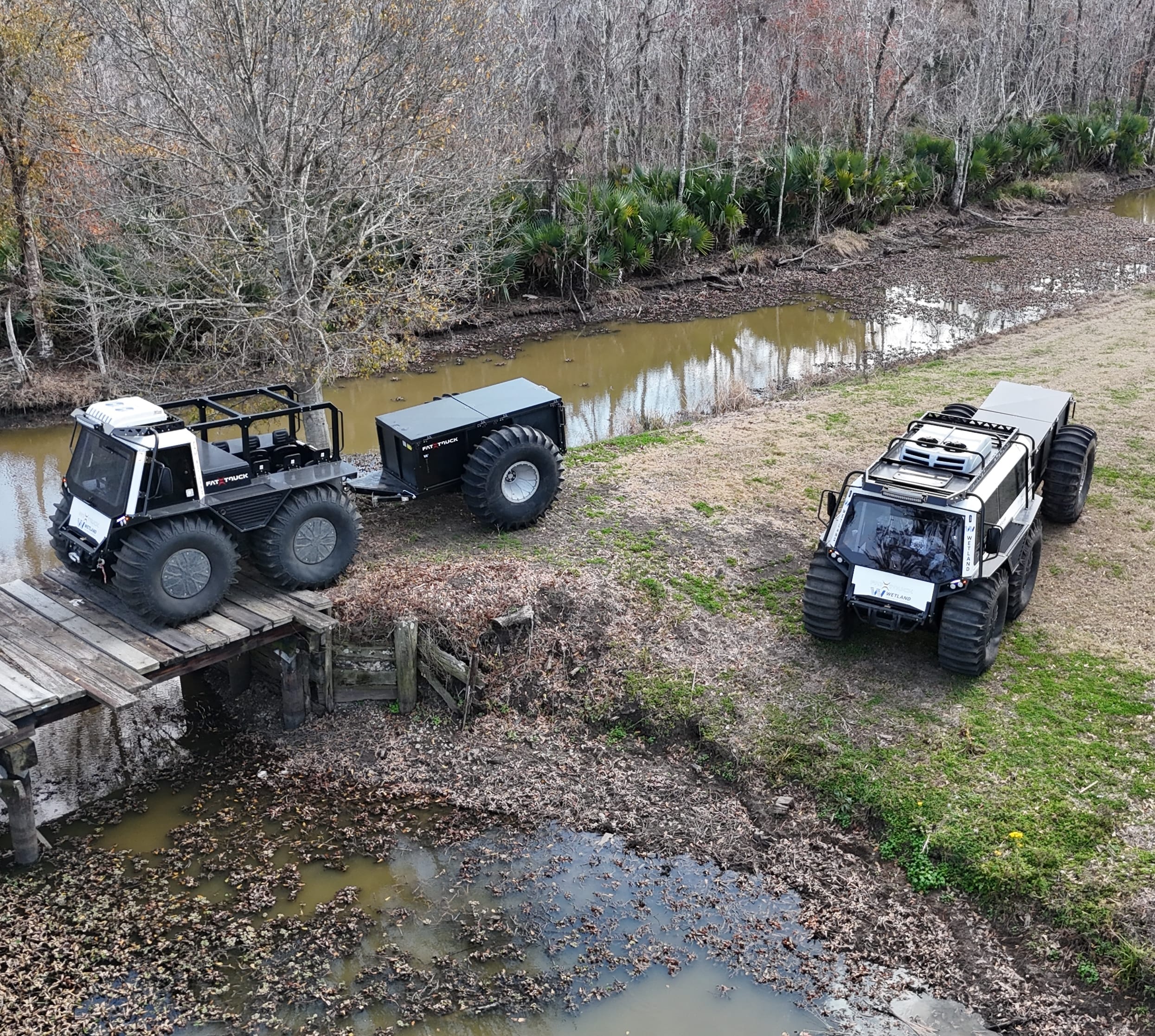
Fat Truck is a wheeled amphibious work platform built around payload, crew transport, and daily industrial productivity. Every design decision, from the hydrostatic drivetrain to the enclosed climate-controlled cab to the attachment-ready pickup bed, points toward one goal: putting your crew and equipment where they need to be, safely and efficiently, every single day.
Sherp is an ultra-low-speed amphibious platform built for extreme flotation and obstacle crossing. It excels at traversing the most severe terrain conditions at low speed. What it does not offer is the payload range, crew capacity, operator comfort, or configuration flexibility that most commercial and industrial operations require.
If your team works in the field regularly and needs a machine that earns its keep on every shift, the design philosophy of Fat Truck is built for you.
Where Fat Truck Performs Best
For utilities, pipeline contractors, oilfield operators, wetland managers, municipalities, and emergency responders, Fat Truck is the machine that fits the way real operations run.

Speed that keeps your schedule.
At 25 mph on land and approximately 3.1 mph on water, Fat Truck moves your crew between locations without wasting half the day in transit. Sherp tops out at 15 to 18 mph on land, which adds up to significant lost time across a full work season.
Speed that keeps your schedule.
At 25 mph on land and approximately 3.1 mph on water, Fat Truck moves your crew between locations without wasting half the day in transit. Sherp tops out at 15 to 18 mph on land, which adds up to significant lost time across a full work season.
Crew capacity that changes the math.
The FT3 carries up to 8 passengers. The FT5 Wagon carries up to 16. Sherp carries up to 9. For any operation running a full crew, Fat Truck often eliminates the need for a second vehicle entirely.
A machine that does more than transport.
The FT3 Pickup accepts a full range of jobsite attachments including flail grass cutters, herbicide sprayers, fire suppression systems, backhoes, anchor setters, augers, mosquito foggers, and service cranes. The FT5 supports aerial lifts up to 50 feet. Sherp has no comparable attachment ecosystem. One Fat Truck can replace multiple pieces of equipment on the same site.
Operator comfort that protects productivity.
The fully enclosed cab runs below 85 dB with climate control and ergonomic seating. The low-pressure tire system acts as an air-ride suspension, smoothing out rough and uneven terrain. Operators who are comfortable work more safely and stay sharper through the end of a long shift. Sherp's cab is minimal, louder, and offers little protection from heat, cold, or insects.
Maintenance that does not eat your schedule.
With the FT3 and FT5's direct hydraulic motor drive, there are no belts, chains, or drive shafts to tension, adjust, or replace. Routine service is limited to engine oil, hydraulic oil, and air filters on 500-hour intervals. Sherp's mechanical drivetrain requires regular chain tensioning and drivetrain servicing, which adds cost, time, and dependency on qualified technicians.
Explore Fat Truck Models
Fat Truck models are built around the realities of remote work. Whether your team needs a compact amphibious vehicle for targeted access, a versatile platform for crew transport and attachments, or a larger machine for heavy hauling, Wetland Equipment can help match the right model to the job.
Where Sherp May Be Used
A credible comparison acknowledges where each machine has a genuine advantage.
Sherp is a strong choice in situations where flotation is the primary requirement and speed, payload, and crew capacity are not critical factors. It's very low ground pressure, as low as 0.9 psi, and its ability to climb obstacles up to 1 meter makes it well-suited for extreme expedition-style access, ice transitions, and environments where simply getting through the terrain is the mission.
If your operation is non-commercial, involves very small crews, and regularly encounters conditions where obstacle clearing is more important than productivity, Sherp is worth evaluating. For the vast majority of industrial, utility, and commercial buyers, however, those conditions do not reflect how the machine will actually be used day to day.
Which Is Better for Real-World Work Environments?
Most operations do not need a machine that climbs a one-meter wall. They need a machine that shows up every morning, runs all day, carries the crew and the gear, and comes back ready to do it again tomorrow.
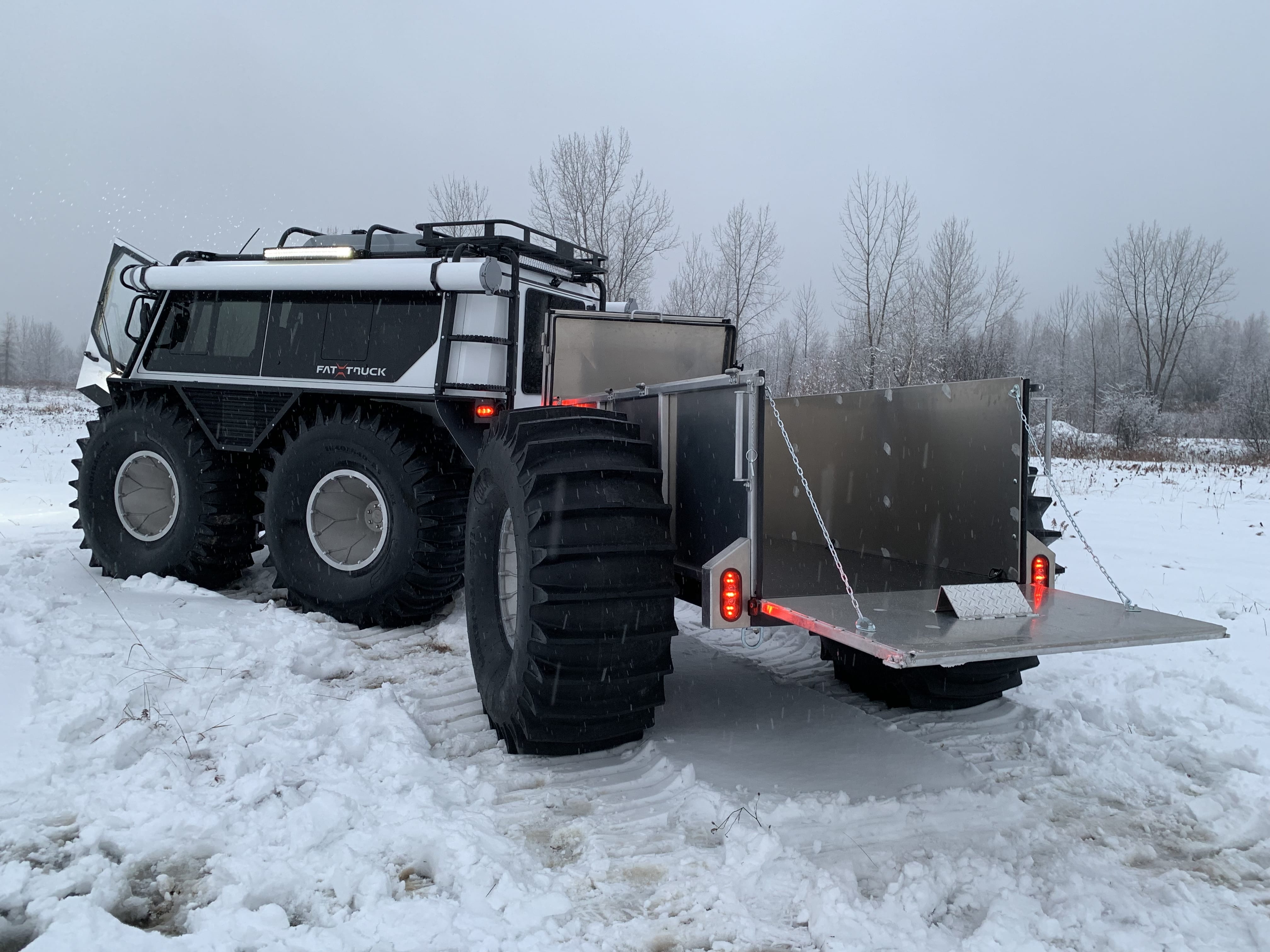
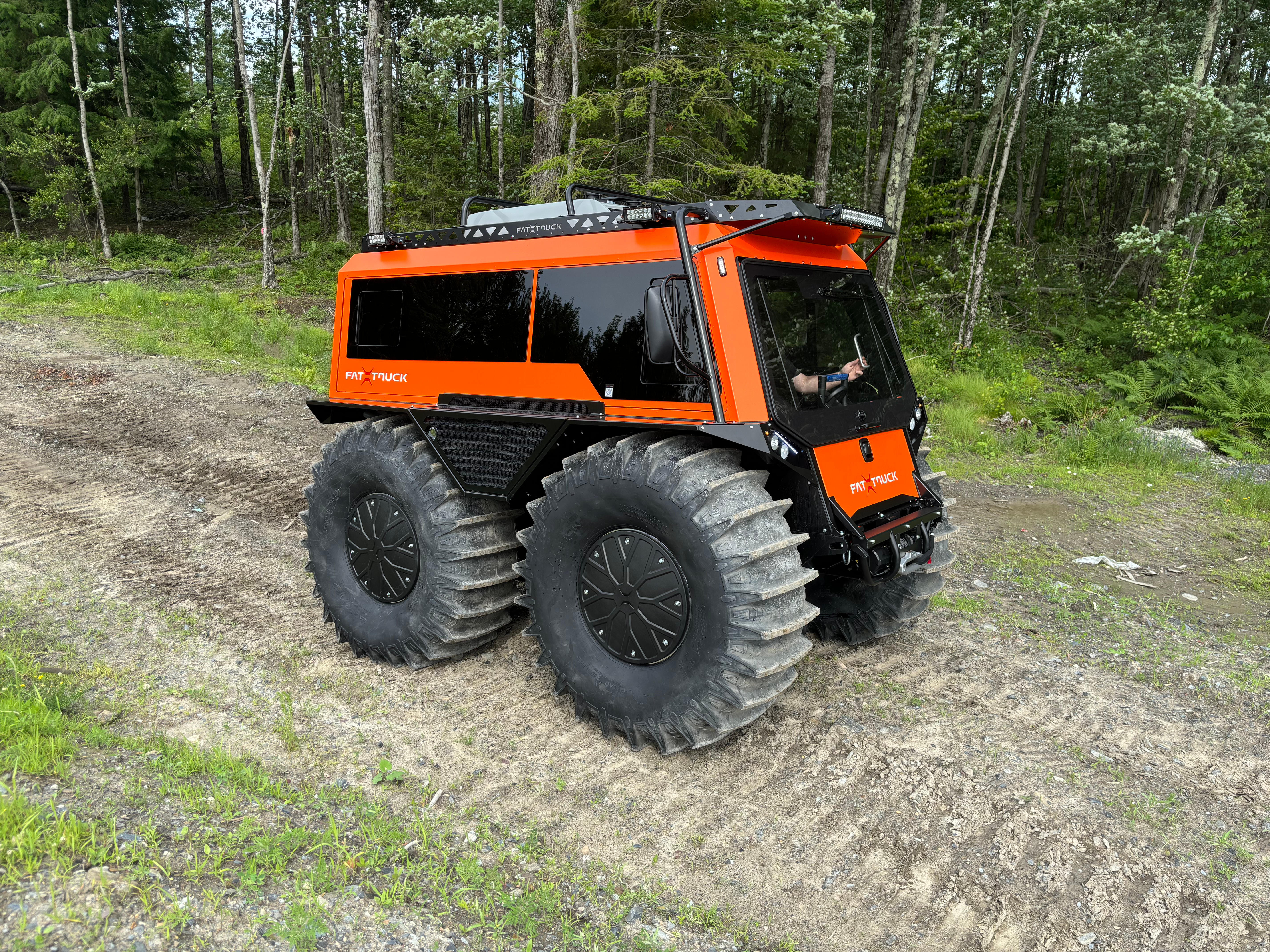
Fat Truck is designed around that standard. The hydrostatic drivetrain eliminates the components most likely to break or require adjustment. The joystick control means operators are productive after minutes of training, not days. The lineup spans the compact FT2, the workhorse FT3, and the heavy-duty FT5, so the machine can be matched to the job rather than forcing a compromise.
When buyers ask which machine is better for real-world work, the data consistently points the same direction: more payload, more crew capacity, faster transit, lower maintenance, better operator conditions, broader configuration options, and full emissions compliance. That is Fat Truck.
Wheeled vs Tracked Amphibious Vehicles
The broader choice between wheeled platforms and ultra-low-speed tracked-style platforms comes down to what you are optimizing for.
Wheeled platforms like Fat Truck deliver higher transport speed, greater payload, superior operator comfort, and far more configuration flexibility. They are built to cover ground efficiently across a wide range of conditions, from hard-pack access roads to soft marsh and open water.
Ultra-low-speed platforms like Sherp offer exceptional flotation and obstacle-crossing ability at the cost of speed, payload, and operator environment. They are built for scenarios where the terrain itself is the primary obstacle and nothing else matters.
For most commercial buyers, the wheeled platform wins on nearly every operational metric. For a deeper breakdown, see our full guide: Tracked vs Wheeled Amphibious Vehicles.

How to Choose Between Fat Truck and Sherp
Work through these questions before you decide:
If your routes include a mix of firm ground, soft ground, marsh, and water, Fat Truck's speed and versatility are the right match. If you operate exclusively in extreme soft-ground conditions where flotation is everything, Sherp deserves consideration.
If the answer is more than 9 people or more than 2,200 lbs of equipment, Fat Truck is your only real option in this comparison.
For daily or high-frequency use, Fat Truck's reduced maintenance requirements and longer service intervals mean more uptime and lower operating costs over time.
If you need attachments, Fat Truck's ecosystem gives you a genuine multi-role work platform. Sherp does not offer an equivalent.
Fat Truck meets Tier 4 Final / Stage V requirements. Verify Sherp's compliance status for your region before committing.
Fat Truck's single joystick control typically takes minutes to learn. Sherp's manual transmission and clutch-based steering require more time and experience to operate confidently.
See the Difference in Real Conditions
Reading specs is a starting point. Seeing the machine perform in your actual environment is what closes the decision. Wetland Equipment offers free local demos and can arrange demonstrations at other locations as needed. Units are typically in stock, with custom builds available in approximately six weeks. Rental programs start at a one-month minimum, and rental costs can be applied toward purchase.
Disclaimer: your personal information will not be shared.
About Us
Products
Copyright© 2025 Wetland Equipment | All Rights Reserved