Oil and Gas Amphibious Vehicle for Wetland and Right-of-Way Access

Production does not stop where the road ends. Wells, gathering lines, valve sites, and transmission corridors sit in marsh, coastal wetland, and river bottom that a service truck cannot cross for most of the year. Fat Truck is a purpose-built amphibious vehicle that floats and propels itself on low-pressure tires, so a crew can carry tools, parts, and personnel from the lease road to the work site on one machine. Wetland Equipment configures these machines for the operators and contractors who work that ground.

The Access Problem on Oil and Gas Sites

Most of the cost of remote field work sits in reaching the location, not in the task itself. A valve inspection that takes twenty minutes can consume most of a day when the crew has to stage at the edge of firm ground, walk in with what they can carry, and walk back out for anything they did not anticipate. Rain, seasonal high water, and tide compound it, turning a passable lease road into a route that will swallow a truck to the axle.

These conditions define large parts of the Gulf Coast oilfield, and they turn up anywhere pipeline right-of-way crosses wetland, floodplain, or soft bottomland. Crews working those corridors face a route that changes character every few hundred yards, from gravel to saturated clay to standing water and back. Equipment that handles one of those surfaces confidently tends to fail at the transitions, which is where most access problems actually start. Environmental sensitivity adds another constraint, because the machine that gets in also has to leave the ground it crossed in acceptable condition.

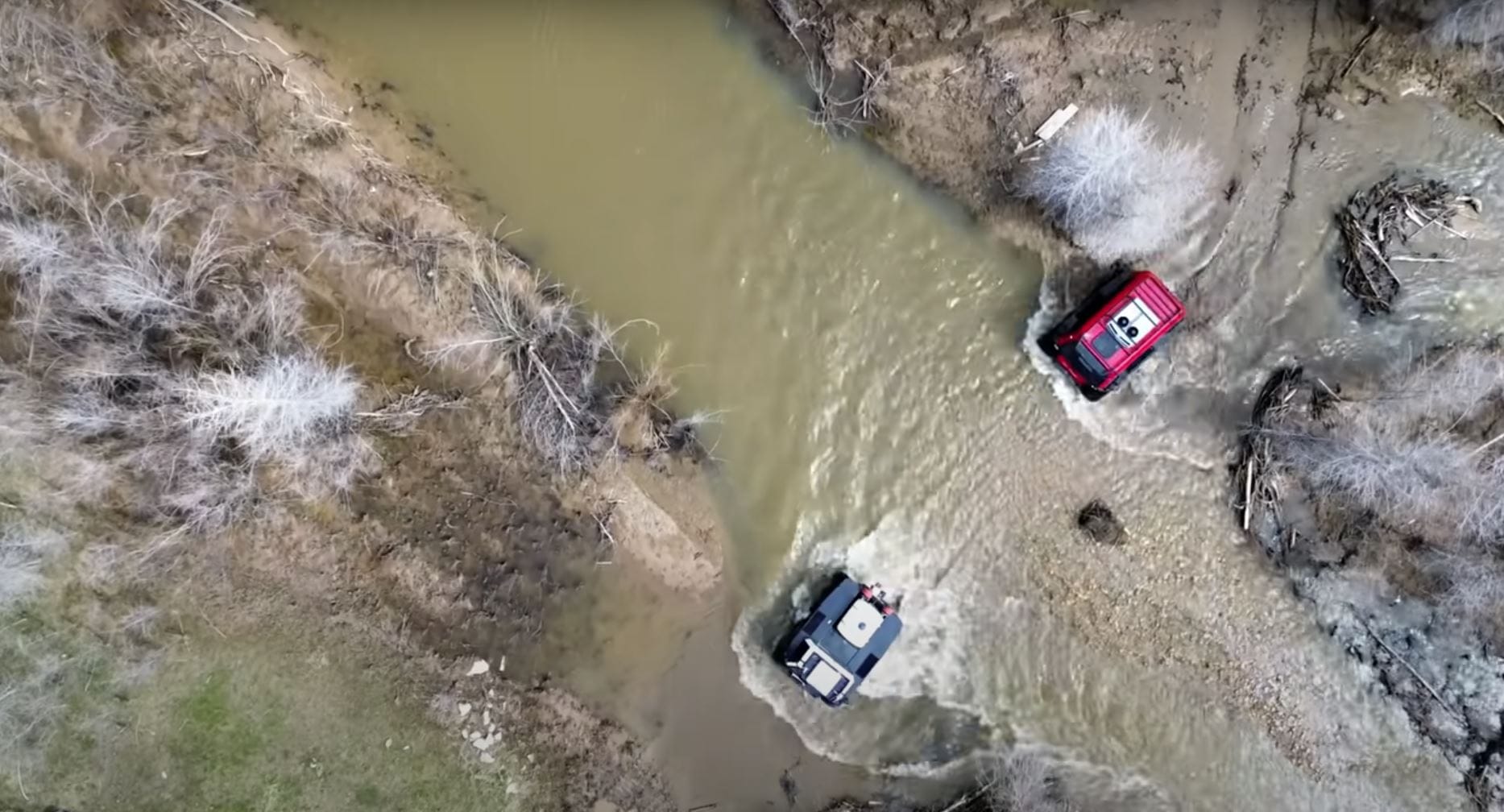
Two Fat Trucks moving through low-level river water across the terrain
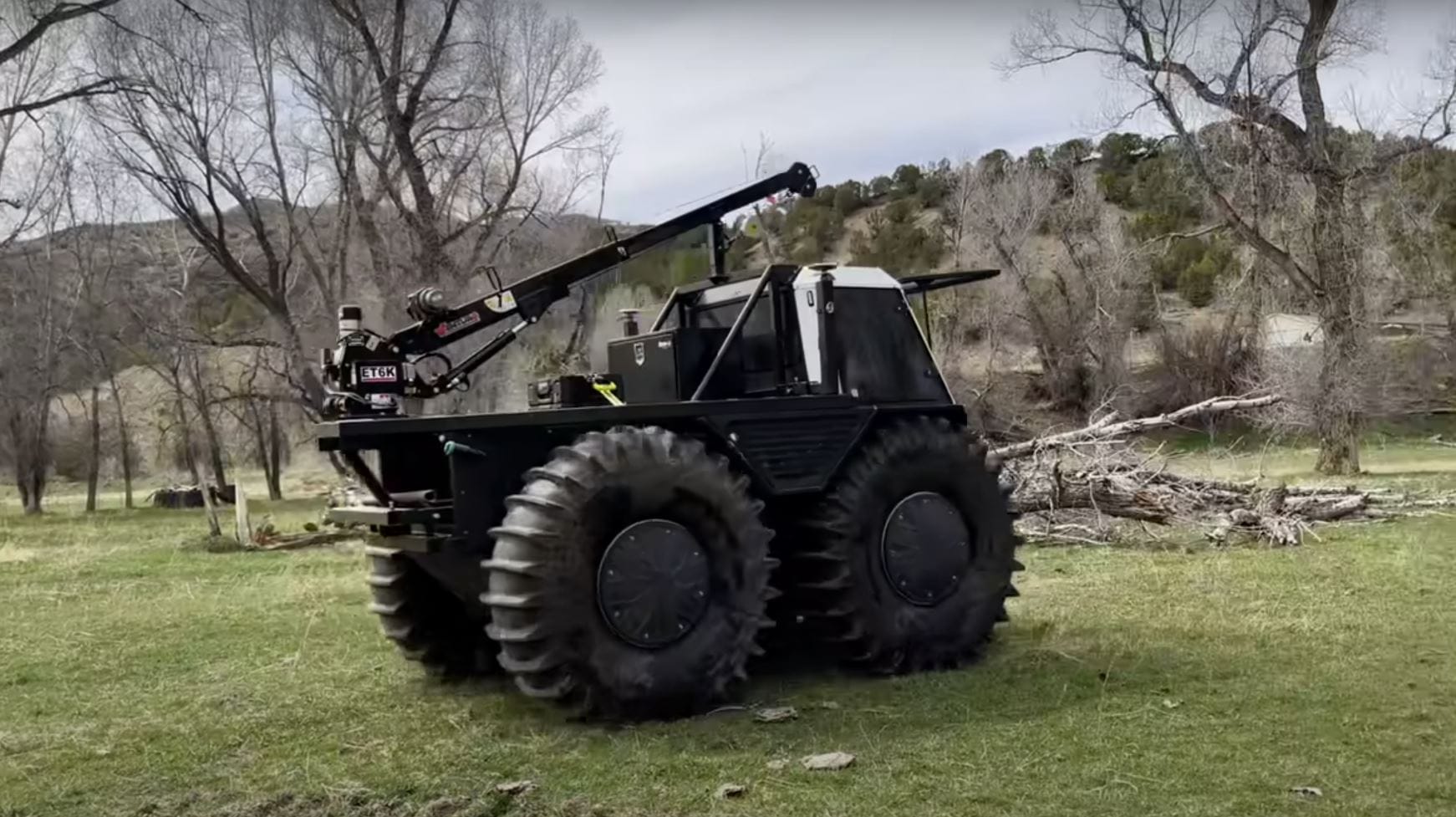
FT3 Pickup sitting in grassy field awaiting instructions to complete

Why Conventional Oilfield Equipment Falls Short

Standard field equipment is built around an assumption about the route. Service trucks and one-tons need ground firm enough to carry axle weight, and recovering one that sinks costs more time than the original job. Marsh buggies and tracked carriers handle soft ground well, though many cannot enter open water, and moving them between sites often means a lowboy and a permit. Boats work where there is navigable water and a launch, which rules out the intermediate ground on either side of it. Side-by-sides get a crew down a right-of-way while carrying very little, so tools and parts follow in a second trip.

The practical result is a staging problem. Equipment gets positioned at the last firm point, personnel and material move the rest of the way by hand, and the crew loses productive hours on both ends of the shift. Access also degrades unpredictably through the season, so the platform that reached a location in October may not reach it in March. For an operations planner, the useful question is whether one machine can carry the crew and the load across every surface between the road and the site, and do it repeatedly without tearing up the corridor.

Oil and Gas

Oil and Gas Applications

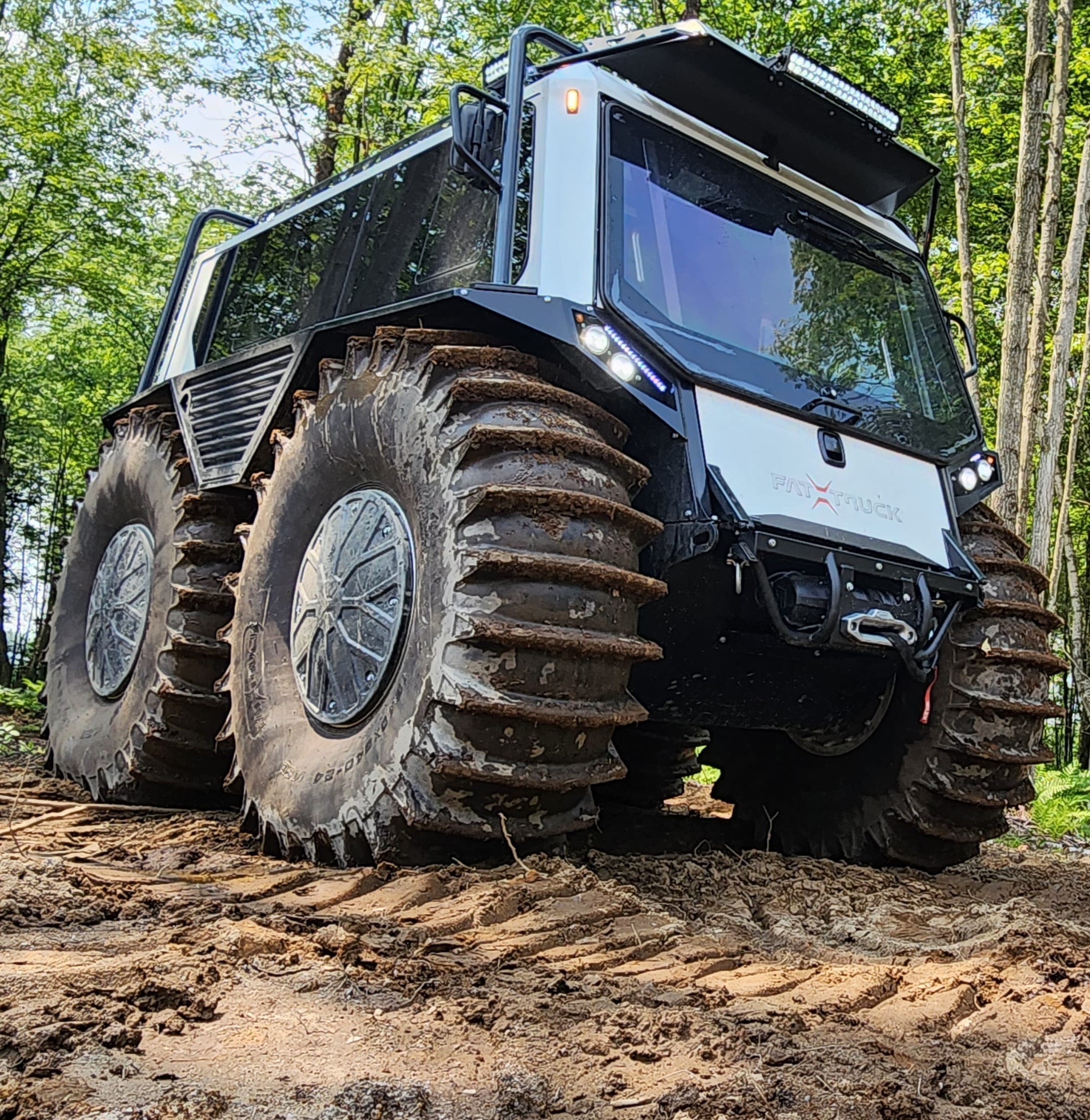
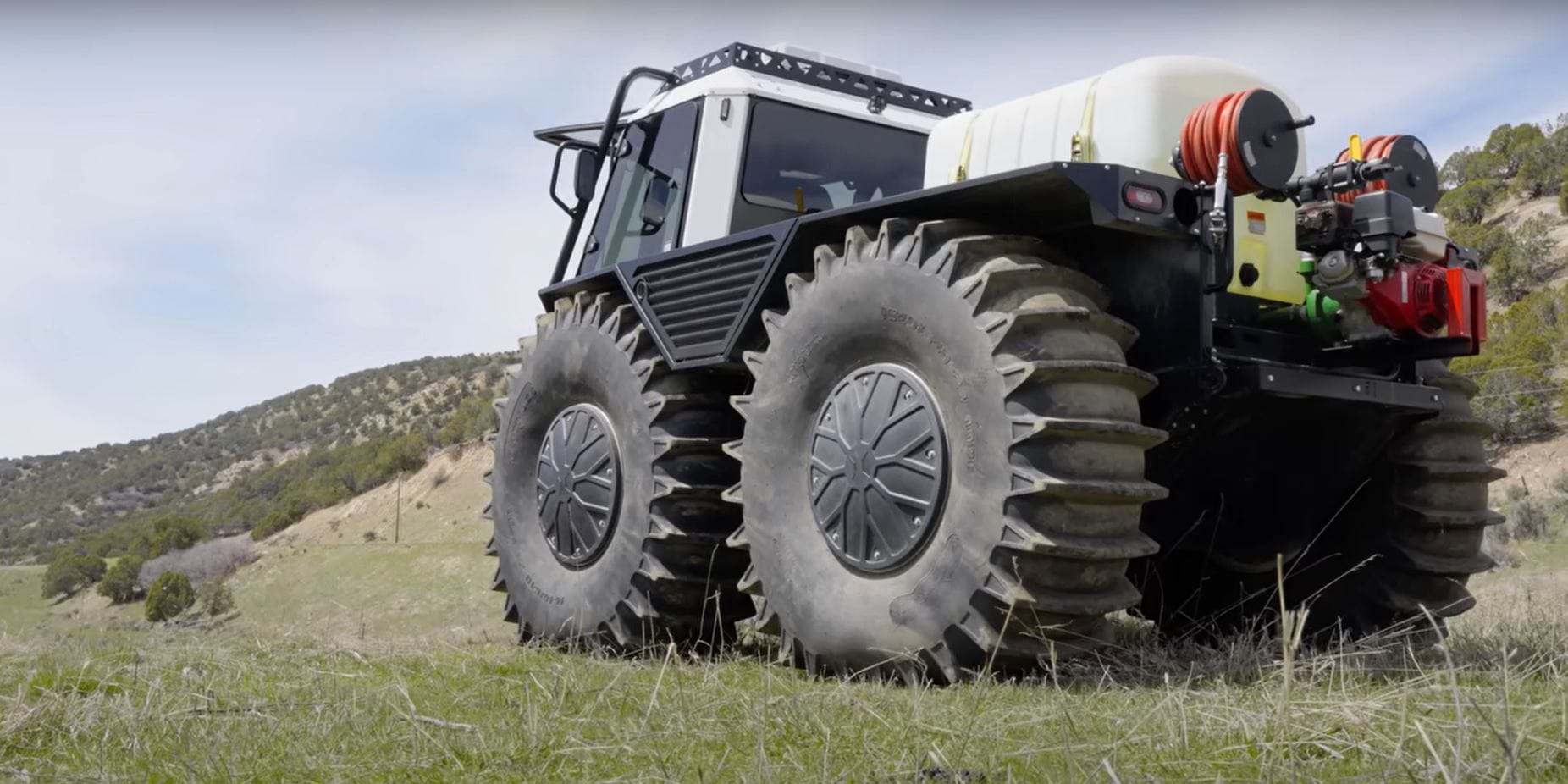
Fat Truck gives field crews a single amphibious platform for ground that normally requires several. Ground pressure runs from 1.6 to 2.0 psi fully loaded, which is the weight the machine places on each square inch beneath it. A 200-pound person standing on one foot exerts roughly 2.6 psi, so the machine travels ground that will not hold a worker on foot. Access without damage is the point of the design.

Pipeline Right-of-Way Access

Corridors cross terrain that changes constantly, and they have to be reached repeatedly for inspection, repair, and vegetation work. An enclosed, climate-controlled cab carries a crew the length of a right-of-way in one pass, with fuel capacity supporting roughly twelve hours of moderate-load running.

Wellsite and Facility Rounds

Routine gauging, valve work, and equipment checks stop being weather-dependent when the route no longer requires firm ground. Tire pressure adjusts from a push button in the cab on the FT3 and FT5, so an operator can set the machine for mud, sand, or gravel without leaving the seat.

Spill and Leak Response

Response windows are short, and the affected ground is usually the ground least able to carry equipment. The machine floats and drives on its tires with no launch ramp, and every door opens while it is fully floating, which matters when a crew has to work at water level.

Choosing a Configuration for Field Work

Payload tends to drive the decision. The FT3 Pickup carries up to eight and hauls 3,000 pounds on land and 2,200 pounds on water, which covers most inspection and maintenance work with tools aboard. The FT5 Hauler is an articulated eight-wheel machine, one vehicle rather than a towed unit, carrying 1,000 pounds on its front unit and 4,000 on the rear for heavier material and equipment moves.

Both can be equipped for the work rather than adapted to it. Backhoes, augers, power pole anchor setters, cranes, flail cutters, and aerial lifts from 40 to 50 feet on the FT5 are available, which lets one machine carry the crew and perform the task once it arrives. Wetland Equipment builds its own modifications with exclusive part numbers, so a contractor with a specific deck arrangement, mounting, or tool requirement is not held to a stock dealer configuration.

Construction work in the same terrain calls for a different class of machine. Where a project involves trenching, laying pipe, or cutting access canals rather than moving crews and tools, Wetland Equipment manufactures amphibious excavators built on pontoons for exactly that ground.

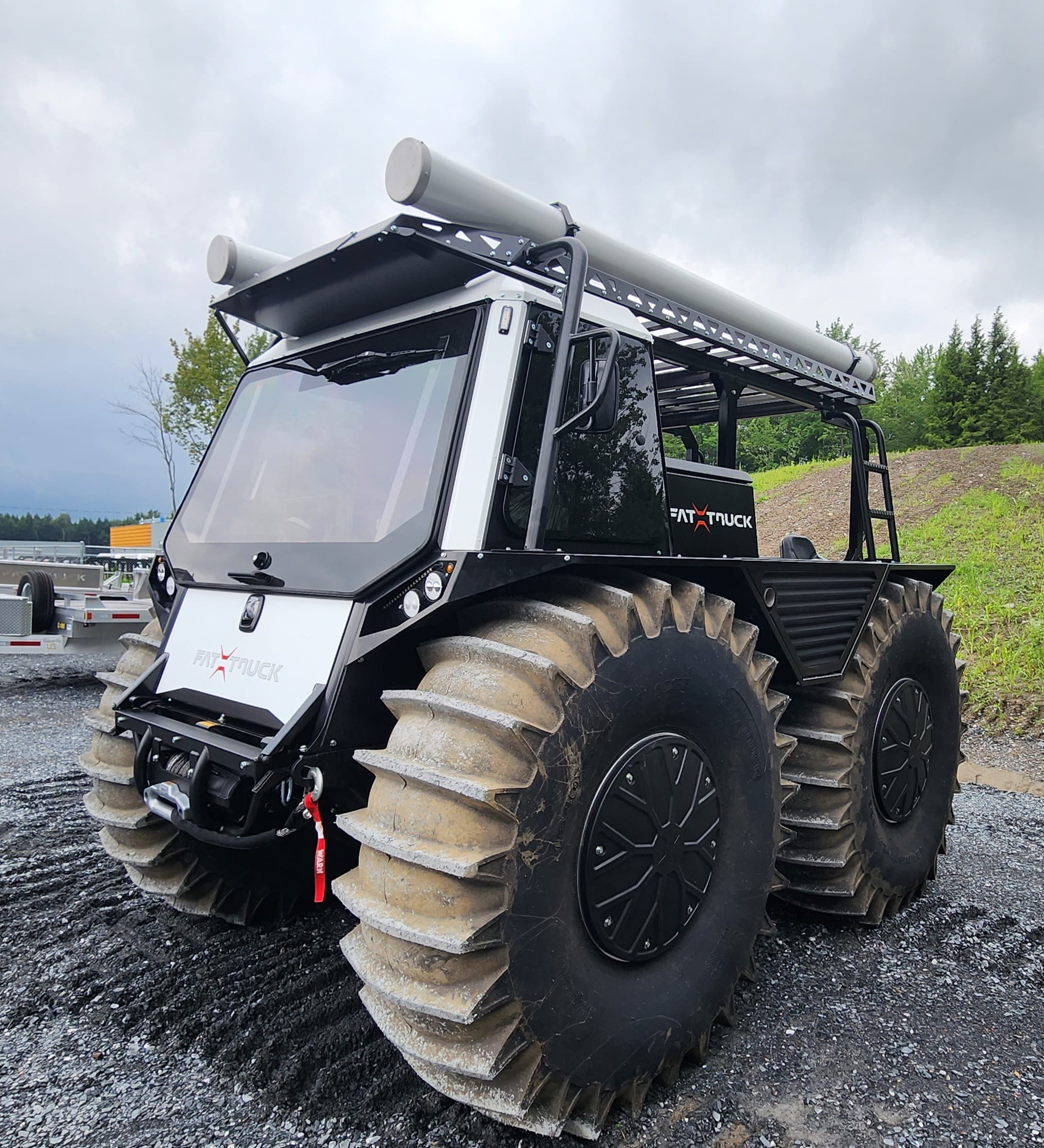
FT3 Fat Truck sitting in a clearing on a cloudy day

Built for Crews and Contract Schedules

Field equipment gets operated by whoever is on the job, which makes training and upkeep part of the specification. Control is by joystick with hydrostatic drive, and most operators are moving the machine confidently within minutes. Wetland Equipment provides a full eight-hour training session with the machine, along with service and parts support anywhere in the continental United States. On the FT3 and FT5 there are no belts, chains, or drive shafts, so routine service comes down to engine oil, hydraulic oil, and air filters.

The compliance and safety details matter on operator-controlled sites. Seating includes an ISO-certified rollover protective structure, known as ROPS, with seat belts at every seat, and the machine handles roughly 35 degrees of climb and descent and 22 degrees of side slope. Engines meet Tier 4 Final and Stage V emissions standards, which is frequently a condition of work on regulated and government-contracted sites. Noise stays below 85 dBA. Braking engages automatically, and beacons, backup cameras, and electronic inclinometers with alarms are available.

Frequently Asked Questions

  • Ground pressure runs from 1.6 to 2.0 psi fully loaded, which is lower than the pressure a person exerts standing on one foot. The machine distributes its weight across low-pressure tires rather than concentrating it under axles, which is what allows repeated trips across sensitive ground.

  • The FT3 Pickup carries 3,000 pounds on land and 2,200 pounds on water. The FT5 Hauler carries 1,000 pounds on its front unit and 4,000 pounds on the rear. The FT2 Pickup handles 2,000 pounds on land for lighter rounds.

  • Yes. Backhoes, augers, power pole anchor setters, cranes, flail cutters, and aerial lifts up to 50 feet on the FT5 are available. One vehicle replaces multiple machines on jobs where getting the equipment there has been the hard part.

  • Engines are Tier 4 Final and Stage V compliant, which is frequently required for work on government-contracted and regulated locations. Confirm the specific requirement for your site with the Wetland Equipment team so the machine is specified correctly.

  • It loads on a standard deck-over trailer behind a three-quarter-ton truck. At roughly 100 inches wide it requires no special permits, and loading with ramps or a tilt trailer takes under fifteen minutes, which keeps a machine moving between sites in a single shift.

  • Standard configurations are often in stock. Custom builds run roughly six to eight weeks depending on the modifications, so bring the requirement early if the machine has to match a project start date.

Talk to the Team About Your Access Problem

Fat Truck machines are backed by a company with 283 combined years of experience across its top fifteen craftsmen, and Wetland Equipment is the exclusive Louisiana Fat Truck dealership with nationwide sales. Book a demo to see the machine cross the ground your crews are currently walking, and to work through the configuration that fits your payload, your attachments, and your site conditions.

Request a Demo With Wetland Equipment

The best way to evaluate off-road spraying equipment is to see how the platform works in real terrain. A Fat Truck demo gives your team the opportunity to review mobility, stability, payload options, and spraying system configurations based on the environments you need to reach. Wetland Equipment can help you discuss tank capacity, pump needs, hose reel placement, operator workflow, and the type of terrain your crews face most often. That conversation helps turn a general equipment search into a practical configuration for your application.