Vegetation Management Vehicle for Wetlands and Remote Terrain

Right-of-way corridors, drainage canals, and wetland tracts all need vegetation kept down, and a good share of that ground can't be reached by the machines built to do the work. Crews cut from the edge, walk equipment in, or wait for things to dry out. Fat Truck amphibious vehicles can be fitted with cutting and spray packages and configured for exactly that ground, carrying a crew, the attachment, and the fuel to run it into terrain where mowers and tractors have to stop short.

The Access Problem in Vegetation Management

Vegetation work runs on a schedule the ground doesn't respect. A transmission corridor gets cleared on a cycle whether or not the low sections have drained, and a canal needs its banks cut in the season when those banks are softest. Utility, pipeline, and environmental crews all know the pattern: the stretches most in need of maintenance tend to be the hardest ones to reach.

When access fails, the work doesn't stop so much as get more expensive. Crews stage at the nearest hard surface and carry equipment in, or a contractor brings a machine big enough to cross the soft section and accepts the rutting and repair that follow. Neither outcome is a good one on ground that's permitted, environmentally sensitive, or simply someone else's property.

That's the access problem the Fat Truck application range is built around, and vegetation management is where it turns up most often, because the work comes back on a cycle rather than happening once.

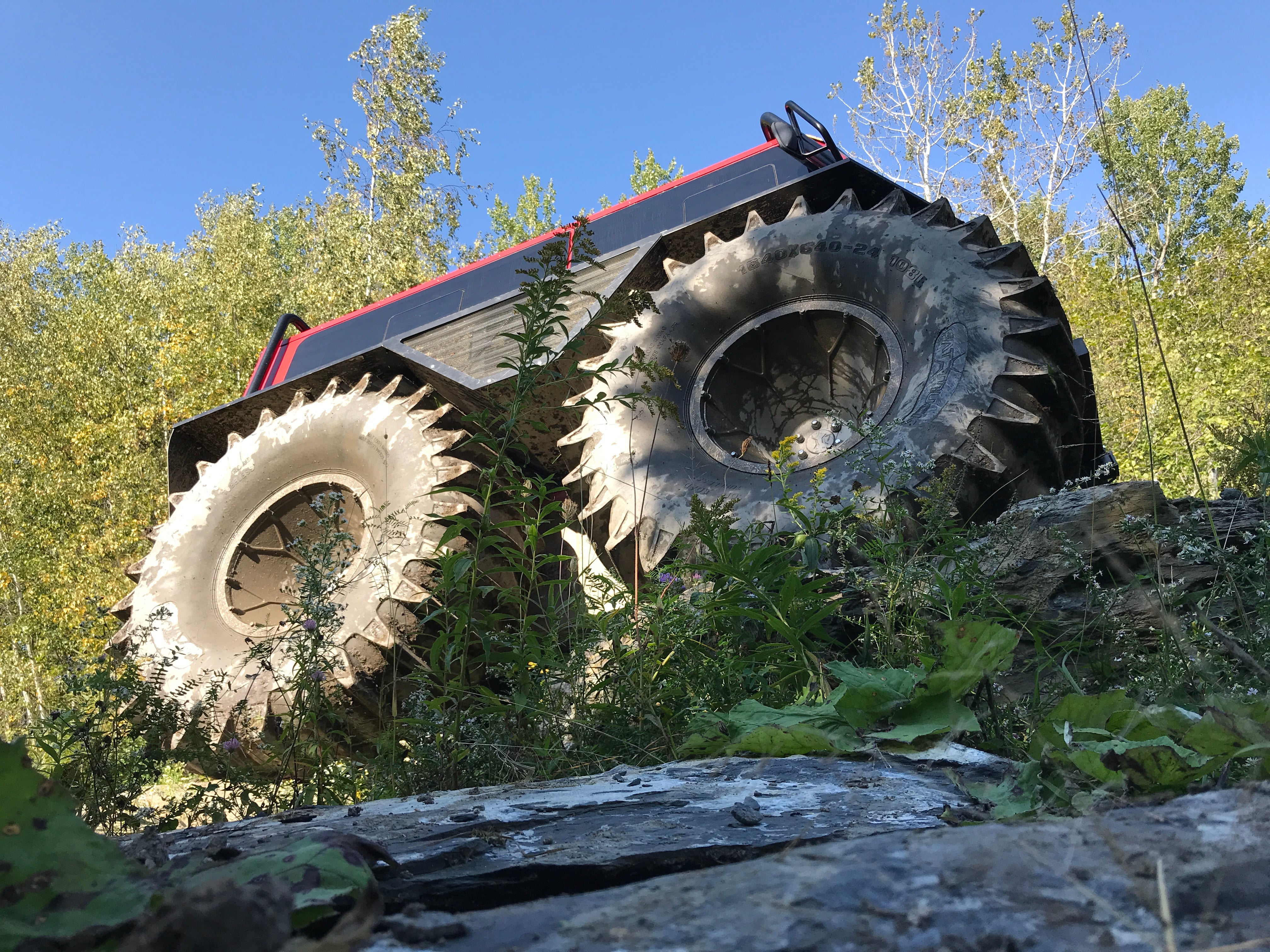
Low-angle view of an amphibious all-terrain vehicle with large lugged flotation tires climbing over rocky ground in front of trees
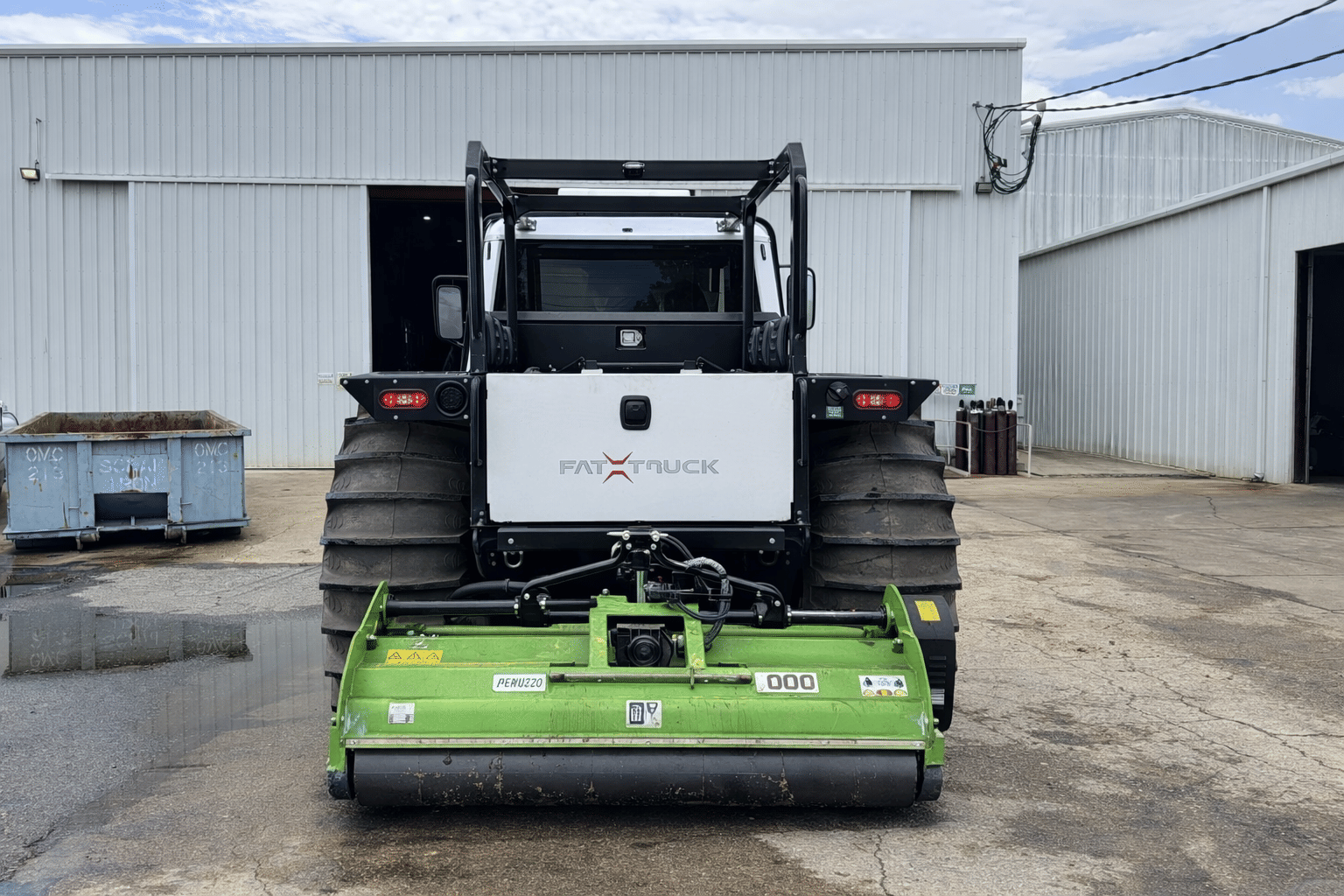
Rear view of a white Fat Truck all-terrain vehicle with a roll cage, parked outside a metal industrial building

Why Conventional Vegetation Equipment Falls Short

Tractors and boom mowers are the default for corridor work, and wherever the ground carries a tractor they're the right tool. Off that ground they bog, and recovering a bogged tractor out of a marsh does more damage than the mowing was ever going to do. Flotation tires help at the margin without changing the underlying limit.

Tracked carriers cross softer ground and bring their own costs: slow travel between work areas, heavy transport, and a crew that still has to arrive separately. On a corridor running for miles with only a few soft sections, most of the day goes to moving the machine rather than cutting.

Airboats and shallow-draft boats reach the wet sections and can't work the dry ones, which means a mixed corridor needs two pieces of equipment and two crews. All-terrain vehicles with mounted sprayers cover ground quickly, then run out of payload and flotation as soon as the tank is full.

On most of these jobs the constraint turns out to be logistical rather than mechanical. Getting a capable crew and a working attachment to the same place on the same day is the part that goes wrong.

Vegetation Management

Vegetation Management Applications

Vegetation management covers several kinds of work, and they share one requirement: repeated access to the same difficult ground on a maintenance cycle. The configurations below are the ones Wetland Equipment gets asked for most.

Right-of-Way and Corridor Clearing

Transmission corridors, pipeline right-of-way, and access roads need brush and regrowth controlled on a cycle. A Fat Truck fitted with a cutting attachment moves a crew down a corridor that includes wet and dry sections without staging twice, which is usually where the day gets lost on this work.

Wetland and Canal Bank Maintenance

Canal banks, retention areas, and wetland tracts have to be cut on ground that stays soft most of the year. Fully loaded, a Fat Truck runs at 1.6 to 2.0 psi, the weight it puts on each square inch beneath it. A 200-pound person standing on one foot exerts roughly 2.6 psi, so these areas get cut without being rutted.

Herbicide and Targeted Treatment

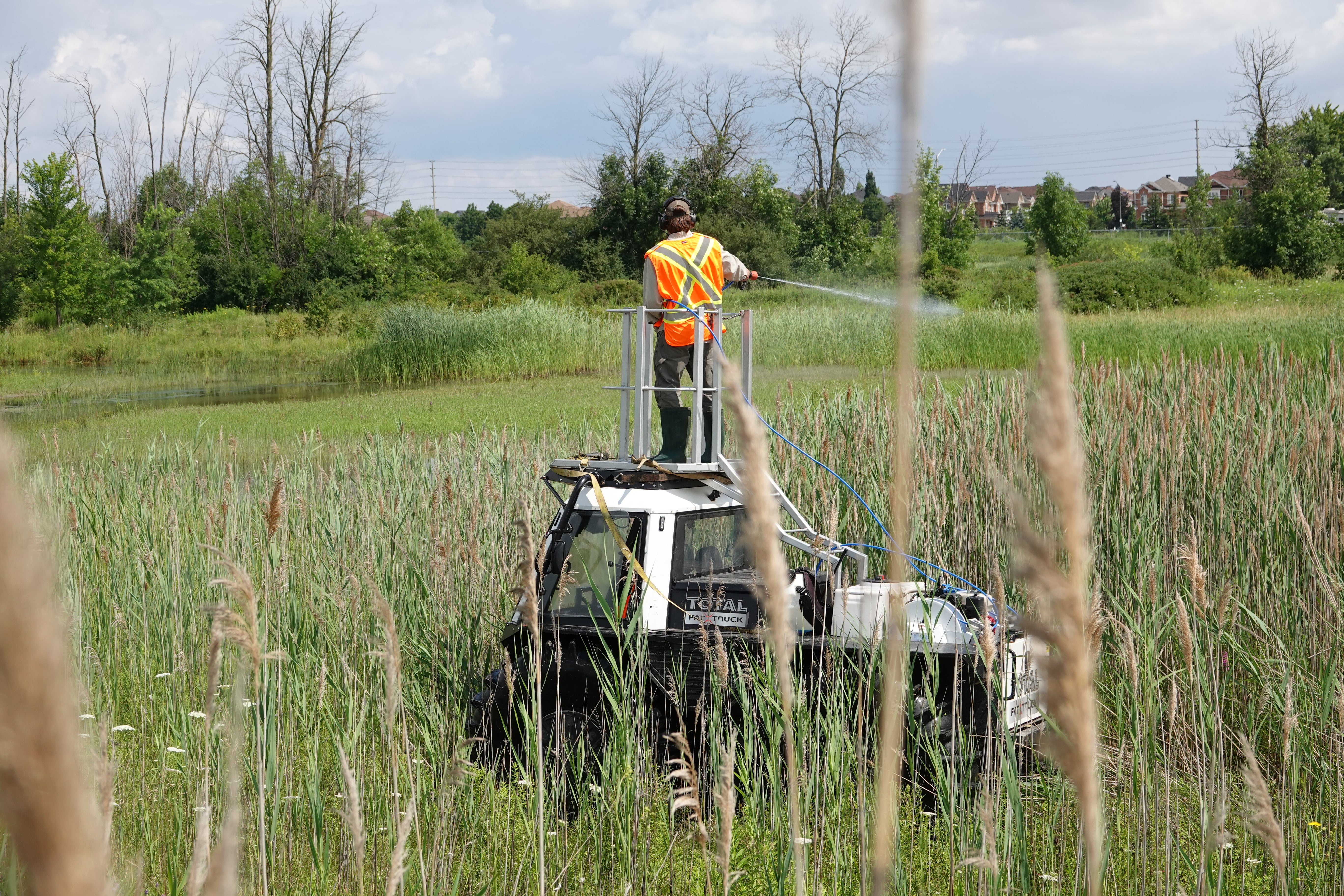
Some vegetation gets managed chemically rather than mechanically, using spray booms, applicators, and mosquito foggers as mounted attachments. Treatment programs that are mostly spraying rather than cutting run on the same platform with a different package.

Choosing a Configuration for Vegetation Work

Model choice depends on crew size and on what the attachment weighs once it's loaded. The FT3 Pickup seats up to eight and carries 3,000 pounds on land, which covers most corridor crews running a cutter or a spray package. The FT5 Hauler is an articulated eight-wheel machine, one vehicle rather than a towed unit, seating up to sixteen and carrying 1,000 pounds on the front unit and 4,000 on the rear. For four-person crews and lighter work, the FT2 Pickup is the smaller option.

Attachment choice is where Wetland Equipment differs from a stock dealership. Modifications get fabricated in house with exclusive part numbers, and fourteen more attachments are in development, starting with an eight-foot cutter and moving on to spray booms and applicators. Standard configurations are often in stock and custom builds run six to eight weeks. Seasonal or project-length needs can be covered through rentals on a one-month minimum.

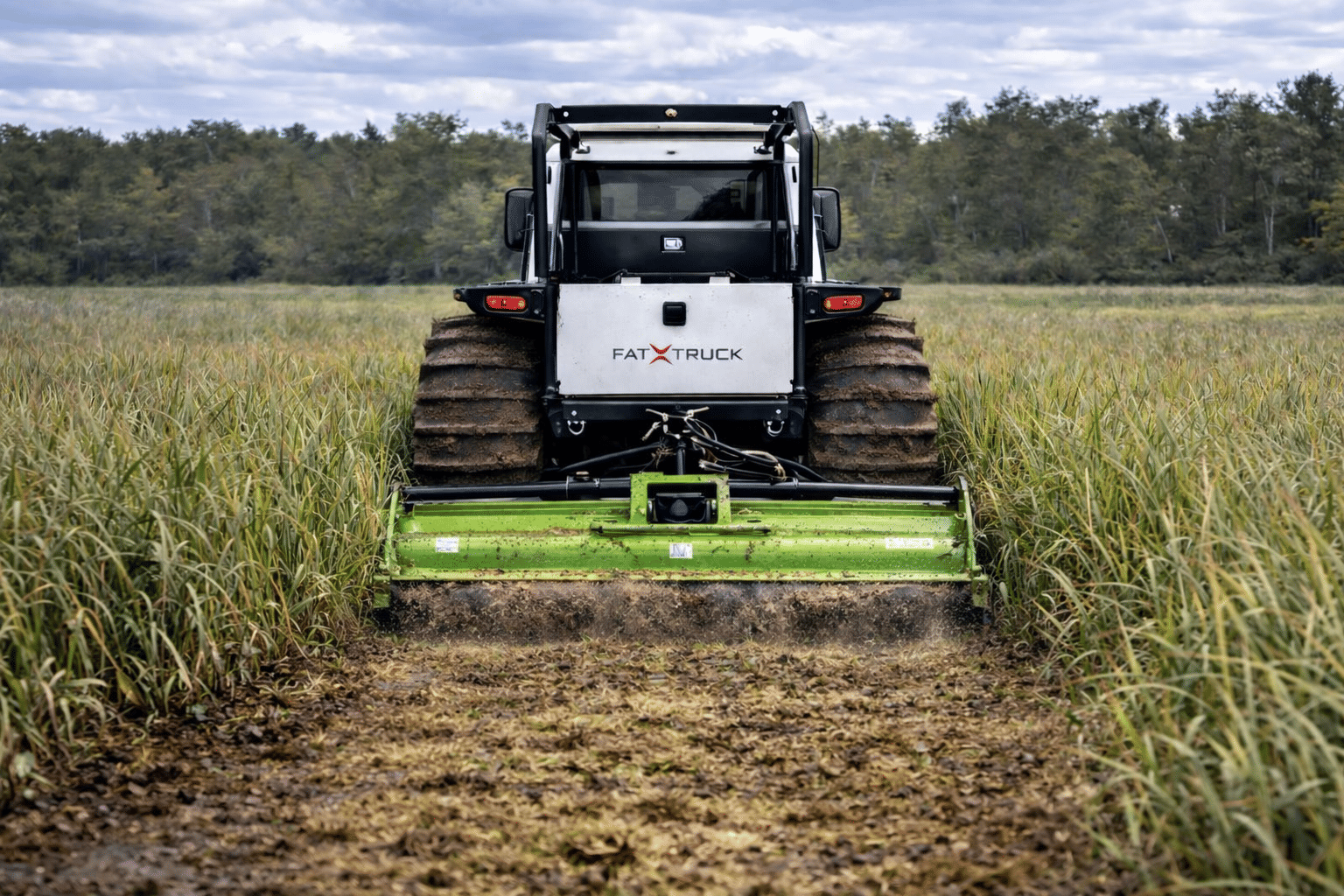
Rear view of a Fat Truck all-terrain vehicle with a mowing attachment, working in a tall grass field beside a tree line

Ground Covered Per Day Is the Real Measure

Vegetation work gets measured in ground covered per shift, and most of what limits that number happens between work areas rather than during the cutting itself.

A Fat Truck floats and propels on its own low-pressure tires, so a canal crossing becomes part of the drive instead of a reason to reroute. Road speed reaches 25 miles an hour on the FT3, which keeps movement between corridor sections from eating the shift. The enclosed, climate-controlled cab earns its keep across a full season of this work, and fuel supports roughly twelve hours under moderate load.

On the FT3 and FT5 there aren't any belts, chains, or drive shafts, so routine service comes down to engine oil, hydraulic oil, and air filters on a 250-hour or annual interval. Tire pressure adjusts from a push button in the cab with presets, which lets an operator set up for soft ground or firm surface without leaving the seat.

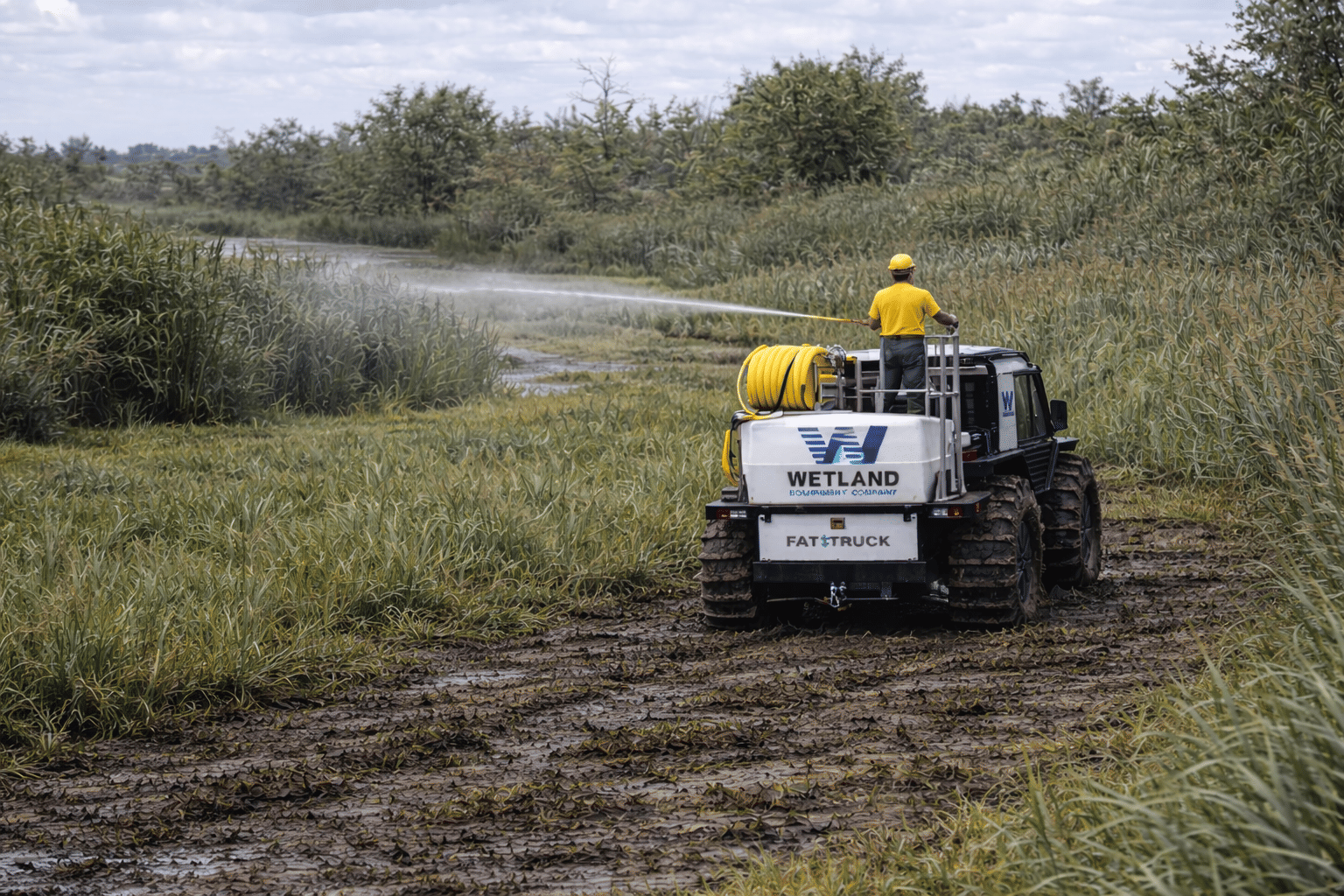
Worker in a yellow shirt and hard hat spraying herbicide over wetland vegetation from a Fat Truck

Bring the Corridor That Gives Your Crews Trouble

Wetland Equipment is the exclusive Louisiana Fat Truck dealership with nationwide sales, backed by 283 combined years of experience across its top fifteen craftsmen. Book a demo and run a machine on a section of corridor that's cost you days before, since the ground is the only real test of whether the platform fits the work. Request a quote once the configuration is clear, and the sales team will work through cutter width, tank capacity, and mounting with you. Standard configurations are often in stock, and custom builds run six to eight weeks.

Frequently Asked Questions

  • Flail cutters, spray booms, mosquito foggers, and herbicide applicators are all mounted options, along with backhoes, augers, anchor setters, and cranes for related work. Wetland Equipment fabricates these in house with exclusive part numbers, and fourteen more are in development, starting with an eight-foot cutter.

  • Yes. Every Fat Truck is purpose-built amphibious, floating and propelling itself on low-pressure tires rather than needing a launch ramp, so it moves from dry ground into standing water without a transition.

  • Four in an FT2 Pickup, up to eight in an FT3, and up to sixteen in an FT5. The FT5 is a single articulated eight-wheel machine across its two units, not a vehicle towing a trailer.

  • Yes, and that's one of the more common requests. Engines meet Tier 4 Final and Stage V emissions standards, which utilities and government agencies frequently require of their contractors. Seating includes an ISO-certified rollover protective structure, known as ROPS, with belts at every seat.

  • On a standard deck-over trailer behind a three-quarter-ton truck. At roughly 100 inches wide it doesn't require special permits, and loading with ramps or a tilt trailer takes under fifteen minutes.

  • Control is by joystick with hydrostatic drive, and operators typically pick up the basics within minutes. Wetland Equipment provides a full eight-hour training session, along with service and parts support anywhere in the continental United States.

Take Vegetation Management Beyond the Easy Ground

The best way to know whether a Fat Truck fits your vegetation management operation is to put one on the ground that gives your crews the most trouble. Wetland Equipment can match the right vehicle, cutter, spray system, or custom attachment to the conditions and maintenance work you handle every day. Book a demo today to see how the platform performs in real terrain, or request a quote to work through crew capacity, payload, attachment requirements, and configuration.

Request a Demo With Wetland Equipment

The best way to evaluate off-road spraying equipment is to see how the platform works in real terrain. A Fat Truck demo gives your team the opportunity to review mobility, stability, payload options, and spraying system configurations based on the environments you need to reach. Wetland Equipment can help you discuss tank capacity, pump needs, hose reel placement, operator workflow, and the type of terrain your crews face most often. That conversation helps turn a general equipment search into a practical configuration for your application.
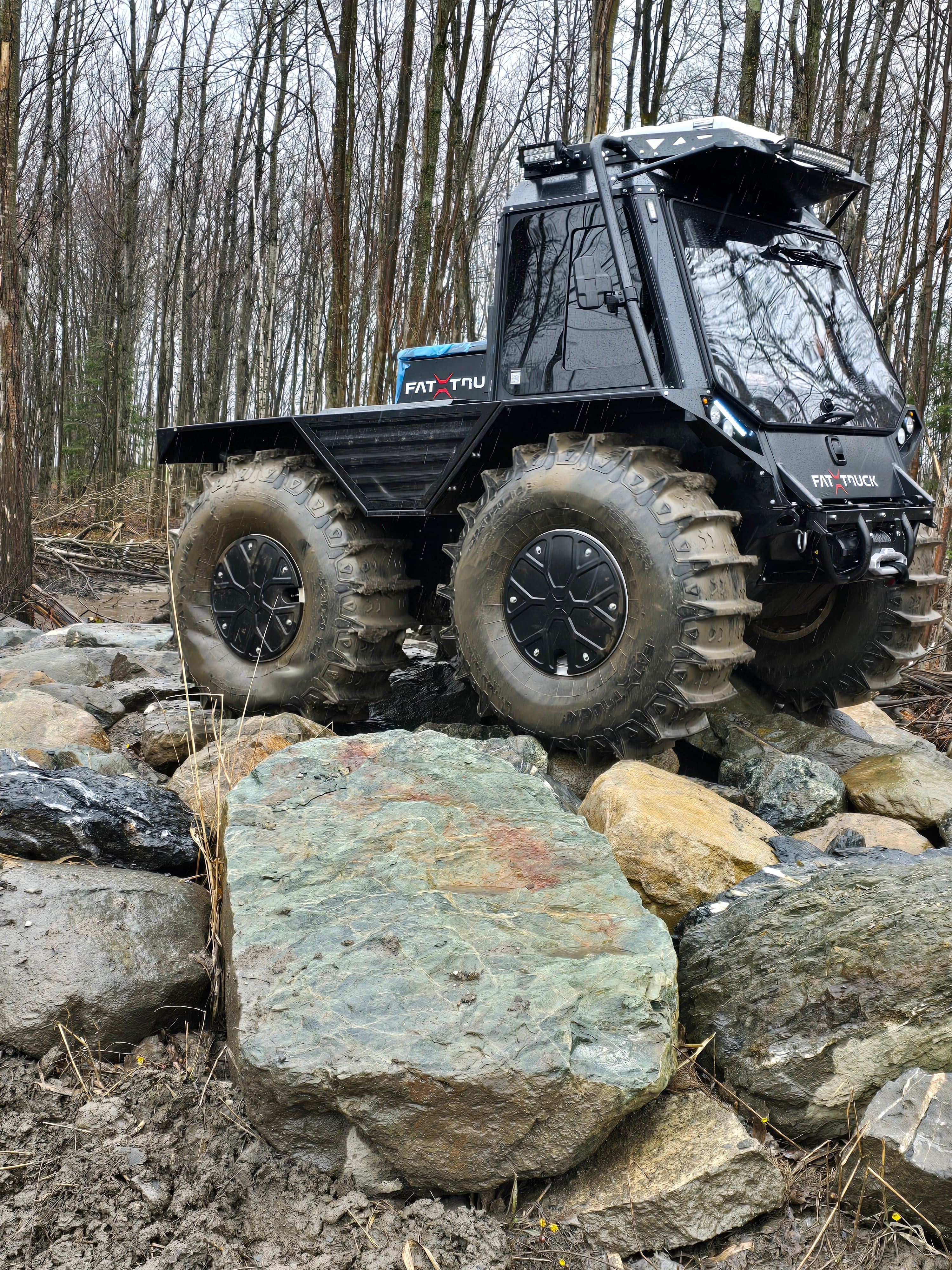
Black Fat Truck amphibious all-terrain vehicle with an enclosed cab and oversized tires, parked on rocky terrain.