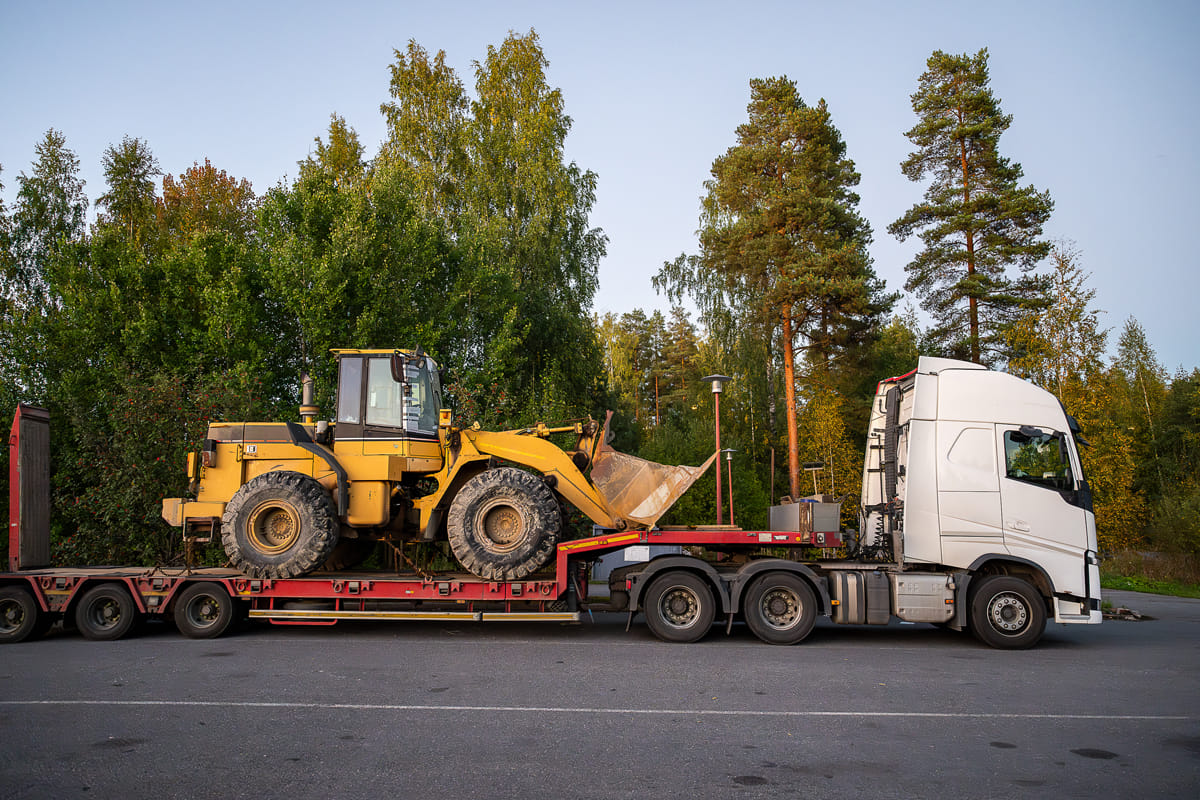
How to Move Amphibious Equipment
Moving heavy equipment is one of those jobs that sounds simple until you actually start planning it. You may only be hauling a single machine across town, or you may be relocating multiple pieces of equipment to a jobsite that is hours away, but the same truth applies every time: the move is either controlled and predictable, or it turns into a stressful mess that burns time and money. The good news is that most of the problems people run into are completely preventable when the move is treated like a process instead of a quick errand.
At Wetland Equipment, we work around machines that are built for difficult environments, which means transportation needs to be handled with the same level of respect as the work itself. A smart plan protects your equipment, keeps your crew safe, and helps you avoid fines, breakdowns, or jobsite delays that can throw off an entire week. If you want the move to go smoothly, the key is preparation, the right trailer setup, and a loading routine that leaves nothing to chance.
Start With the End in Mind
Before you even think about hooking up a trailer, start by defining what “success” looks like for the move. Success is not just getting the equipment from Point A to Point B, it is arriving on time, with no damage, no safety incidents, and no last-minute surprises that force you to improvise. The easiest way to do that is to map the entire move from the destination backward, including where you will unload, what the ground conditions are like, and whether there is enough space to maneuver safely.
Your destination matters more than most people think. A wide open yard is very different from a muddy access road, a residential neighborhood, or a tight worksite with multiple trades moving around. When you know what the unloading zone looks like, you can choose the right trailer, prepare the right support tools, and avoid the classic mistake of showing up with a machine that cannot be safely unloaded where it needs to go.
What Counts as “Equipment” When You Are Hauling?
A lot of people hear “equipment transport” and immediately picture a massive excavator, but equipment can mean plenty of things. Compact loaders, mini excavators, skid steers, dozers, trenchers, attachments, generators, pumps, and specialized machines for wetlands or soft ground all come with different weight distributions and tie-down needs. The moment you move beyond a pickup bed, you are dealing with the realities of trailer ratings, securement rules, and safe loading angles.
Even smaller machines can cause big problems if you treat them casually. A compact excavator with a bucket tucked in tight may haul easily, but that same machine can become unstable on a trailer if the boom is positioned incorrectly or the weight is not centered. The goal is not to guess what will work, it is to treat each machine like its own transport project and set it up deliberately.
Know Your Weights, Dimensions, and Ratings
If you want one habit that prevents more transport disasters than any other, it is verifying numbers instead of assuming them. You need the operating weight of the machine, the transport height with attachments, and the overall length that will sit on the trailer. Those numbers determine whether your trailer is appropriate, whether you are legal on the road, and whether your route will create clearance issues.
Trailer ratings matter just as much as equipment weight. Your trailer has a Gross Vehicle Weight Rating, and your tow vehicle has limits too, including payload, towing capacity, and hitch rating. A trailer that is “close enough” on paper can still become unsafe when you add fuel, attachments, chains, binders, and the weight of the trailer itself. The safest approach is building in a comfortable margin instead of chasing the absolute maximum capacity.
Do You Need a Permit for This Move?
Permits can feel like a hassle, but the rules are not arbitrary, and they exist because weight and size have real consequences on roads and bridges. If your load qualifies as oversize or overweight in your state, you may need permits, escorts, or route restrictions. Even when a machine looks compact, certain configurations can push height, width, or axle weight into a category that triggers extra requirements.
Skipping permit research is how otherwise responsible operators get hit with expensive citations or forced to park and wait while paperwork catches up. The smarter approach is checking regulations before the move, especially if you are crossing state lines, because each state can have different thresholds. A few minutes of planning up front is far cheaper than losing half a day on the side of the road.
Choose the Right Trailer for the Job
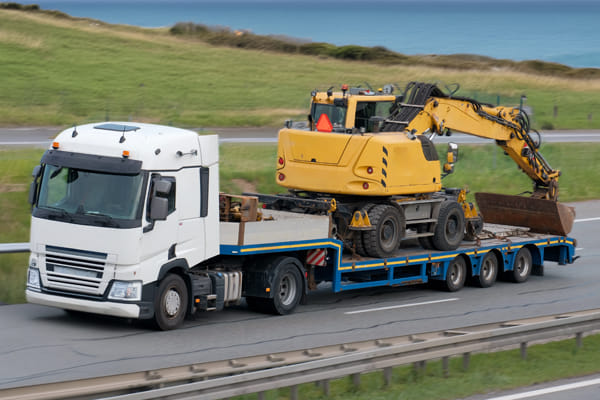
The right trailer is not always the biggest trailer, it is the trailer that matches the machine and the conditions you will face during loading and unloading. For many machines, a properly rated equipment trailer with sturdy ramps works well, but lowboy or tilt trailers can make loading safer by reducing ramp angle. Deck height, ramp strength, and the ability to maintain traction while driving on all matter more than people think.
Trailer length also affects stability and loading position. A trailer that is too short forces the machine into awkward placement, which can create dangerous tongue weight issues or make it hard to secure properly. A trailer that is too long may be harder to maneuver in tight jobsite entrances. The best setup is the one that allows the equipment to sit centered, secure easily, and travel with predictable handling.
Inspect the Tow Vehicle and Trailer Like You Mean It
The fastest way to turn a good move into a nightmare is to skip inspections because the equipment “only has to go a few miles.” Tire condition, tire pressure, wheel bearings, brake function, lights, safety chains, and breakaway systems all matter. A blowout or brake failure at speed does not care how short the trip was supposed to be, and heavy equipment magnifies every mechanical weakness.
Walk around the trailer and tow vehicle before every move, even if you hauled yesterday. Look for dry rot, bulges, worn tread, loose lug nuts, cracked welds, damaged ramps, or a hitch that does not seat properly. If something feels off, fix it now, because the road is the worst possible place to learn you ignored a warning sign.
Plan Your Route Like a Professional
Route planning is not only for cross-country hauling. Sharp turns, steep grades, narrow bridges, low-clearance overpasses, and high-traffic intersections can make a short move more complicated than a long one. The more weight you tow, the more you need room for braking and lane changes, which means your route should prioritize safer roads over the quickest shortcut.
Try to avoid tight neighborhoods, school zones during peak hours, and roadways with aggressive speed changes or poor shoulders. If you are hauling into wetlands or rural areas, consider how the final access road looks after rain, because mud and soft shoulders can trap a trailer quickly. A planned route reduces stress and keeps the move predictable for both the driver and everyone else on the road.
Set Up the Loading Area for Control
Loading is where most mistakes happen, and it is usually because people rush the setup. Your loading area should be flat, stable, and clear of unnecessary distractions. Ramps should be fully seated, locked or pinned if applicable, and aligned to reduce the chance of the machine slipping off center. If the surface is loose gravel, wet grass, or mud, you need to think through traction before the machine ever starts climbing.
Space matters too. You need room to approach straight, adjust alignment, and stop if something feels wrong. Having spotters can help, but spotters also need clear roles and communication rules so you do not end up with conflicting signals. A controlled loading environment is not about perfection, it is about removing variables that create accidents.
How Do You Load Equipment Without Damaging It?
Loading is all about smooth motion and correct machine positioning. Start by lowering attachments to reduce bounce and keep the center of gravity manageable, then move forward slowly and steadily, maintaining a straight approach up the ramps. If the ramps flex, shift, or feel unstable, stop immediately and fix the setup, because forcing a climb is how machines slide, tip, or damage trailer components.
Once the machine is on the deck, position it for balance rather than convenience. For most equipment, you want the weight distributed so the trailer and tow vehicle handle predictably, which usually means keeping the machine slightly forward of the trailer axles without overloading the hitch. Lower the attachment, set the parking brake, and shut down the machine before you start the securement process.
Center of Gravity Is the Real Boss
You can have the best chains and binders in the world, but if the load is badly placed, the trailer will still tow poorly. Too much weight behind the axles can create sway, and too much weight forward can overload the hitch and make steering feel light or unpredictable. The goal is stability, not just “it fits.”
A quick reality check is how the rig looks once the machine is in position. The trailer should sit level, the tow vehicle should not squat excessively, and the load should look centered rather than lopsided. If you are unsure, reposition now while it is easy, because shifting weight after tie-downs is frustrating and often leads to rushed decisions.
Securement Rules Are Not Optional
Equipment tie-down is not a vibe, it is a standard. You need appropriate chains or straps, rated binders, and attachment points that are built to handle the forces of road travel. Many jurisdictions follow securement rules that require multiple points of restraint and additional securement for attachments, because a bucket, blade, or other accessory can move even if the machine itself stays put.
Make sure your chains and binders are rated for the weight you are hauling, and inspect them for wear, stretching, or damaged hooks. Cheap or damaged tie-down gear is one of the most expensive “savings” you can make, because when a chain fails, the consequences are immediate. Securement is about preventing movement in every direction, not just keeping the machine from rolling backward.
How Many Tie-Downs Do You Actually Need?
The safest mindset is to use more securement than you think you need, as long as it is properly applied and rated. Many common standards call for at least four points of securement for heavy machinery, with additional restraint for articulating components and attachments. Even if you are hauling a smaller machine, the principle stays the same: prevent shifting, prevent bouncing, and prevent any part of the machine from becoming a hazard.
Tie-downs should be angled to resist side-to-side and forward-back movement, and they should be tightened evenly so the machine is held firmly without stressing a single point. After tightening, do a final walk-around to confirm hooks are seated, binders are locked, and nothing is rubbing on sharp edges. A secure load should feel like part of the trailer, not like something resting on top of it.
Protect Hydraulics, Attachments, and Loose Components
Hydraulic cylinders, hoses, and linkages are tough, but they are not designed to take repeated shock loads from road vibration. Lowering attachments, relieving pressure when appropriate, and ensuring nothing is dangling or free to swing protects the machine and reduces wear. If the equipment has removable components, remove and secure them properly instead of trusting them to stay in place.
Loose items are a bigger deal than people admit. Tools, buckets, forks, chains, and spare parts need their own securement, because one forgotten accessory can fly out and create a dangerous situation for other drivers. Treat every object like it will move unless you physically prevent it from moving.
Drive Like Your Load Is Trying to Shift
Towing equipment changes the way you need to drive, even if you have hauled plenty of times before. Accelerate slowly, brake early, and take turns wider and more carefully than you would in an empty truck. Sudden moves are what shift loads, stress tie-downs, and create trailer sway, especially when roads are uneven or drivers around you act unpredictably.
Keep your speed reasonable, leave extra following distance, and avoid aggressive lane changes. Wind, passing trucks, and rough pavement can all introduce movement, which is why stable towing is a discipline, not a casual habit. A calm driver is one of the most powerful safety tools you have, because smooth driving protects both the equipment and the people sharing the road with you.
Stop and Recheck, Even If Everything Looks Fine
A proper move includes planned check-ins, especially during the first few miles. Chains can settle, binders can loosen slightly, and straps can stretch as the load finds its natural resting position. If you check early and tighten as needed, you prevent small movement from becoming a big problem.
Build it into your routine to stop after the first 10 to 15 minutes of driving, then again at longer intervals on longer trips. Walk around the trailer, touch your securement points, and look for anything that feels or sounds different. A few minutes of rechecking can save you from hours of repairs and stress later.
Unloading Is Not the Victory Lap
People get relaxed when they arrive, but unloading is just as risky as loading, sometimes more so because the ground conditions are unknown. Walk the unloading area first and confirm it is stable, level enough, and clear of obstacles. Soft ground, uneven surfaces, or narrow space can make a machine slide off ramps or cause a trailer to shift unexpectedly.
Unhook tie-downs carefully, keep bystanders away, and unload slowly and straight. If the ramps are slick or the surface is muddy, take extra time to create traction, because spinning tires can turn a controlled descent into a sudden drop. A clean unloading process is the final step that proves you handled the move the right way.
Common Mistakes That Make Equipment Moves Expensive
Most expensive mistakes come from small decisions that stack up. Using the wrong trailer, loading in a hurry, guessing weights, skipping route planning, and trusting worn tie-downs are the patterns that cause damaged machines and unsafe road conditions. Even experienced operators can fall into these habits when the schedule feels tight and the move feels familiar.
The move should be treated as its own job, not something squeezed between tasks. When you slow down enough to plan, inspect, and secure correctly, the entire move becomes repeatable. That repeatability is what protects your equipment, your crew, and your reputation.
Make Your Next Move Easier With the Right Support
Moving equipment does not have to feel like a high-stress event, especially when you build a consistent routine around preparation, loading control, and securement discipline. The goal is simple: the equipment arrives ready to work, the crew stays safe, and you do not waste time fixing mistakes that never should have happened. When every move is handled with the same professional structure, your operation runs smoother, and you can take on bigger jobs with confidence.
Wetland Equipment is here to help you choose machines and solutions that fit the environments you work in, including soft ground, rough access roads, and specialty applications that demand more than standard equipment. If you have questions about transporting a specific machine, trailer setup, or jobsite logistics, reach out to Wetland Equipment and let’s make sure your next move is safe, efficient, and ready for success.
Disclaimer: your personal information will not be shared.
About Us
Products
Copyright© 2025 Wetland Equipment | All Rights Reserved